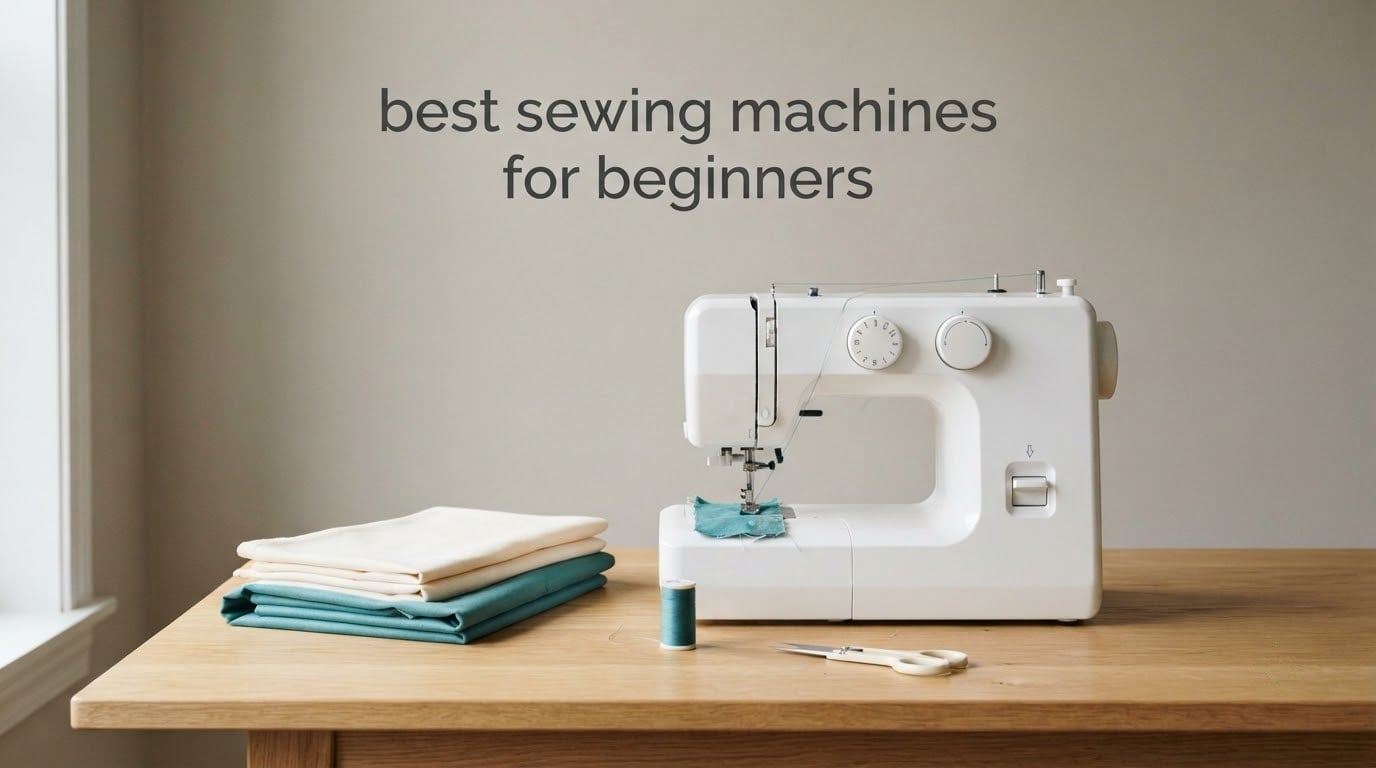
The sewing machine aisle is genuinely confusing. Two machines sit side by side, both marketed to complete beginners, one with 27 stitches and one with 100, and the sticker tells you nothing about which one will still be running in three years. Most first-time buyers do not need 100 stitches. They need a straight stitch that stays straight, a zigzag that does not skip, a buttonhole that does not take ten minutes, and a machine that does not fight them while they learn those things.
That is what this roundup is built around. We compared 10 sewing machines aimed at first-time buyers, from entry-level mechanical machines with dials to computerized models with LCD screens and 100-stitch libraries, and we ranked them on the five things that actually decide whether a beginner enjoys sewing or quietly stops. Stitch consistency came first, then setup friction, then whether the motor can handle the fabric you plan to sew, then how much the features help rather than overwhelm, and finally build quality against the price you pay.
You will find the quick verdicts below, the full ranked list with hands-on notes for every machine, a buying guide that explains the features in plain language, and a section on used and vintage machines that no competitor covers. Model generations in this category churn fast, so everything here reflects the current 2026 lineup and is worth re-checking before you buy.
Index Table of Contents
- Top 3 Picks for a First Sewing Machine
- All 10 Beginner Sewing Machines at a Glance
- How We Ranked These Sewing Machines
- 1. Brother XM2701 – The Best First Machine for Almost Anyone
- Brother Sewing Machine, XM2701, Portable Sewing Machine, 27 Stitches
- Specification
- Pros
- Cons
- Who the Brother XM2701 suits
- Where the XM2701 falls short
- 2. Singer Heavy Duty 4423 – Best for Denim, Canvas, and Thick Layers
- SINGER® 4423 (Meltwater Blue) Heavy Duty Sewing Machine with Accessories
- Specification
- Pros
- Cons
- Who the Singer Heavy Duty 4423 suits
- Where the 4423 falls short
- 3. Singer Heavy Duty 4552 – The Power Upgrade with Drop Feed
- SINGER® Heavy Duty 4552™ Next Evolution Sewing Machine, Bonus Presser Feet
- Specification
- Pros
- Cons
- Who the Singer Heavy Duty 4552 suits
- Where the 4552 falls short
- 4. Brother CS5055 – Best for Absolute Beginners Who Hate Guessing
- Brother CS5055 Computerized Sewing Machine with LCD Display
- Specification
- Pros
- Cons
- Who the Brother CS5055 suits
- Where the CS5055 falls short
- 5. Singer M1500 – Best Compact Machine for Small Spaces and Mending
- SINGER® M1500 Lightweight & Portable Sewing Machine with Accessory Kit
- Specification
- Pros
- Cons
- Who the Singer M1500 suits
- Where the M1500 falls short
- 6. Brother CP100X – Best for Quilting and for Not Outgrowing the Machine
- Brother CP100X Computerized Sewing and Quilting Machine
- Specification
- Pros
- Cons
- Who the Brother CP100X suits
- Where the CP100X falls short
- 7. Janome Arctic Crystal – Best Metal Frame at an Entry Price
- Janome Arctic Crystal Easy-to-Use Sewing Machine with Interior Metal Frame, Bobbin Diagram, Tutorial Videos, Made with Beginners in Mind for Garments, Patchwork, Light Quilting
- Specification
- Pros
- Cons
- Who the Janome Arctic Crystal suits
- Where the Arctic Crystal falls short
- 8. Janome 2212 – Best Mechanical Step Up With Real Adjustment Control
- Janome 2212 Front-Loading Sewing Machine with 12 Built-In Stitches
- Specification
- Pros
- Cons
- Who the Janome 2212 suits
- Where the 2212 falls short
- 9. bernette B33 – Best All-Metal Build and Simplest Controls
- Bernette B33 Swiss-Designed Mechanical Sewing Machine | 15 Stitches, Semi‑Automatic Needle Threader, 5 mm Stitch Width, 2‑Step Presser Foot Lift, Manual Thread Cutter
- Specification
- Pros
- Cons
- Who the bernette B33 suits
- Where the B33 falls short
- 10. Janome MOD-15 – Best Budget Machine for Quilting and Knits
- Janome MOD-15 Easy-to-Use Sewing Machine with 15 Stitches, Adjustable Stitch Length and 5-Piece Feed Dogs
- Specification
- Pros
- Cons
- Who the Janome MOD-15 suits
- Where the MOD-15 falls short
- How to Choose a Beginner Sewing Machine: 8 Features That Matter
- Mechanical vs Computerized Sewing Machines: Which Should You Buy?
- New or Used? What Vintage Sewing Machines Get Right
- Before Your First Sew: Setup Steps and Maintenance Habits
- Frequently Asked Questions
- What is the best sewing machine for beginners at home?
- Is Brother or Singer better for beginners?
- What is the easiest sewing machine for beginners?
- Which sewing machine has the least problems?
- Which brand sewing machine is best for beginners?
- How many stitches do I need on a beginner sewing machine?
- Which Beginner Sewing Machine Should You Buy?
Top 3 Picks for a First Sewing Machine
 Pick 1
Brother XM2701
- 27 built-in stitches
- automatic needle threader
- drop-in top bobbin
- free arm
- 6 included presser feet
 Pick 2
Singer Heavy Duty 4423
Top of the shelf
- metal frame
- 1100 stitches per minute
- 97 stitch applications
- one-step buttonhole
- free arm
 Pick 3
Brother CP100X
- 100 built-in stitches
- wide extension table
- speed control slider
- hard case
- 10 presser feet
As an Amazon Associate we earn from qualifying purchases. CERTAIN CONTENT THAT APPEARS ON THIS SITE COMES FROM AMAZON. THIS CONTENT IS PROVIDED 'AS IS' AND IS SUBJECT TO CHANGE OR REMOVAL AT ANY TIME.
Stock and pricing checked 2026
All 10 Beginner Sewing Machines at a Glance
Every machine below is in the ranking in full detail further down. This table is the fast version, sorted by who should actually buy it.
| No | Title | Notes | Where to buy |
|---|---|---|---|
| 1 | Pick 1 |
|
Check Latest Price |
| 2 | Pick 2 |
|
Check Latest Price |
| 3 |  Pick 3 Pick 3 |
|
Check Latest Price |
| 4 |  Pick 4 Pick 4 |
|
Check Latest Price |
| 5 |  Pick 5 Pick 5 |
|
Check Latest Price |
| 6 | Pick 6 |
|
Check Latest Price |
| 7 |  Pick 7 Pick 7 |
|
Check Latest Price |
| 8 |  Pick 8 Pick 8 |
|
Check Latest Price |
| 9 | 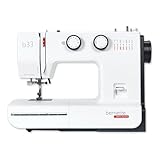 Pick 9 Pick 9 |
|
Check Latest Price |
| 10 |  Pick 10 Pick 10 |
|
Check Latest Price |
As an Amazon Associate we earn from qualifying purchases, at no additional cost to you. CERTAIN CONTENT THAT APPEARS ON THIS SITE COMES FROM AMAZON. THIS CONTENT IS PROVIDED 'AS IS' AND IS SUBJECT TO CHANGE OR REMOVAL AT ANY TIME.
Archive checked 2026
How We Ranked These Sewing Machines
Most roundups rank sewing machines by stitch count, which is close to meaningless. Every machine here sews a usable straight stitch and zigzag, and the gap between 15 stitches and 100 stitches matters far less to a beginner than whether the feed dogs grip evenly or the automatic threader actually works. So we scored each machine on five criteria instead, weighted toward what breaks a new sewist’s momentum.
Stitch consistency was the heaviest weight. We looked at owner reports of skipped stitches, thread breaks, bunching, and whether the seam stays flat over a long session. A machine that needs re-tensioning every ten minutes will teach you to hate sewing.
Setup friction came second. Threading, bobbin winding, and needle changes are where beginners actually get stuck. An automatic needle threader and a drop-in bobbin remove the two hardest steps, and a machine that prints its threading path on the body removes the third.
Motor and fabric range was third. If you sew denim, canvas, or layered work, an underpowered motor stalls mid-seam and skews the fabric. We weighted the metal frame and DC motor figures here heavily, because motor strength is the single hardest thing to upgrade later.
Feature access was fourth, and it cuts both ways. A screen or printed chart that shows you the stitch you are on removes guesswork. Ninety decorative stitches behind a menu with no preview do not. Build and support value closed it out, covering frame material, warranty length, included feet, and how easy the brand is to service.
One honesty note before the picks. We are not able to test every machine on every fabric, and the specifications and owner feedback below come from published product data and long-term owner reviews. Where owners consistently report a limitation, we name it rather than skipping it, because the machine that fits your actual projects beats the machine with the longest feature list.
1. Brother XM2701 – The Best First Machine for Almost Anyone
Brother Sewing Machine, XM2701, Portable Sewing Machine, 27 Stitches
Specification
- 27 built-in stitches
- Automatic needle threader
- Drop-in top bobbin
- 12.6 lb metal body
- 25-year warranty
Pros
- Genuinely learnable in a single sitting
- Forgiving thread tension with even stitches
- Compact enough for a drawer or a class
- 6 feet and 4 bobbins cover the basics
Cons
- LED work light is dim for detail work
- Thick plastic presser foot lever wears with heavy use
- Struggles past roughly nine layers of cotton
As an Amazon Associate we earn from qualifying purchases, at no additional cost to you. CERTAIN CONTENT THAT APPEARS ON THIS SITE COMES FROM AMAZON. THIS CONTENT IS PROVIDED 'AS IS' AND IS SUBJECT TO CHANGE OR REMOVAL AT ANY TIME.
The Brother XM2701 is the sewing machine we recommend to a person holding a pattern for the first time. It has 27 built-in stitches, an automatic needle threader, a jam-resistant drop-in top bobbin, and a metal body, which is a rare combination at this tier. Owners report being able to hem a pair of pants within half an hour of unboxing, and that is the single most useful thing a first machine can do.
What separates it from cheaper entry machines is that it does the boring parts reliably. The tension is forgiving, the stitch line stays even, and nobody in the review pool is reporting skipped stitches on ordinary cotton. Long-term owners describe years of service with nothing more than regular needle changes and lint cleaning.
The metal frame matters more than the spec sheet suggests. It weighs 12.6 pounds, which is heavy enough to stay planted on the table and light enough to carry to a class, and that rigidity is why the straight stitch stays flat instead of diving into the fabric. The free arm handles cuffs, sleeves, and pant legs without any adapter work.
Accessories are unusually generous for a first machine: 6 presser feet, a 3-piece needle set, a twin needle, 4 bobbins, and a DVD plus printed manual. You can start hemming, topstitching, and making a tote bag without buying anything else. Backed by a 25-year limited warranty, it is the safest long-term bet in this group.
Who the Brother XM2701 suits
It suits anyone whose projects are garments, mending, cushions, tote bags, and light quilting. It also suits renters and beginners in small flats, since it stores in a drawer and the free arm handles sleeve work without taking the whole machine off the table. Experienced sewers on r/SewingForBeginners repeatedly name the XM2701 as the budget mechanical pick when someone wants simple dials and no computer screen, and that consensus holds up in practice.
If you plan to sew denim, canvas, or heavy quilt backings as your very first projects, you will feel its limits sooner than most people expect.
Where the XM2701 falls short
The built-in LED work light is dim, so an external lamp helps with detailed work like appliqué or topstitching in a dark color. The presser foot lever is thick plastic and is the part most likely to wear with heavy use. Reviewers also find the printed booklet and DVD less self-explanatory than a short video walkthrough.
Its real ceiling is fabric thickness. Owners report it struggles with thick multi-layer seams and corners, and it is best kept to about nine layers of cotton. That covers clothing and light quilting, not workwear construction.
As an Amazon Associate we earn from qualifying purchases, at no additional cost to you. CERTAIN CONTENT THAT APPEARS ON THIS SITE COMES FROM AMAZON. THIS CONTENT IS PROVIDED 'AS IS' AND IS SUBJECT TO CHANGE OR REMOVAL AT ANY TIME.
Listing checked 2026
2. Singer Heavy Duty 4423 – Best for Denim, Canvas, and Thick Layers
SINGER® 4423 (Meltwater Blue) Heavy Duty Sewing Machine with Accessories
Specification
- Metal frame and steel bedplate
- 1100 stitches per minute
- 97 stitch applications
- One-step buttonhole
- Free arm
Pros
- Sews denim canvas and layered fabric without stalling
- Fastest motor in the roundup at 1100 spm
- Numbered threading path printed on the body
- Real metal rigidity under the plastic shell
Cons
- Outer housing spool pin and pedal are all plastic
- No dedicated light switch so the needle area goes dark
- No seam guide on the bed plate
As an Amazon Associate we earn from qualifying purchases, at no additional cost to you. CERTAIN CONTENT THAT APPEARS ON THIS SITE COMES FROM AMAZON. THIS CONTENT IS PROVIDED 'AS IS' AND IS SUBJECT TO CHANGE OR REMOVAL AT ANY TIME.
The Singer Heavy Duty 4423 is the sewing machine to buy if your fabric budget is dominated by denim, canvas, webbing, and layered work. It sews at 1,100 stitches per minute with 50 percent more piercing power than a standard machine, and reviewers consistently describe it punching through multi-layer denim without bogging down. It is the fastest motor in this roundup, and experienced sewers notice that immediately.
Under the plastic shell there is a heavy-duty metal frame with a stainless-steel bedplate, which is what keeps vibration down and the seam straight at speed. The 23 base stitches deliver 97 stitch applications, so you are not short on options even though the base number sounds modest.
For a beginner, the single most important detail is the numbered threading path printed directly on the machine. Setup takes minutes rather than an evening of reading the manual. One-step buttonhole, adjustable presser foot pressure, extra-high foot lift, and a free arm round out a genuinely capable feature set for garment work.
Here is the honest caveat that most roundups skip. This line is heavily promoted online, and it does divide owners. Hobby and repair sewists call it a durable workhorse. A smaller group of professional sewists report thread breaks, nesting, and needle breakage that earlier Heavy Duty models did not produce, and several beginners who reported those problems were using metal rather than Class 15 plastic bobbins or adjusting tension before the machine had been tried properly. Community consensus in sewing forums is genuinely split on the line, so treat the power as real and expect a short adjustment period.
Who the Singer Heavy Duty 4423 suits
It suits anyone making jeans, work shirts, tote bags from heavy canvas, costume pieces, and repairs on thick garments. It also suits a beginner who already sews and simply needs more motor than they have. The adjustable presser foot pressure and free arm mean you can move from a flat seam to a sleeve cuff without changing machines.
If you want one machine for everything and your projects skew heavy, this is the one. You will not hit a fabric ceiling in the first year.
Where the 4423 falls short
The trim is plastic: outer housing, spool pin post, bobbins, and the foot pedal all feel inexpensive even though the frame beneath is metal. The foot pedal cord is short and the light pedal floats, making it awkward to position, and there is no dedicated power switch for the work light, so powering the machine down leaves the needle area dark. There is also no seam guide on the bed plate.
At 17.1 pounds it is heavy to carry to a class, and the printed directions send you to a downloadable manual that reviewers find incomplete. Buy a magnetic seam guide and keep spare Class 15 plastic bobbins, and most of the reported friction disappears.
As an Amazon Associate we earn from qualifying purchases, at no additional cost to you. CERTAIN CONTENT THAT APPEARS ON THIS SITE COMES FROM AMAZON. THIS CONTENT IS PROVIDED 'AS IS' AND IS SUBJECT TO CHANGE OR REMOVAL AT ANY TIME.
Listing checked 2026
3. Singer Heavy Duty 4552 – The Power Upgrade with Drop Feed
SINGER® Heavy Duty 4552™ Next Evolution Sewing Machine, Bonus Presser Feet
Specification
- DC motor and metal interior frame
- 32 stitches, 110 applications
- Drop feed for free-motion work
- Adjustable speed control
Pros
- Noticeably stronger piercing power on thick fabric
- Metal interior frame stays stable under load
- Speed control makes slow curves manageable
- Bonus walking foot and non-stick foot included
Cons
- Over 17 pounds and awkward to transport
- Mechanical controls need the stitch chart to learn
- Exterior shell is still plastic
As an Amazon Associate we earn from qualifying purchases, at no additional cost to you. CERTAIN CONTENT THAT APPEARS ON THIS SITE COMES FROM AMAZON. THIS CONTENT IS PROVIDED 'AS IS' AND IS SUBJECT TO CHANGE OR REMOVAL AT ANY TIME.
The Singer Heavy Duty 4552 is the step up from the 4423, and the step up is the motor. A new DC motor inside a full metal interior frame delivers noticeably stronger piercing power on thick, layered, and stretch fabrics, which is exactly where a beginner working from commercial patterns runs out of machine. The 32 built-in stitches deliver 110 applications, including stretch options for knits.
Two features separate it from every other heavy machine here. The drop feed lever lets you lower the feed dogs and free-motion quilt or monogram, and the user-adjustable maximum speed control lets you cap how fast the machine runs. Beginners single out that speed dial as the feature that makes corners and slow curves manageable for the first time in their lives.
It also bundles the feet you would otherwise have to buy: an even feed walking foot and a non-stick foot, plus a stainless-steel bedplate, rubberized dial grips, and a large sewing space. An integrated needle threader, top drop-in bobbin, and one-step buttonhole cover the setup steps that normally trip up new sewists.
Its average rating sits a little below the two machines ahead of it, and the reviews explain why: this is a manual mechanical machine with a real learning curve, not a defect. Stitch and tension adjustments take practice before results are consistent, and a small share of owners report the usual plastic-trim durability complaints. We rank it third because the power is unmatched, not because it is the easiest machine to learn on.
Who the Singer Heavy Duty 4552 suits
It suits a beginner who already knows they will sew thick fabric, stretch fabric, or free-motion quilting, and who wants the walking foot in the box. Sewists with back or hand mobility problems also benefit from the speed control, which lets the machine run slowly and steadily without fighting a pedal.
If you want to start garment making and plan to work in knitwear, the stretch stitches plus the motor are a genuinely useful combination.
Where the 4552 falls short
It weighs over 17 pounds, which is genuinely awkward to move to a class or a shared studio. The controls are mechanical, so you have to learn the stitch chart before sewing, and the exterior is still plastic rather than metal even though the interior frame is solid. Expect a few sessions of adjustment before the tension behaves consistently.
For a total beginner who wants the gentlest possible introduction, the computerized Brother models below are a better fit even though they cannot touch heavy fabric.
As an Amazon Associate we earn from qualifying purchases, at no additional cost to you. CERTAIN CONTENT THAT APPEARS ON THIS SITE COMES FROM AMAZON. THIS CONTENT IS PROVIDED 'AS IS' AND IS SUBJECT TO CHANGE OR REMOVAL AT ANY TIME.
Listing checked 2026
4. Brother CS5055 – Best for Absolute Beginners Who Hate Guessing
Brother CS5055 Computerized Sewing Machine with LCD Display
Specification
- 60 built-in stitches
- LCD screen for settings
- Metal frame, fixed needle bar
- 10.5 pounds
- 25-year warranty
Pros
- LCD removes all guesswork from stitch selection
- Metal frame produces clean even stitch lines
- Light enough to carry to a workshop
- 7 feet and lifetime tech support included
Cons
- No hard cover or extension table included
- Bobbin winding can run uneven
- Workspace is smaller than table-equipped models
As an Amazon Associate we earn from qualifying purchases, at no additional cost to you. CERTAIN CONTENT THAT APPEARS ON THIS SITE COMES FROM AMAZON. THIS CONTENT IS PROVIDED 'AS IS' AND IS SUBJECT TO CHANGE OR REMOVAL AT ANY TIME.
The Brother CS5055 is the machine we would hand someone who finds machines intimidating. The LCD screen shows the stitch you are on and the settings you are changing, which turns the single most demoralizing part of learning, guessing what a dial does, into a labelled choice. Beginners report learning the machine in an afternoon.
It also hits 60 built-in utility, decorative, and heirloom stitches plus 7 auto-size one-step buttonholes, which is a generous library without being intimidating. The metal frame with a fixed needle bar is what keeps the stitch lines clean, and that is the same engineering that makes the heavier machines in this roundup sew straight.
At 10.5 pounds it is one of the lighter full-size machines here, with an enlarged needle-to-arm workspace for bigger projects. The kit includes 7 presser feet, 4 bobbins, a needle set, and a trilingual English, Spanish, and French manual. A 25-year limited warranty comes with free phone and technical support for the life of the product.
The automatic needle threader is an improved version of the one in Brother’s cheaper machines, and the jam-resistant drop-in top bobbin is the system that causes the fewest beginner problems. This is the sweet spot between a mechanical machine and an expensive computerized one, and it is why it lands here at number four rather than higher: it lacks the extension table and hard case that make the CP100X the better growth machine.
Who the Brother CS5055 suits
It suits anyone who has never used a sewing machine and wants the screen to explain things. It suits learners who want a 60-stitch library for garments, home decor, and quilting without committing to a large machine. The light weight also makes it a good choice for workshops and shared spaces.
If you like the reassurance of visible settings but not the bulk of a table-equipped machine, this is the version to buy.
Where the CS5055 falls short
There is no hard cover or extension table included, unlike higher-end Brother models, and the needle-to-arm workspace is smaller than on machines that ship with a table. That matters most once you start quilting. The bobbin winding can be uneven and needs you to watch the thread, which is the most common beginner frustration on this machine.
Computerized controls also mean more electronics that can fail over time compared with a fully mechanical machine. If you want a machine that will sit unused for a decade and start sewing, a mechanical model is the safer bet.
As an Amazon Associate we earn from qualifying purchases, at no additional cost to you. CERTAIN CONTENT THAT APPEARS ON THIS SITE COMES FROM AMAZON. THIS CONTENT IS PROVIDED 'AS IS' AND IS SUBJECT TO CHANGE OR REMOVAL AT ANY TIME.
Listing checked 2026
5. Singer M1500 – Best Compact Machine for Small Spaces and Mending
SINGER® M1500 Lightweight & Portable Sewing Machine with Accessory Kit
Specification
- 6 stitches, 57 applications
- Preset length and width
- 9.7 pound body
- Marked threading guides
Pros
- Preset settings mean zero setup knowledge needed
- Light and quiet for apartments and evenings
- Handles mending hems and pillow covers reliably
- Marked guides speed up threading
Cons
- Not heavy duty
- struggles with thick denim
- Four-step buttonhole is slow
- Light body slides unless you add rubber feet
As an Amazon Associate we earn from qualifying purchases, at no additional cost to you. CERTAIN CONTENT THAT APPEARS ON THIS SITE COMES FROM AMAZON. THIS CONTENT IS PROVIDED 'AS IS' AND IS SUBJECT TO CHANGE OR REMOVAL AT ANY TIME.
The Singer M1500 is the simplest machine in this roundup and the easiest first purchase. It has 6 built-in stitches delivering 57 applications, and critically, the stitch length and width are preset, so a total beginner can press the pedal and sew a straight line without reading anything. Owners who sewed years ago and want mending back in their life tend to love it for exactly that reason.
At 9.7 pounds it stores in a drawer between projects and it is quiet enough for evening sewing in a small apartment. The stitch selector dial and the marked-on-machine threading guides make setup fast, and there is a free creator app with manuals and tutorials to fall back on.
The 57 applications come from six base stitches, including a scallop and a multi-step zigzag, so the number on the box is flattering but not dishonest. For pillow covers, simple garments, hems, and repairs, six base stitches is genuinely enough. The four-step buttonhole is clearly marked on the selector dial, which is the main convenience feature you give up against the one-step buttonholes on the heavier machines.
This is not a machine to grow into. It is a machine to do a specific, useful job in a small space. If that job is altering clothes, hemming, and making simple home items, it does them well and quietly. The recurring limitation in the reviews is power, not quality: it is not a heavy-duty machine and it will not handle a jeans hem.
Who the Singer M1500 suits
It suits a beginner in a small flat who wants to hem, mend, and make simple accessories without a machine permanently occupying a table. It suits anyone returning to sewing after a long gap who wants the least intimidating possible re-entry. It also works as a travel and demonstration machine because of the low weight.
If your first goal is a wardrobe that lasts longer, this is the honest, low-commitment choice.
Where the M1500 falls short
It is not heavy duty. It struggles with thick denim and multi-layer seams, and the four-step buttonhole is slower than the one-step units on the machines above it. Because the body is light, it can slide across the table during a seam, so rubber feet pads are worth adding.
A small minority of owners report skipped stitches and repeated servicing needs, and the unit is a 120V design, so it is not usable in other voltage regions. If you want one machine for a decade of garments, look past this one.
As an Amazon Associate we earn from qualifying purchases, at no additional cost to you. CERTAIN CONTENT THAT APPEARS ON THIS SITE COMES FROM AMAZON. THIS CONTENT IS PROVIDED 'AS IS' AND IS SUBJECT TO CHANGE OR REMOVAL AT ANY TIME.
Listing checked 2026
6. Brother CP100X – Best for Quilting and for Not Outgrowing the Machine
Brother CP100X Computerized Sewing and Quilting Machine
Specification
- 100 built-in stitches
- Wide extension table
- Speed slider, no pedal needed
- Protective hard case
- Quilt guide
Pros
- Extension table makes quilts far easier to handle
- Speed slider allows slow precise work without a pedal
- Widest stitch library in the roundup
- Hard case included at this tier
Cons
- Bobbin winding is hit and miss
- Threader is oversized and takes practice
- Bulkier because of the table
- Monogramming foot included but machine cannot monogram
As an Amazon Associate we earn from qualifying purchases, at no additional cost to you. CERTAIN CONTENT THAT APPEARS ON THIS SITE COMES FROM AMAZON. THIS CONTENT IS PROVIDED 'AS IS' AND IS SUBJECT TO CHANGE OR REMOVAL AT ANY TIME.
The Brother CP100X is the growth machine in this roundup, and it answers the fear that hangs over every first purchase, which is outgrowing the machine in six months. It has 100 built-in utility, decorative, and heirloom stitches plus 8 auto-size buttonholes, the widest library here, and it includes a wide extension table, 10 sewing feet, a quilt guide, and a protective hard case.
The wide extension table is the reason to choose it if you quilt. It flattens the bulk of a quilt sandwich so the fabric feeds without dragging, and combined with the larger needle-to-arm space it makes a full-size quilt block far less awkward. The metal frame and fixed needle bar sew denim and heavy quilts consistently rather than merely tolerating them.
The speed control slider is a sleeper feature. It lets the machine run without the foot pedal and lets you cap the speed for precise work, and sewists with back or mobility issues who cannot use a pedal call it out specifically. Controls sit close to the needle area, so settings are easy to see and change mid-project without looking away from the fabric.
Its 845-review pool is the second smallest in this group, so treat the long-term data as thinner than the numbers on the bigger models suggest. The most common complaints are mechanical housekeeping rather than quality: bobbin winding is hit-and-miss and needs the thread held and guided manually, and the automatic threader is oversized and still takes practice even on a well-used machine.
Who the Brother CP100X suits
It suits anyone who knows quilting is in their future, even if it is a year away. It suits sewists who cannot use a foot pedal. It suits beginners who want one machine that covers garments, crafts, home decor, and quilting without a planned upgrade, and the included hard case means it survives being moved.
If you only ever plan to hem clothes, the extension table and extra stitches are capability you will not use. Everyone else should look here first.
Where the CP100X falls short
Setup and initial threading take longer than on a simple mechanical machine, the table makes the package bulkier and heavier to move, and bobbin winding needs attention. The included monogramming foot is a genuine quirk, because the machine itself cannot monogram. And at 845 reviews, the track record is shorter than the machines ranked above it.
For free-motion quilting you will still want a foot and some practice, since this machine has no drop feed lever like the Singer 4552 does.
As an Amazon Associate we earn from qualifying purchases, at no additional cost to you. CERTAIN CONTENT THAT APPEARS ON THIS SITE COMES FROM AMAZON. THIS CONTENT IS PROVIDED 'AS IS' AND IS SUBJECT TO CHANGE OR REMOVAL AT ANY TIME.
Listing checked 2026
7. Janome Arctic Crystal – Best Metal Frame at an Entry Price
Janome Arctic Crystal Easy-to-Use Sewing Machine with Interior Metal Frame, Bobbin Diagram, Tutorial Videos, Made with Beginners in Mind for Garments, Patchwork, Light Quilting
Specification
- 15 built-in stitches
- Interior metal frame
- Darning plate for free-motion
- 12 pounds
- 25-year warranty
Pros
- Metal frame and metal bobbin case at an entry price
- No computer screen to learn
- Handles multiple denim layers better than rivals its tier
- Darning plate enables free-motion quilting out of the box
Cons
- Front-loading bobbin is a learning curve
- Thread holders are flimsy plastic
- Foot pedal jumps from slow to full speed quickly
As an Amazon Associate we earn from qualifying purchases, at no additional cost to you. CERTAIN CONTENT THAT APPEARS ON THIS SITE COMES FROM AMAZON. THIS CONTENT IS PROVIDED 'AS IS' AND IS SUBJECT TO CHANGE OR REMOVAL AT ANY TIME.
The Janome Arctic Crystal is the value pick for the buyer who wants metal construction without paying computerized-machine money. It has an interior metal frame and a metal bobbin case, and long-term owners including buyers in their sixties and seventies who learned on vintage machines consistently rate it the best value in its class. That is not a marketing claim, it is the most repeated theme in the reviews.
The feature set is deliberately modest: 15 built-in stitches, a 4-step buttonhole, and a 3-piece feed dog with free-arm design. That is enough for garments, home decor, patchwork, and light quilting, which is exactly the list most beginners work from for their first year.
Two details make it stronger than cheaper plastic-framed rivals. The front-loading bobbin is clearly diagrammed inside the machine, and the darning plate lets you drop the feed dogs and free-motion quilt straight out of the box, which almost no other machine at this level does. A 25-year limited warranty and a quick start guide are included, along with 4 presser feet, bobbins, needles, a seam ripper, and a darning plate.
At 12 pounds it is easy to carry to a class or store away, and the 3-piece feed dog with even fabric feed is why it handles multiple layers of denim better than most machines at this tier. The front-loading bobbin is a real learning curve if you are used to a top-loading machine, and the pedal is known to jump from slow to full speed quickly, which catches beginners out.
Who the Janome Arctic Crystal suits
It suits a beginner who wants a simple mechanical machine that will not flex or skip when they sew layered fabric. It suits anyone who prefers dials to screens, and anyone who wants free-motion capability without buying a foot. Sewists who learned on metal machines often recognise the feel immediately.
If you want a machine that can be repaired rather than replaced, a metal-frame mechanical model like this is the safest long-term bet.
Where the Arctic Crystal falls short
The front-loading bobbin takes practice if you have only used top-loaders, and the thread holders are flimsy plastic that can snap if you pull hard. The foot pedal transitions abruptly from slow to full speed, and several regional listings include English-only instructions. There is no automatic needle threader here, so you thread it by hand every time.
With 15 stitches there is no stretch-stitch library for knitwear, so if jersey is on your project list, look at a computerized Brother instead.
As an Amazon Associate we earn from qualifying purchases, at no additional cost to you. CERTAIN CONTENT THAT APPEARS ON THIS SITE COMES FROM AMAZON. THIS CONTENT IS PROVIDED 'AS IS' AND IS SUBJECT TO CHANGE OR REMOVAL AT ANY TIME.
Listing checked 2026
8. Janome 2212 – Best Mechanical Step Up With Real Adjustment Control
Janome 2212 Front-Loading Sewing Machine with 12 Built-In Stitches
Specification
- 12 built-in stitches
- Adjustable width and length dials
- 5-piece feed dog with drop feed
- Detachable extension table
- 25-year warranty
Pros
- Smooth sewing with no bunching reported
- Handles folded denim edges and decor layers
- Detachable table with internal storage
- Well illustrated manual with technique tips
Cons
- Reverse lever must be held down continuously
- Runs fast out of the box and can pull thread
- Plastic outer case despite metal internals
- Older model with fewer stitch options
As an Amazon Associate we earn from qualifying purchases, at no additional cost to you. CERTAIN CONTENT THAT APPEARS ON THIS SITE COMES FROM AMAZON. THIS CONTENT IS PROVIDED 'AS IS' AND IS SUBJECT TO CHANGE OR REMOVAL AT ANY TIME.
The Janome 2212 is the last truly mechanical step up, and it is the machine to buy if you want dials but with real control. Where basic mechanical machines give you one stitch at a fixed setting, the 2212 has separate dials for stitch width and stitch length on top of the 12 built-in stitches, so you can set a seam precisely rather than accepting what comes.
Owners describe the stitching as smooth with no bunching and no skipped stitches, and they single out its ability to handle multi-fold denim edges and several layers of decor fabric without strain. For a beginner, that consistency is what lets you build the habit of a straight, even seam.
Mechanically it is well equipped: a 5-piece feed dog, drop feed for free-motion work, a free arm, extra-high presser foot lift, a push-pull bobbin winder, and two retractable vertical spool pins. It also includes a detachable extension table with internal storage compartments, which is unusual at this level and useful once you start larger pieces. Zipper, buttonhole, blind hem, and zigzag feet are in the box.
The warranty is unusually long for the category, at 25 years on mechanical parts, 2 years on electrical, and 1 year on labor, which reflects how much longer a machine like this tends to last than a computerized one. Janome builds machines for several other brands, so parts knowledge is widely available.
Who the Janome 2212 suits
It suits a beginner who has sewn before on a borrowed machine and wants real control without a screen. It suits anyone making garments from patterns, where you adjust stitch length for different fabric weights rather than accepting a preset. The drop feed and darning capability also make it a reasonable quilting companion.
If your goal is a machine you can service yourself and keep for a very long time, this is one of the strongest options here.
Where the 2212 falls short
The reverse lever must be held continuously while sewing backwards, which is genuinely tiring on a long seam and confuses first-timers. It also runs fast out of the box, and pressing the pedal abruptly can pull the thread out of the needle, so anchor the thread before your first stitch. The outer case is plastic rather than metal, making it heavier than it looks, and 12 stitches is fewer than newer computerized models offer.
The front-loading bobbin and top-mounted presser foot lift also need adjusting if you learned on a different layout, so budget an afternoon with the well-illustrated manual before starting a real project.
As an Amazon Associate we earn from qualifying purchases, at no additional cost to you. CERTAIN CONTENT THAT APPEARS ON THIS SITE COMES FROM AMAZON. THIS CONTENT IS PROVIDED 'AS IS' AND IS SUBJECT TO CHANGE OR REMOVAL AT ANY TIME.
Listing checked 2026
9. bernette B33 – Best All-Metal Build and Simplest Controls
Bernette B33 Swiss-Designed Mechanical Sewing Machine | 15 Stitches, Semi‑Automatic Needle Threader, 5 mm Stitch Width, 2‑Step Presser Foot Lift, Manual Thread Cutter
Specification
- All-metal Swiss body
- 15 stitches
- Semi-automatic needle threader
- Printed stitch chart
- Built-in ruler
Pros
- All-metal body instead of plastic housing
- Two dials are genuinely simple to learn
- Printed stitch chart removes manual lookup
- Built-in ruler in cm and inches speeds alignment
Cons
- Smallest stitch library in the group at 15
- No bobbin cover window or LED light in the feature set
- Lowest average rating here with a small one-star share
- Smallest review pool so long-term data is thin
As an Amazon Associate we earn from qualifying purchases, at no additional cost to you. CERTAIN CONTENT THAT APPEARS ON THIS SITE COMES FROM AMAZON. THIS CONTENT IS PROVIDED 'AS IS' AND IS SUBJECT TO CHANGE OR REMOVAL AT ANY TIME.
The bernette B33 is the machine here with a genuinely all-metal body rather than metal internals inside a plastic shell, and that is the reason to shortlist it. Metal means rigidity, low vibration, and a machine that can be repaired rather than replaced, which is exactly the argument experienced sewists make for buying a used vintage body instead of a new plastic-heavy entry model.
Everything else about it is built to be understood in under five minutes. Two dials handle stitch pattern selection and stitch length and width fine-tuning. The 15 essential and decorative stitches are printed on the front panel, so you never cross-reference a manual, and there is a built-in ruler in both centimeters and inches on the base for measuring and alignment.
A semi-automatic needle threader, a 2-step presser foot lift, a 5 mm maximum stitch width, and a manual thread cutter complete a thoughtful, uncluttered package. It is the most compact full-size machine in this roundup, and reviewers consistently describe the physical design as clean and genuinely beginner friendly.
It also carries the least evidence behind it. At 4.2 average with 179 reviews, it has the smallest review pool here and a one-star share several times higher than the other machines, which reflects a narrow feature set as much as quality. Buy it for the build and the simplicity, not for the feature set.
Who the bernette B33 suits
It suits a beginner who wants the least possible between sewing and making things, and who will never need more than straight stitch, zigzag, and a handful of utility stitches. It suits anyone who prefers a printed chart to a screen. It also suits a buyer who intends to keep the machine for many years and values an all-metal body over feature count.
If you want mechanical simplicity with premium construction, nothing else in this list matches it.
Where the B33 falls short
It has the smallest stitch library in the group at 15, with no decorative-heavy selection and no stretch-stitch options for knitwear. The feature set lists no bobbin cover window and no LED work light, so threading and low-light work are less convenient. There is no drop feed, so free-motion quilting is not available without an aftermarket kit.
With 179 reviews, you have far less long-term reliability data than the Brother and Singer models here. That is the honest trade: better build, fewer features, less evidence.
As an Amazon Associate we earn from qualifying purchases, at no additional cost to you. CERTAIN CONTENT THAT APPEARS ON THIS SITE COMES FROM AMAZON. THIS CONTENT IS PROVIDED 'AS IS' AND IS SUBJECT TO CHANGE OR REMOVAL AT ANY TIME.
Listing checked 2026
10. Janome MOD-15 – Best Budget Machine for Quilting and Knits
Janome MOD-15 Easy-to-Use Sewing Machine with 15 Stitches, Adjustable Stitch Length and 5-Piece Feed Dogs
Specification
- 15 built-in stitches
- Top-loading bobbin with clear cover
- 5-piece feed dog with drop feed
- Automatic tension
- 11.7 pounds
Pros
- Top-loading bobbin is one of the easiest to learn
- Does not skip stitches on stretchy knits and jersey
- Automatic tension removes a common beginner problem
- 25-year limited warranty
Cons
- Not suitable for fleece
- fibres jam inside the mechanism
- Struggles with thicker denim and heavier fibres
- Small triangle screwdriver included is awkward
- Mechanical action is louder than computerized models
As an Amazon Associate we earn from qualifying purchases, at no additional cost to you. CERTAIN CONTENT THAT APPEARS ON THIS SITE COMES FROM AMAZON. THIS CONTENT IS PROVIDED 'AS IS' AND IS SUBJECT TO CHANGE OR REMOVAL AT ANY TIME.
The Janome MOD-15 is the pick if your sewing is going to be quilting or knitwear on a smaller budget. The top-loading bobbin with a clear cover is one of the easiest bobbin systems to learn, and the 5-piece feed dog with drop feed makes both free-motion quilting and even fabric feeding simple. Experienced sewists pick it as a dedicated quilting machine for exactly that reason.
The other standout is the automatic tension, combined with an easy threading path. That pairing removes what is otherwise the most common beginner problem, which is thread tension, and owners report the machine does not skip stitches on stretchy knit and jersey, where cheaper mechanical machines typically falter.
It is a no-frills machine that stitches accurately, with 15 built-in stitches including one 4-step buttonhole, adjustable stitch length and zigzag width, and a free arm. Four presser feet are included, the dials for stitch length, zigzag width, and reverse are clearly marked, and the 25-year limited warranty is among the longest in this roundup.
At 11.7 pounds with a compact footprint it travels well, which makes it a sensible second machine for someone who already has a computerized one. The single consistent material limitation named in the reviews is fleece, which leaves fibres and lint inside the mechanism and causes noise and thread breaks. It also struggles somewhat with thicker denim and heavier fibres, and its mechanical action is louder than the computerized models.
Who the Janome MOD-15 suits
It suits a beginner working with knits, jersey, or patchwork who wants tension that holds without fiddling. It suits a quilter on a smaller budget who wants drop feed and a top-loading bobbin. It also suits anyone who wants a mechanical machine that does not need electricity to think about, so nothing fails between projects.
If you sew fleece, denim, or heavy outerwear, choose one of the Singer Heavy Duty models instead.
Where the MOD-15 falls short
Fleece is the clear limit, because fibres get caught inside the mechanism and cause noise and thread breaks. It struggles somewhat with thicker denim and heavier fibres, the feature set is basic with few decorative or lettered stitches, and the small triangle screwdriver included for maintenance is awkward to handle.
With 215 reviews the long-term data is thinner than for the mainstream models, so consider buying a spare needle set and a basic maintenance kit alongside it.
As an Amazon Associate we earn from qualifying purchases, at no additional cost to you. CERTAIN CONTENT THAT APPEARS ON THIS SITE COMES FROM AMAZON. THIS CONTENT IS PROVIDED 'AS IS' AND IS SUBJECT TO CHANGE OR REMOVAL AT ANY TIME.
Listing checked 2026
How to Choose a Beginner Sewing Machine: 8 Features That Matter
Stitch count is the number sellers push hardest, and it is the one beginners should mostly ignore. A new sewist uses straight stitch, zigzag, a stretch stitch if they touch knits, a blind hem, a buttonhole, and maybe a couple of decorative patterns. Everything from 15 stitches upward covers that list. Judge the machine on the eight things below instead.
1. Automatic needle threader. Threading by hand is the single most common reason beginners give up in week one. A machine with an automatic or semi-automatic threader removes the hardest setup step, and every owner review that praises a machine mentions it first.
2. One-step buttonhole. A four-step buttonhole requires you to coordinate three separate operations and is a classic first-project blocker. One-step units measure, cut, and stitch in a single pass. If you will ever make a shirt or a jacket, this one matters more than any decorative stitch.
3. Bobbin system. Drop-in top-loading bobbins are the easiest to learn and most common on modern machines. Front-loading bobbins, found on the Janome Arctic Crystal and 2212, hold more thread and suit heavy work but take a week to get comfortable. Buy the top-loader unless you have a specific reason.
4. Free arm and needle-to-arm space. The free arm is the narrow section beside the needle that lets you sew cuffs, sleeves, and pant legs without the whole machine in the way. Throat space, the distance from the needle to the machine body, is the number that decides whether a quilt fits comfortably. A wide extension table, included with the Brother CP100X, is the real answer to bulky projects.
5. Speed control. A speed slider or adjustable maximum speed lets you sew slow, precise stitches without feathering the pedal. It is the single most recommended feature for beginners with mobility or back issues, and it makes corners and curves dramatically easier.
6. Motor and frame. Look for a metal frame or metal interior frame, and treat DC motors as stronger than older AC motors. A weak motor stalls on thick layers and skews fabric, and it is the hardest limitation to work around later. This is where buying for denim or canvas pays off.
7. Included presser feet and needle position. Zipper, blind hem, buttonhole, and a walking foot should be in the box. Adjustable needle position lets you sew close to a seam or do decorative work at the edge, and it is standard on the computerized models here.
8. Warranty and service access. The Janome models here carry 25-year limited warranties and the Brother models carry 25-year limited warranties with lifetime technical support, while the SINGER 4552 carries a 1-year manufacturer warranty. Longer warranties track build quality and parts availability, which is a reasonable proxy for how long the machine will last.
Two habits are worth building before you shop. Sit with the machine and sew on your own fabric before buying, which experienced sewists in r/SewingForBeginners recommend more than any other single piece of advice, and bring a scrap of the fabric you actually plan to use. And buy a pack of needles with the machine, because a dull or wrong-size needle is the number one cause of skipped stitches and will make a good machine look bad.
Mechanical vs Computerized Sewing Machines: Which Should You Buy?
A mechanical machine uses dials and levers to set stitch length, width, and tension. A computerized machine uses a control panel, usually with an LCD, to select stitches and settings electronically, and often adds an automatic threader, one-step buttonholes, and adjustable speed. That is the whole distinction, and the practical difference is about how the machine fails and how much it helps you up front.
Choose mechanical if you want simplicity, a low purchase price, durability, and the ability to repair the machine yourself. Mechanical machines have fewer electronics that can fail, and the ones in this roundup with metal frames, such as the bernette B33 and the Janome 2212, are built to last. The tradeoff is speed control and buttonhole convenience, and a short learning curve on the stitch chart.
Choose computerized if you are starting from zero and want the machine to remove decisions. The LCD on the Brother CS5055 shows the stitch you are on and the settings you are changing, and the automatic threader plus drop-in bobbin on most computerized models remove the two steps beginners get stuck on. The tradeoff is electronics that can fail, a slightly higher price, and in a few cases uneven bobbin winding.
There is a third option worth naming, and it is the Janome MOD-15 and Janome Arctic Crystal approach: a mostly mechanical machine with a few modern conveniences, such as automatic tension or a semi-automatic threader, and no screen. It is a reasonable middle ground for someone who wants fewer decisions but still wants a simple machine.
For a complete beginner with no previous exposure, we would take the computerized route first because the screen shortens the time to a successful first seam. For someone who is patient, methodical, and sewing a lot of one fabric type, the mechanical route is cheaper and lasts longer. Neither answer is wrong; the wrong answer is buying a machine you are intimidated by, because you will not use it.
New or Used? What Vintage Sewing Machines Get Right
No competitor roundup on this search covers used and vintage machines, and that is a real gap, because the community consensus is strongly in favor of them. On r/SewingForBeginners and r/sewing, experienced sewists repeatedly argue that a secondhand machine from the 1970s through the 1990s, with an all-metal body, is a better first machine than a new plastic-heavy entry model. They recommend thrift stores, Facebook Marketplace, and Craigslist by name.
The argument is physical. Machines built in that era use metal frames, metal gears, and metal bobbin cases, and the parts still exist decades later. Modern entry machines are frequently plastic-bodied, which means the shell and small components are the parts that eventually fail rather than the mechanism. A vintage machine also tends to have a mechanical speed controller that gives you real control rather than a fixed maximum.
There are real downsides. You must be able to test it before you commit, because a seized mechanism or a missing part can eat the value instantly. Servicing is local work, and you may need a technician who knows vintage models. Threading paths, tension dials, and bobbin systems will feel unfamiliar if everything you have seen is modern, and stitch libraries are small by modern standards.
Our practical advice is this. Buy a used vintage machine if you have a local sewing shop or a friend who can test it with you and you are willing to spend an afternoon learning it. Buy new if you want a warranty, an automatic needle threader, and a one-step buttonhole on day one. The machines in this roundup, several of which carry 25-year limited warranties, are the lower-risk version of the same idea: build quality you will not outgrow.
Before Your First Sew: Setup Steps and Maintenance Habits
Whatever you buy, the first hour decides whether you keep going. Set the machine on a stable table at a comfortable height, find the power switch and the foot pedal or speed control, and make sure the bobbin winder and threading guides are within reach before you thread anything.
Wind the bobbin first, watching the thread fill evenly rather than heaping on one side. Insert it according to the machine’s diagram, which is printed inside the cover on the front-loading Janome models. Then thread the upper path in the order the machine marks, and anchor the thread in the needle plate groove so it cannot pull out when you start.
Fit a fresh needle, correctly oriented, before anything else. A dull or wrong-size needle is the number one cause of skipped stitches, and it is also the cheapest fix available. If you are sewing denim or canvas, use the heavier needle the manual specifies rather than the universal one that came in the box.
Bring the bobbin thread up by turning the handwheel, set your stitch to a straight stitch at medium length, and sew a test seam on scrap fabric in the material you will actually use. Check the seam from both sides under light. If it bunches, your tension is too tight. If it is loose and loopy, too loose. Adjust one step at a time and sew another test seam.
Then make the maintenance habits part of the routine, because they are what separates a machine that lasts from one that does not. Change the needle every 8 to 10 hours of sewing, not every project. Brush lint out of the bobbin area and feed dogs regularly, since lint is the main cause of noise and jamming. Oil the machine on the schedule in its manual, and have it serviced by a technician when the needle plate starts pouncing, the machine gets louder, or the timing feels off rather than waiting for a breakdown.
Frequently Asked Questions
What is the best sewing machine for beginners at home?
The Brother XM2701 is the best all-round first machine for home use, with 27 built-in stitches, an automatic needle threader, a drop-in top bobbin, and a metal body that keeps stitches straight. Runners-up depend on your projects: the Singer Heavy Duty 4423 if you sew denim and canvas, the Brother CS5055 if you want an LCD that explains every setting, and the Brother CP100X if quilting is in your plans.
Is Brother or Singer better for beginners?
Brother machines tend to be easier to set up, with clearer threading paths, better automatic needle threaders, and LCD options that remove guesswork, plus 25-year limited warranties. Singer machines tend to be more powerful, with metal frames and faster motors that handle denim, canvas, and thick layers better. For a complete beginner sewing garments and doing mending, Brother is usually easier. For heavy fabrics, Singer has the stronger motor.
What is the easiest sewing machine for beginners?
Ease comes from four specific features: an automatic needle threader, a one-step buttonhole, needle up and down control, and adjustable speed. Among these picks, the Brother CS5055 and the Brother XM2701 both have an automatic needle threader and one-step buttonhole, and the Singer M1500 removes setup decisions almost entirely with preset stitch length and width.
Which sewing machine has the least problems?
Reliability tracks build rather than features. The machines with metal frames and long mechanical parts warranties, such as the Janome 2212, the Janome MOD-15, the Janome Arctic Crystal, and the bernette B33, are built to be serviced rather than replaced. Vintage machines from the 1970s to the 1990s with all-metal bodies are also widely considered among the least troublesome, provided you can have one tested before you buy it.
Which brand sewing machine is best for beginners?
Brother is the strongest default choice for beginners because of easy threading, reliable automatic threaders, and 25-year limited warranties. Singer is stronger for heavy fabrics and fast sewing but has a shorter warranty on some models. Janome builds machines for several other brands and offers long mechanical warranties, making it a good value choice. Bernette is worth considering specifically for an all-metal mechanical body.
How many stitches do I need on a beginner sewing machine?
Between 12 and 30 is genuinely enough. A new sewist uses straight stitch, zigzag, a stretch stitch for knits, a blind hem, a buttonhole, and a few decorative patterns. The Janome 2212 offers 12 stitches and the bernette B33 offers 15, and both cover that list. Pay attention to the automatic needle threader, one-step buttonhole, and free arm instead of the stitch count.
Which Beginner Sewing Machine Should You Buy?
If you are starting from nothing and want the shortest path to a successful first seam, buy the Brother XM2701. It threads itself, drops the bobbin in from the top, stays straight, weighs 12.6 pounds, and carries a 25-year warranty. It is our pick for the best sewing machine for beginners because it does the hard parts well and leaves plenty of room to grow.
Match the machine to the fabric instead if your projects are decided. Heavy denim and canvas go to the Singer Heavy Duty 4423 or 4552, quilting goes to the Brother CP100X with its wide extension table, absolute beginners who want a screen go to the Brother CS5055, small spaces and mending go to the Singer M1500, and long-term metal-frame durability goes to the bernette B33 or a Janome.
Whichever one you choose, buy a pack of fresh needles with it, sew a test seam on scrap fabric before your first real project, and change that needle every 8 to 10 hours of use. That single habit will do more for your sewing than any feature on the spec sheet. The models above reflect the current 2026 lineup, so re-check the details before you order.