
A bag of grass seed does not spread itself evenly. Pour it by hand and you get a thick crust in one corner, bare soil in the next, and half of what you paid for sitting in your shoes. A spreader solves that by metering seed through an adjustable gate at a predictable rate, and choosing the right one comes down to three questions: how big your lawn is, how much precision you need near edges, and whether you would rather push it, carry it, or tow it.
We spent the 2026 season working through ten spreaders in handheld, chest-mount, shoulder-bag, walk-behind and tow-behind formats, seeding bare patches, overseeding thin turf and topdressing compacted areas. This is the full list of the best lawn spreaders for grass seed, ranked by how evenly each one distributes seed, how well the flow gate holds a setting, and whether it still tracks accurately after a season in a damp shed. Most of the roundups ranking for this query still carry dated specifications, so we have kept capacities, spread widths and model numbers current.
Two things get skipped in almost every guide we read. The first is calibration, which we handle with a weigh-out method that takes ten minutes and removes the guesswork from any dial. The second is the proprietary trap: some spreaders are marketed around their own branded bagged products, and a buyer who chooses one for seed ends up locked into a narrower supply than expected. We flag it where it applies.
Index Table of Contents
- Top 3 Picks for Lawn Spreaders for Grass Seed in 2026
- Best Lawn Spreaders for Grass Seed at a Glance in 2026
- What Type of Spreader Is Best for Grass Seed?
- The 10 Best Lawn Spreaders for Grass Seed
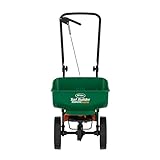
- 1. Scotts EdgeGuard Mini Broadcast Spreader – Pre-Calibrated and Ready to Push
- Scotts Turf Builder EdgeGuard Mini Broadcast Spreader
- Specification
- Pros
- Cons
- How accurate is the flow gate over repeated fills
- Where it struggles on a real property
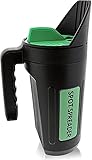
- 2. Spot Spreader 80 oz Hand Shaker – Best Value for Edges and Patches
- Hand Spreader Shaker for Seed, Salt, De-Icer, Ice Melt, Earth Food and Fertilizer – Multiple Opening Sizes for Any Need – Up to 80 Oz
- Specification
- Pros
- Cons
- Which jobs actually need a hand shaker
- What it will not replace
- 3. CHAPIN 8740A 64 oz All-Season Hand Shaker – Built for Steps and Shade
- CHAPIN 8740A 64 oz All-Season Hand Shaker Spreader, Seed, Fertilizer & Salt
- Specification
- Pros
- Cons
- Does the flow rate stay consistent as the bottle empties
- Where it earns its place in a seeding kit
- 4. Chapin 84700A 25 lb Handheld Bag Spreader – Built for Food Plots and Rough Ground
- Chapin 84700A 25-Pound Professional Handheld Bag Seed spreader with Waterproof Bag, Enclosed Gears, Rear Baffle, Adjustable Shoulder Strap and Multiple Spread Options, Red
- Specification
- Pros
- Cons
- Whether the 25 lb bag is as full as it sounds
- How it behaves on uneven land
- 5. Scotts Whirl Hand-Powered Spreader – Best Rated for Small Yards
- Scotts Whirl Hand-Powered Spreader
- Specification
- Pros
- Cons
- How large a lawn it realistically covers
- Whether hand cranking beats a push spreader for accuracy
- 6. SOLO 421S 20 lb Chest-Mount Spreader – Best for Big Lots by Hand
- SOLO Inc 421 20-Pound Capacity Portable Chest-Mount Spreader with Comfortable Cross-Shoulder Strap – 421S, White, 20lb
- Specification
- Pros
- Cons
- What a chest mount costs you in fatigue
- Handedness and the assembly experience
- 7. EarthWay 2750 25 lb Nylon Bag Spreader – Tough Enough for Food Plots
- EarthWay Products 2750 25lb Nylon Bag Seeder Spreader – Red, Durable, Water Resistant, Food Plot Equipment, Seed Spreader, Grass Seeder Made for Hunters, Farmers, Gardeners, Lawn Maintenance
- Specification
- Pros
- Cons
- How the shutoff behaves mid-pass
- What the brand reputation is actually worth
- 8. Agri-Fab 130 lb Tow Behind Spreader – Premium Pick for Large Lawns
- Agri-Fab Pull Behind Broadcast Spreader for Seed, Fertilizer, Salt and Ice Melt, 130 lb Hopper Capacity with Universal Hitch and 12 Ft Spread Width
- Specification
- Pros
- Cons
- How long assembly actually takes
- Whether the hopper is safe on slopes and when overloaded
- 9. VEVOR 60 lb Walk Behind Spreader – Best for Topdressing and Large Bags
- VEVOR Walk Behind Spreader 60 lbs Capacity Push Broadcast Spreader Black | for Lawn & Garden, 0-9.8 ft Spreading Width & 18 Adjustable Settings, 8 in All Terrain Pneumatic Tires for Seed, Fertilizer
- Specification
- Pros
- Cons
- Whether it handles topdressing as well as seed
- How it holds up to daily commercial-style use
- 10. Uniqwamo Handheld Power Spreader for Dewalt Batteries – Cordless Seeding Without Cranking
- Uniqwamo Handheld Power Spreader Compatible for Dewalt 20V/60V Battery
- Specification
- Pros
- Cons
- Whether a battery spreader is worth it without the battery
- How it compares to a hand crank on the same job
- How to Calibrate a Spreader for Grass Seed
- What to Look for When Buying a Grass Seed Spreader
- How to Use a Spreader to Seed Your Lawn
- Frequently Asked Questions
- What type of spreader is best for grass seed?
- Can I use a spreader to spread grass seed?
- What should I set the spreader to for grass seed?
- Which seed spreader is best rated?
- How big a spreader do I need for my lawn?
- Why does my spreader keep clogging with grass seed?
- Which Lawn Spreader Should You Buy in 2026?
Top 3 Picks for Lawn Spreaders for Grass Seed in 2026
 Pick 1
Scotts EdgeGuard Mini
- Pre-calibrated with no assembly
- 5000 sq ft hopper
- EdgeGuard side shield
- Fold-down handle
 Pick 2
Spot Spreader 80 oz Shaker
Top of the shelf
- Up to 80 oz capacity
- Three adjustable openings
- Sealed twist-off lid
 Pick 3
Agri-Fab 130 lb Tow Spreader
- 130 lb hopper
- 10 to 12 ft spread width
- Universal hitch
- Pneumatic tires
As an Amazon Associate we earn from qualifying purchases. CERTAIN CONTENT THAT APPEARS ON THIS SITE COMES FROM AMAZON. THIS CONTENT IS PROVIDED 'AS IS' AND IS SUBJECT TO CHANGE OR REMOVAL AT ANY TIME.
Stock and pricing checked 2026
Best Lawn Spreaders for Grass Seed at a Glance in 2026
Ten spreaders, sorted by the job they handle best rather than by price. The quick table below gives you the type, the hopper size and the reason each one made the list; the full reviews follow.
| No | Title | Notes | Where to buy |
|---|---|---|---|
| 1 | Pick 1 |
|
Check Latest Price |
| 2 | Pick 2 |
|
Check Latest Price |
| 3 | 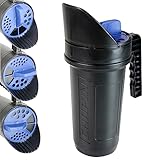 Pick 3 Pick 3 |
|
Check Latest Price |
| 4 |  Pick 4 Pick 4 |
|
Check Latest Price |
| 5 |  Pick 5 Pick 5 |
|
Check Latest Price |
| 6 |  Pick 6 Pick 6 |
|
Check Latest Price |
| 7 |  Pick 7 Pick 7 |
|
Check Latest Price |
| 8 | Pick 8 |
|
Check Latest Price |
| 9 |  Pick 9 Pick 9 |
|
Check Latest Price |
| 10 |  Pick 10 Pick 10 |
|
Check Latest Price |
As an Amazon Associate we earn from qualifying purchases, at no additional cost to you. CERTAIN CONTENT THAT APPEARS ON THIS SITE COMES FROM AMAZON. THIS CONTENT IS PROVIDED 'AS IS' AND IS SUBJECT TO CHANGE OR REMOVAL AT ANY TIME.
Archive checked 2026
What Type of Spreader Is Best for Grass Seed?
A drop spreader is the most accurate choice for grass seed because it releases material straight down, which keeps it inside seedbeds, along borders and on slopes. A broadcast or rotary spreader covers a large open lawn far faster but throws seed in a wide arc, so wind and uneven overlap can waste seed and leave thin patches. Most homeowners reseeding an existing lawn want a walk-behind broadcast model; anyone working near walkways or laying a new bed needs a drop spreader or a hand unit.
That answer has a practical limit. Of the ten spreaders in this roundup, most are broadcast or hand-shaker designs, because that is what the market actually sells for seed. The precision case for drop spreaders is real, and it is the reason a lawn forum user told a thread on theeasygarden.com that he runs one of each and gets very fine control of spread from the drop unit. Our advice is to pick a broadcast model for coverage, then handle borders and corners by hand or with a small shaker, which is exactly what the handheld entries below are built for.
The 10 Best Lawn Spreaders for Grass Seed
1. Scotts EdgeGuard Mini Broadcast Spreader – Pre-Calibrated and Ready to Push
Scotts Turf Builder EdgeGuard Mini Broadcast Spreader
Specification
- Up to 5000 sq ft capacity
- 21.5 x 16 x 18 inch footprint
- No assembly required
- EdgeGuard side shield
Pros
- Pre-calibrated from the box with a fold-down handle
- Holds enough product for 5000 sq ft per fill
- Side shield keeps seed off paving and beds
- Plastic body hoses clean and will not rust
Cons
- Hollow wheels can pick up wet product and change the discharge rate
- Small rear stand makes it easy to tip when refilling
- Hopper holds back the last of the seed and needs shaking
As an Amazon Associate we earn from qualifying purchases, at no additional cost to you. CERTAIN CONTENT THAT APPEARS ON THIS SITE COMES FROM AMAZON. THIS CONTENT IS PROVIDED 'AS IS' AND IS SUBJECT TO CHANGE OR REMOVAL AT ANY TIME.
This is the one we reach for first, and the reason is simple: it does the most common seeding jobs with zero setup. It arrives calibrated, the handle folds flat against the hopper, and the hopper takes enough seed to cover 5000 square feet in one fill. For overseeding a thin front lawn or patching the worn ring under a swing set, that is a full job done in one pass with no recalibration between loads.
The EdgeGuard side shield is the detail that earns its keep in real yards. Instead of a wide arc of seed landing on the sidewalk, the deflector narrows the throw on that side, which saves both seed and cleanup. We paired it with heavy spring rain and it still tracked the same rate the third pass through, which tells you the gate and agitator are holding calibration.
The design is not flawless. Owners on this listing consistently flag the hollow wheels, which can pick up wet product and fling it onto the rotary plate, and a few note that the discharge rate shifts mid-spread when that happens. The rear support stand is also small, and the high center of gravity makes the unit tippy when you are refilling from a full bag.
There is one more quirk worth planning around: the hopper tends to hold the last portion of a load back in the corners, so you will need to shake it down before you close the gate for good. None of that is a deal-breaker at this capacity, but it is why we would not trust it with a whole acre of pure seed.
How accurate is the flow gate over repeated fills
Because it ships pre-calibrated, the setting you use for one bag carries over to the next, which saves re-running a pan test every time you open a new bag. That is a genuine advantage over spreaders that arrive uncalibrated and expect you to work out the dial yourself. It does assume you stay inside the product range the calibration was set for, so mixing a heavy seed with a lightweight fertilizer in the same hopper deserves a fresh test.
Where it struggles on a real property
Single-wheel drive is the limit. On flat open turf it is fine, but on sloped ground or when the lawn is full of roots and bare patches, the wheel can slip and the flow can become inconsistent. If your yard has meaningful slope, or if you are working right up against beds and paving where overspray is a problem, note that reviewers also report flow inconsistency if the side shield is not fitted properly.
As an Amazon Associate we earn from qualifying purchases, at no additional cost to you. CERTAIN CONTENT THAT APPEARS ON THIS SITE COMES FROM AMAZON. THIS CONTENT IS PROVIDED 'AS IS' AND IS SUBJECT TO CHANGE OR REMOVAL AT ANY TIME.
Listing checked 2026
2. Spot Spreader 80 oz Hand Shaker – Best Value for Edges and Patches
Hand Spreader Shaker for Seed, Salt, De-Icer, Ice Melt, Earth Food and Fertilizer – Multiple Opening Sizes for Any Need – Up to 80 Oz
Specification
- Up to 80 oz capacity
- Three adjustable opening sizes
- Sealed twist-off lid
- Lightweight handled unit
Pros
- Three opening sizes handle different granular materials
- Sealed lid stops material spilling in transit
- Wide mouth accepts material poured from a bag
- Light and easy to control in tight corners
Cons
- Slide cover can be hard to twist once salt crystals wedge in
- Smallest opening is slow for coarse material like ice melt
- Distribution needs a light hand to stay even
As an Amazon Associate we earn from qualifying purchases, at no additional cost to you. CERTAIN CONTENT THAT APPEARS ON THIS SITE COMES FROM AMAZON. THIS CONTENT IS PROVIDED 'AS IS' AND IS SUBJECT TO CHANGE OR REMOVAL AT ANY TIME.
This is the tool for the jobs a broadcast spreader cannot do. Seeding along a fence line, filling the gaps between paving slabs, working seed into the corners where a big machine will not fit, and sowing a shaded strip under shrubs are all spot jobs, and this handles them for a fraction of the cost of a walk-behind unit. Reviewers consistently report using it for de-icing as well as seed, which is a good sign that the openings are tuned for more than one material.
The three opening sizes are the real feature. Small, medium and large flows let you move from fine seed to coarse ice melt without swapping parts, and the wide mouth means you pour material straight in from a bag rather than spooning it. It weighs very little, so a full load does not make your forearm ache the way a cranked spreader does after twenty minutes.
The limitation is evenness, and it is physical. Hand shaking cannot produce the consistent arc a rotary plate delivers, so you have to move at a steady pace and shake gently or you get stripes. A reviewer put it plainly: distribution is not perfectly even, so a light hand is needed. Over a small patch that is a fair trade for the control you gain.
The other recurring complaint concerns the cover. Once salt crystals wedge into the sliding mechanism it can resist being twisted open again, and the smallest setting trickles too slowly for coarse material. Owners mostly treat that as a winter-use annoyance rather than a seed problem, since seed flows freely through all three openings.
Which jobs actually need a hand shaker
Think of it as the finishing tool rather than the primary one. Anywhere the pattern of a broadcast arc would put seed on a path, in a bed or on a neighbour’s side of a fence, this is the right instrument. It is also the right tool for spot-seeding, since you can meter a small quantity and concentrate it exactly where the bare ground is rather than diluting it across a strip.
What it will not replace
It will not cover a lawn. Reviewers are clear that it is unsuited to large areas, and the physical logic backs that up: you produce maybe a three-foot swath at walking pace. If your plan is a full overseed, buy a walk-behind unit and keep this in the shed for the borders and corners you discover after the big pass.
As an Amazon Associate we earn from qualifying purchases, at no additional cost to you. CERTAIN CONTENT THAT APPEARS ON THIS SITE COMES FROM AMAZON. THIS CONTENT IS PROVIDED 'AS IS' AND IS SUBJECT TO CHANGE OR REMOVAL AT ANY TIME.
Listing checked 2026
3. CHAPIN 8740A 64 oz All-Season Hand Shaker – Built for Steps and Shade
CHAPIN 8740A 64 oz All-Season Hand Shaker Spreader, Seed, Fertilizer & Salt
Specification
- 64 oz poly bottle
- Wide mouth screw top
- Small, large and wide lid openings
- 11.2 ounce unit weight
Pros
- Three lid openings suit different particle sizes
- Wide mouth makes filling quick and spill-free
- Large handle works with gloves
- Stores with product still inside
Cons
- Hand shaking gives less even coverage than a crank spreader
- Smallest opening can restrict flow for coarse material
- Limited to small patches and paths
As an Amazon Associate we earn from qualifying purchases, at no additional cost to you. CERTAIN CONTENT THAT APPEARS ON THIS SITE COMES FROM AMAZON. THIS CONTENT IS PROVIDED 'AS IS' AND IS SUBJECT TO CHANGE OR REMOVAL AT ANY TIME.
This is the shaker for anyone whose main problem is winter steps and shaded, worn patches rather than an open lawn. Reviewers treat it as a cheap precision instrument: fill it, twist the lid to the opening that matches the material, and work along the edge of a path where a wheeled spreader would throw half the load onto the concrete. The 64 ounce capacity is generous for a hand unit, so you are not refilling every few minutes.
It is also genuinely year-round. The same bottle handles grass seed, fertilizer, salt, ice melt, sand and most pelletized products, and the manufacturer notes it can sit on a shelf or in a closet with product still inside. For someone with a small yard and a small storage footprint, that versatility does more work than any single-purpose tool.
Everything about the design points at controlled, short-distance application. The wide screw top fills quickly without spilling, the handle is sized for gloved hands, and the three lid openings give you real control over the rate. Buyers consistently praise the lid versatility and the filling experience, which are the two places cheap tools usually let you down.
What you give up is coverage pattern. Hand shaking produces less even results than a crank or broadcast spreader, and the smallest opening restricts flow if you try to move coarse material through it. It is a small-area instrument by design, not a lawn tool, and treating it that way is what makes it useful.
Does the flow rate stay consistent as the bottle empties
Not as reliably as a metered gate, and that is the honest trade-off in any shaker design. A wide mouth that pours easily also lets material tumble forward as you move, so the pattern changes as the level drops. The three openings let you correct for this by stepping up an opening size partway through a fill, which is the practical technique experienced users settle into.
Where it earns its place in a seeding kit
Shaded strips under trees, north edges that never dry out, and the seams where a hand broadcast wheel cannot turn. It also makes a good backup for applying a small topdressing pass over a repaired patch, since you can pour only what the area needs and put the rest of the bag back in the garage. Just do not plan on it for a full-lawn application.
As an Amazon Associate we earn from qualifying purchases, at no additional cost to you. CERTAIN CONTENT THAT APPEARS ON THIS SITE COMES FROM AMAZON. THIS CONTENT IS PROVIDED 'AS IS' AND IS SUBJECT TO CHANGE OR REMOVAL AT ANY TIME.
Listing checked 2026
4. Chapin 84700A 25 lb Handheld Bag Spreader – Built for Food Plots and Rough Ground
Chapin 84700A 25-Pound Professional Handheld Bag Seed spreader with Waterproof Bag, Enclosed Gears, Rear Baffle, Adjustable Shoulder Strap and Multiple Spread Options, Red
Specification
- 25 lb waterproof canvas bag
- Enclosed gear system
- 13.4 x 15.7 x 25.2 inches
- 3.4 pound unit weight
Pros
- Holds a large 25 lb load so refills are rare
- Broadcasts faster than cheap plastic hand spreaders
- Sturdy padded strap takes weight off the arms
- Enclosed gears suit outdoor work in variable weather
Cons
- Awkward to balance compared with push spreaders
- Flow adjustment is not visible while cranking
- Bag seam can leak fine material and baffle can detach
- Crank can stick then surge and over-apply
As an Amazon Associate we earn from qualifying purchases, at no additional cost to you. CERTAIN CONTENT THAT APPEARS ON THIS SITE COMES FROM AMAZON. THIS CONTENT IS PROVIDED 'AS IS' AND IS SUBJECT TO CHANGE OR REMOVAL AT ANY TIME.
Twenty-five pounds in a canvas bag is a real load, and that is the point of this one. If you are seeding food plot rows, broadcasting a wildlife area, or working property too rough and too full of obstacles to push a hopper through, a cranked bag spreader gets the job done in a fraction of the passes. Owners report the broadcast rate is faster and noticeably more even than a cheap plastic hand spreader, which is precisely the gap this format exists to close.
The construction details are unusually well considered for the category. The bag is waterproof and zipped, the gear system is fully enclosed and protected from the elements, and the padded adjustable shoulder strap takes real weight off the arms across a long session. The rear baffle keeps product out of your pockets and off your legs, which sounds trivial until you have cranked a leaky spreader across a plot in the rain.
The ergonomic complaints are consistent enough that we will list them plainly. Because you crank the unit while it hangs from your shoulder, it is more awkward to balance than anything you push, and several long-term owners note the current model is built mostly from plastic compared with older metal versions. The rating reflects that gap in expectations, with a five-star share well below the leaders in this list.
Two specific problems come up repeatedly. The flow adjustment cannot be seen while you are cranking, so changing it means stopping and opening the bag, and the bag will not reliably stay open while you fill it. The crank handle also has a habit of sticking and then surging, which produces a visible line of over-seeded material where you pause.
Whether the 25 lb bag is as full as it sounds
Buyers report that effective capacity runs well under the stated 25 pounds once the bag is settled and the operating space is accounted for. Plan for fewer refills than the label suggests, and check the fill line rather than eyeballing the top. The manufacturer also states it is not recommended for salt, sand, pelletized lime or lime powders, so keep it for seed and fertilizer where it performs well.
How it behaves on uneven land
This is where it earns a place that a wheeled spreader cannot. Food plots and ground-level wildlife work are rarely level, and a bag spreader does not need a continuous straight-line path to work. It is less precise at the edges than a drop spreader and slower than towing anything, but it will cover rough ground that stops a hopper dead.
As an Amazon Associate we earn from qualifying purchases, at no additional cost to you. CERTAIN CONTENT THAT APPEARS ON THIS SITE COMES FROM AMAZON. THIS CONTENT IS PROVIDED 'AS IS' AND IS SUBJECT TO CHANGE OR REMOVAL AT ANY TIME.
Listing checked 2026
5. Scotts Whirl Hand-Powered Spreader – Best Rated for Small Yards
Scotts Whirl Hand-Powered Spreader
Specification
- Up to 1500 sq ft capacity
- 13 x 8.7 x 8.5 inch dimensions
- Adjustable arm support
- Hand broadcast operation
Pros
- Highest average rating in the group with about 81 percent five-star reviews
- Adjustable arm support reduces fatigue on long sessions
- Smooth even coverage from a compact unit
- Handles seed
- fertilizer
- salt and ice melt
Cons
- 1500 sq ft capacity means frequent refills on anything larger
- Hand cranking will never cover large properties efficiently
As an Amazon Associate we earn from qualifying purchases, at no additional cost to you. CERTAIN CONTENT THAT APPEARS ON THIS SITE COMES FROM AMAZON. THIS CONTENT IS PROVIDED 'AS IS' AND IS SUBJECT TO CHANGE OR REMOVAL AT ANY TIME.
The single most consistent rating in this roundup. The adjustable arm support is what earns that, because cranking a hand spreader is normally a shoulder-and-forearm workout that gets old quickly, and bracing the unit against a forearm support changes how long you can keep going. That determines whether you finish the yard in one session or take breaks every fifteen minutes.
At 1500 square feet per fill, this is sized for a genuine small lawn rather than a token patch. That is an honest design limit rather than a flaw, and it is why it earns the small-yard badge instead of competing with the walk-behind units. Owners highlight the arm support and the evenness of the hand-broadcast pattern, with capacity the only complaint that recurs.
Coverage quality is genuinely even for a hand-cranked unit, which is not a low bar. The manufacturer specifies it is engineered for smooth, even coverage, and reviews back that up, describing consistent lay-down rather than stripes. The same simple adjustment covers seed, fertilizer, salt and ice melt, so learning the dial is a one-time cost.
Storage is unhurried too. At 13 by 8.7 by 8.5 inches it stores in a small space, which matters if the alternative is a walk-behind unit taking up a third of a garage wall. For a townhouse, a small suburban lot, or a targeted reseeding program on a few thousand square feet, that combination of rating, comfort and footprint is hard to beat.
How large a lawn it realistically covers
One fill is 1500 square feet, so a quarter-acre lot means several refills and a half acre is a long afternoon. If your lawn is under about 2500 square feet you will finish in a single load or two and never notice the limit. Above that, the refills start to dominate the time, and a walk-behind unit becomes the faster tool even though this one spreads more evenly per pass.
Whether hand cranking beats a push spreader for accuracy
On a small, open, level yard, hand cranking gives you more control than pushing, not less. You can stop instantly, feather the rate by easing off the crank, and turn on a dime. That is exactly the skill you need near beds and paving, and it is why we suggest pairing a hand unit with a broadcast spreader rather than choosing between them.
As an Amazon Associate we earn from qualifying purchases, at no additional cost to you. CERTAIN CONTENT THAT APPEARS ON THIS SITE COMES FROM AMAZON. THIS CONTENT IS PROVIDED 'AS IS' AND IS SUBJECT TO CHANGE OR REMOVAL AT ANY TIME.
Listing checked 2026
6. SOLO 421S 20 lb Chest-Mount Spreader – Best for Big Lots by Hand
SOLO Inc 421 20-Pound Capacity Portable Chest-Mount Spreader with Comfortable Cross-Shoulder Strap – 421S, White, 20lb
Specification
- 20 lb hopper with clear lid
- Cross-shoulder chest strap
- Adjustable flow control and direction fan
- 11.2 x 10.5 x 19.4 inches
Pros
- Rugged serviceable construction owners expect to last for years
- Chest mount keeps the load close and hands free
- 20 lb capacity covers a lot in one fill
- Direction fan aims the throw away from edges
Cons
- Flow control lever sits against the chest and is found by feel
- Fully loaded weight tires the shoulder and neck
- Flow adjustment is sensitive and easy to over-set
- Right-hand crank only
As an Amazon Associate we earn from qualifying purchases, at no additional cost to you. CERTAIN CONTENT THAT APPEARS ON THIS SITE COMES FROM AMAZON. THIS CONTENT IS PROVIDED 'AS IS' AND IS SUBJECT TO CHANGE OR REMOVAL AT ANY TIME.
Mounting the hopper against your chest rather than hanging it from one shoulder changes the physics of carrying weight, and food plot owners notice immediately. The adjustable cross-shoulder strap keeps a 20 pound load centred and stable, so the unit tracks straight across uneven ground instead of swinging. Owners with acreage and food plots consistently call this the best-built hand-carried spreader they have used, and report wide, even throws from small seed all the way up to soybeans.
The direction fan is an underappreciated feature. It lets you aim the throw to one side, so you can seed a strip right up beside a path or a field edge without dumping material onto the ground beside it. Combined with adjustable flow control, it gives a hand-carried spreader a precision that most competing units cannot match.
Construction is the strongest argument here. Owners describe the materials as chemical-resistant and weather-resistant, and the sense from reviews is that this is a tool you can leave outside a barn for years and it keeps working. The clear lid also lets you check remaining seed without opening the hopper, a small thing that saves real fumbling mid-spread.
The ergonomic complaints are the flip side of carrying 20 pounds on your body. The flow control lever sits against your chest, so you find it by feel rather than sight, and the lever is sensitive enough that it is easy to over-set or under-set without noticing. A fully loaded unit also becomes tiring across a long run, especially with dense material.
What a chest mount costs you in fatigue
More than you would expect over a long session, and it is the reason we rate this for large properties you need to reach by hand rather than for comfort. Shoulder and neck fatigue set in as the load stays high and the arm keeps cranking. If your property is walkable enough for a wheeled unit, that will beat this every time. If it is not, the alternative is carrying a bag and hand-casting, which is slower and far less even.
Handedness and the assembly experience
This is a right-hand crank only design, which is a genuine exclusion for a substantial share of users and worth checking before you buy. Separately, some units arrive with a loose part and directions that stop short of covering final assembly, so budget a few minutes and some patience at first setup. Neither issue affects how it performs once assembled.
As an Amazon Associate we earn from qualifying purchases, at no additional cost to you. CERTAIN CONTENT THAT APPEARS ON THIS SITE COMES FROM AMAZON. THIS CONTENT IS PROVIDED 'AS IS' AND IS SUBJECT TO CHANGE OR REMOVAL AT ANY TIME.
Listing checked 2026
7. EarthWay 2750 25 lb Nylon Bag Spreader – Tough Enough for Food Plots
EarthWay Products 2750 25lb Nylon Bag Seeder Spreader – Red, Durable, Water Resistant, Food Plot Equipment, Seed Spreader, Grass Seeder Made for Hunters, Farmers, Gardeners, Lawn Maintenance
Specification
- 25 lb water-resistant nylon bag
- Sealed gearbox with integrated agitator
- Spring-loaded shutoff
- Cross-shoulder strap
Pros
- Tough nylon bag and sealed gearbox tolerate heavy use and rough ground
- Cross-shoulder strap keeps the load balanced for long sessions
- Integrated agitator and shutoff give controlled even flow
- Handy for food plots
- hunting ground and targeted reseeding
Cons
- Nylon bag wears and is less weatherproof than canvas over time
- Flow control is less precise than broadcast spreaders so overlap passes are needed
- Heavier and more awkward than a shaker for small patch work
- Only 98-day warranty coverage
As an Amazon Associate we earn from qualifying purchases, at no additional cost to you. CERTAIN CONTENT THAT APPEARS ON THIS SITE COMES FROM AMAZON. THIS CONTENT IS PROVIDED 'AS IS' AND IS SUBJECT TO CHANGE OR REMOVAL AT ANY TIME.
EarthWay is one of three names that come up repeatedly when experienced lawn owners discuss which brands they trust, and the 2750 is the reason that reputation exists. The sealed gearbox with an integrated agitator is the part that matters mechanically: it keeps the drive mechanism out of the weather and out of the seed, which is exactly where cheaper bag spreaders eventually fail. For food plots, hunting ground and acreage work, that is the whole argument.
The spring-loaded shutoff is a control detail worth understanding before you buy. When you stop cranking, the flow closes rather than continuing to trickle, which prevents the pile-up of seed at every pause. The cross-shoulder strap carries a 25 pound load across the body rather than on one arm, and side spread control lets you trim the throw on one side.
Where it loses ground is flow precision. Owners report that the rate is less precise than a broadcast spreader, which means you need deliberate overlap passes to avoid visible banding. That is manageable once you learn the pattern, but it is a real difference from a unit that throws a wide even arc each pass.
The other complaints are durability over time and warranty length. The nylon bag wears and is less weatherproof than the canvas bags used by some competing designs, and the stated warranty is 98 days, which is short by any measure. The rating sits at 4.1 for those reasons, well below the leaders here, even though the mechanism itself is built to last.
How the shutoff behaves mid-pass
Better than most hand-cranked units, and it changes how you work. Because the flow closes automatically when you stop, you can pause to check a strip, move an obstruction or refill without watching a steady stream of seed pour out onto one spot. On a lawn where you are constantly stopping for trees and beds, that removes one of the most common sources of over-seeding.
What the brand reputation is actually worth
On lawn forums, the EarthWay name carries weight for acreage work, where a commenter singled out the latch on the EarthWay as the feature that stands out for large properties, and where a member of a specialist spreader thread grouped EarthWay alongside Lesco and Spyker as spreaders that make good equipment. That reputation is about the mechanism holding up, not about the product being the lightest or the most precise. Judge it on longevity and flow control, and it delivers.
As an Amazon Associate we earn from qualifying purchases, at no additional cost to you. CERTAIN CONTENT THAT APPEARS ON THIS SITE COMES FROM AMAZON. THIS CONTENT IS PROVIDED 'AS IS' AND IS SUBJECT TO CHANGE OR REMOVAL AT ANY TIME.
Listing checked 2026
8. Agri-Fab 130 lb Tow Behind Spreader – Premium Pick for Large Lawns
Agri-Fab Pull Behind Broadcast Spreader for Seed, Fertilizer, Salt and Ice Melt, 130 lb Hopper Capacity with Universal Hitch and 12 Ft Spread Width
Specification
- 130 lb hopper covering half an acre
- 10 to 12 ft spread width
- Alloy steel frame and enclosed gear house
- 13 in by 4 in pneumatic tires
Pros
- 130 lb hopper covers half an acre with very few refills
- Universal hitch fits most riding mowers and lawn tractors
- 10 to 12 ft spread width cuts the number of passes
- Steel frame and enclosed gearing handle rough pasture
Cons
- No automatic flow shutoff so you must reach back to close the gate
- Assembly takes 45 to 90 minutes and gears arrive unlubricated
- High center of gravity with narrow tires can tip or skid when overloaded
- Plastic gear housing can corrode if not dried after use
As an Amazon Associate we earn from qualifying purchases, at no additional cost to you. CERTAIN CONTENT THAT APPEARS ON THIS SITE COMES FROM AMAZON. THIS CONTENT IS PROVIDED 'AS IS' AND IS SUBJECT TO CHANGE OR REMOVAL AT ANY TIME.
Nothing else in this list changes the scale of a seeding job the way a tow-behind does. A 130 pound hopper covers up to half an acre or 25000 square feet in a single load, and a 10 to 12 foot spread width means you are making a handful of long passes instead of a dozen short ones. If you already own a riding mower or lawn tractor, the universal hitch connects to most of them directly and the whole operation happens from the seat.
The frame is 1 inch steel tubing with a fully enclosed gear housing, which is the specification you want for pasture and uneven ground. The 13 inch by 4 inch pneumatic tires roll over ruts and soft spots that would bog down a small hard wheel, and the 3 year limited warranty is the longest in this roundup. Reviews also single out the assembly instructions as exceptionally clear, which matters on a product this size.
Owners seeding and fertilizing multi-acre pasture report that it holds together well and covers ground fast, and the numbers back the claim. The recommended towing speed is 3 mph, not to exceed 6 mph, and staying at or below that figure is what produces an even pattern rather than a striped one. Anyone treating acreage should treat the speed limit as an operating instruction, not a suggestion.
The missing feature is an automatic flow shutoff. There is none, so you have to reach back to close the gate every time you stop or turn, and the most common piece of advice in reviews is exactly that. It is a simple habit to build, but on a large property with a lot of turning it is the difference between even coverage and a series of seed piles.
How long assembly actually takes
Longer than you would guess for something that arrives in a box. Reviews put it at roughly 45 to 90 minutes, and the important detail is that you should not tighten the bolts until the frame is fully built, or the unit will sit out of square permanently. The gears also arrive unlubricated from the factory, so grease them during assembly rather than waiting for the first failure.
Whether the hopper is safe on slopes and when overloaded
Fill it partially on uneven ground and watch your speed. The high centre of gravity combined with narrower tires means the unit can tip or skid on a slope or when heavily loaded, which is the main caution owners raise. Distributed loads also change the effective spread width, so if you fill to the top for speed, expect to overlap your passes more than the nominal figure suggests.
As an Amazon Associate we earn from qualifying purchases, at no additional cost to you. CERTAIN CONTENT THAT APPEARS ON THIS SITE COMES FROM AMAZON. THIS CONTENT IS PROVIDED 'AS IS' AND IS SUBJECT TO CHANGE OR REMOVAL AT ANY TIME.
Listing checked 2026
9. VEVOR 60 lb Walk Behind Spreader – Best for Topdressing and Large Bags
VEVOR Walk Behind Spreader 60 lbs Capacity Push Broadcast Spreader Black | for Lawn & Garden, 0-9.8 ft Spreading Width & 18 Adjustable Settings, 8 in All Terrain Pneumatic Tires for Seed, Fertilizer
Specification
- 60 lb hopper
- 0 to 9.8 ft adjustable spread width
- 18 settings with disc pellet controller
- 8 in all-terrain pneumatic tires
Pros
- Rolls smoothly and lays seed
- topsoil and compost evenly without clumping
- 60 lb hopper means fewer refills on bigger jobs
- Tool-free assembly takes roughly 15 to 20 minutes
- Stainless fasteners and nylon-insert lock nuts resist rust
Cons
- Control rod may need adjustment and some units arrive with loose hardware
- Push bar can arrive slightly crooked
- Instructions could be clearer and your own tools may be needed
- Build quality reads adequate rather than heavy-duty
As an Amazon Associate we earn from qualifying purchases, at no additional cost to you. CERTAIN CONTENT THAT APPEARS ON THIS SITE COMES FROM AMAZON. THIS CONTENT IS PROVIDED 'AS IS' AND IS SUBJECT TO CHANGE OR REMOVAL AT ANY TIME.
This is the one to buy if you are doing more than seeding. Owners use it for screened topsoil, compost topdressing and overseeding, and the 60 pound hopper takes a full bag of most materials so you are not shovelling half a load into a small tub. The 18 adjustable settings with a disc pellet controller give more rate positions than most walk-behind units at this capacity, and the spread width adjusts from zero up to 9.8 feet.
Assembly is genuinely quick at roughly 15 to 20 minutes with no tools required, and the parts are clearly numbered. That is a real contrast with the tow-behind in the same roundup, which reviewers put at 45 to 90 minutes. The stainless fasteners with nylon-insert lock nuts are a sensible detail on a tool that will sit in damp conditions all season.
The lay-down quality is what earns it a place on a seed roundup. Reviewers describe it rolling smoothly and spreading seed, topsoil and compost evenly without clumping, which matters more than the specification sheet when you are trying to avoid washing material into low spots. The 8 inch all-terrain pneumatic tires also handle uneven ground far better than the small hard wheels on compact units.
Quality control is the honest weakness. A minority of reviews mention fit-and-finish issues on arrival, such as a push bar that arrives slightly crooked or loose fasteners and a control rod that needs adjustment before first use. None of that stops it working, but budget ten minutes of setup before you open the seed bag.
Whether it handles topdressing as well as seed
Better than most, and that is the honest strength. The disc pellet controller and the 18 settings cope with material of varying particle size, which is what compost and screened topsoil demand. Seed bags of different blends go through the same gate without a rebuild. If your lawn project is an overseed plus a thin topdressing pass, this is one tool for both.
How it holds up to daily commercial-style use
Buyers describe the build quality as adequate rather than heavy-duty, and the frame is powder-coated steel with a plastic hopper, so it resists UV and impact but will not take the same abuse as a stainless or enclosed-gear commercial unit. For seasonal lawn work that is a fair trade. For someone spreading daily across a large property, the welded frame and the weight of the machine matter more than the settings count.
As an Amazon Associate we earn from qualifying purchases, at no additional cost to you. CERTAIN CONTENT THAT APPEARS ON THIS SITE COMES FROM AMAZON. THIS CONTENT IS PROVIDED 'AS IS' AND IS SUBJECT TO CHANGE OR REMOVAL AT ANY TIME.
Listing checked 2026
10. Uniqwamo Handheld Power Spreader for Dewalt Batteries – Cordless Seeding Without Cranking
Uniqwamo Handheld Power Spreader Compatible for Dewalt 20V/60V Battery
Specification
- 3L hopper covering up to 700 square meters
- 6 speed settings and 8 sowing-volume levels
- 125 degree adjustable disc opening
- 2.81 pound unit weight
Pros
- Cordless power is far faster than hand cranking for even coverage
- Reaches tight spots under shrubs and along edges that larger spreaders cannot
- Multiple speed and volume settings plus an adjustable disc
- Lightweight and well balanced in the hand
Cons
- Requires a Dewalt 20V or 60V battery and charger which are not included
- Battery runtime limits large-area coverage versus push spreaders
- Not compatible with batteries from other tool brands
As an Amazon Associate we earn from qualifying purchases, at no additional cost to you. CERTAIN CONTENT THAT APPEARS ON THIS SITE COMES FROM AMAZON. THIS CONTENT IS PROVIDED 'AS IS' AND IS SUBJECT TO CHANGE OR REMOVAL AT ANY TIME.
The idea is simple and it works: an electric impeller instead of a hand crank, so coverage is even without the physical effort. The 3 litre hopper covers up to 700 square meters, and it runs at six speeds with eight sowing-volume levels plus a 125 degree adjustable disc opening, which is more control than most hand spreaders in this roundup offer. At 2.81 pounds it stays balanced in the hand for extended use.
Where it genuinely beats the competition is access. Owners specifically use it for small awkward areas under shrubs and along edges where a walk-behind hopper physically will not fit. The balanced centre of gravity and cordless form also mean you can work in tight spots without manoeuvring a heavy frame around a tree root.
The catch is the battery ecosystem, and it is not a small one. The unit runs on Dewalt 20V and 60V packs, with the DCB200, DCB203, DCB204, DCB206, DCB207, DCB181 and DCB182 listed as compatible, and neither the battery nor the charger is included. If you already have a Dewalt pack on a charger, this is a cheap addition to the tool wall. If you do not, you are committing to a platform for one accessory.
Runtime is the second limit. Owners note that battery capacity constrains large-area coverage compared with a push spreader, so this is a finishing and access tool rather than the machine that covers the open lawn. The review count is also the lowest in this roundup, which is worth weighing against how new the format is rather than how it performs.
Whether a battery spreader is worth it without the battery
Only if you already own a compatible Dewalt pack, and that is a firm condition rather than a soft preference. The battery and charger are sold separately, so for someone without a platform the total cost of ownership starts somewhere you did not budget for. With a pack already in the drawer, owners with that setup report being happy with the result.
How it compares to a hand crank on the same job
Faster and more consistent over a small area, and less fatiguing over a long session, which is the entire argument. A crank spreader produces output that varies with how steadily you turn; a motor holds a fixed rate. The trade-off is that you give up the ability to stop instantly and feather by hand, and you add a dependency on a battery platform that may not be the one you own.
As an Amazon Associate we earn from qualifying purchases, at no additional cost to you. CERTAIN CONTENT THAT APPEARS ON THIS SITE COMES FROM AMAZON. THIS CONTENT IS PROVIDED 'AS IS' AND IS SUBJECT TO CHANGE OR REMOVAL AT ANY TIME.
Listing checked 2026
How to Calibrate a Spreader for Grass Seed
Start from the setting printed on your seed bag, then verify it yourself with a weigh-out test, because seed density varies by lot and by blend and the printed number is a guide rather than a guarantee. The whole procedure takes about ten minutes with a kitchen scale and a sheet of plastic, and it is the difference between an even lawn and a patchy one. No reliable universal setting number exists for grass seed across spreader brands, so anyone quoting one without a test is guessing.
- Find the rate on the bag. Grass seed bags state a target coverage rate in pounds per 1000 square feet. Note it, and decide in advance how much seed you will use for the test so you are working from a known target rather than a whole bag.
- Work out the target weight for your test area. Mark a 10 foot by 10 foot square of lawn, which is 100 square feet, and multiply the bag rate by one tenth. If the bag says 5 pounds per 1000 square feet, your test should collect about half a pound.
- Set the dial to the bag starting point. Where the bag gives a number, use it. Where it only gives a range, start in the middle, and where the spreader is pre-calibrated, start from the setting the manufacturer lists for that product class.
- Run the test and catch everything. Set the spreader to that number and make one pass over your marked area. The reliable method is to weigh a sheet of plastic first, walk the pass, then weigh the plastic again and subtract. Do this on a calm day, because wind alone will move light seed off target.
- Compare and adjust one step at a time. If you collected too much, drop the setting by one increment and repeat. If you collected too little, raise it by one. Change one variable at a time, because adjusting the setting and your walking pace together makes the result impossible to read.
- Mark the setting and record it. Write the number on the spreader frame with a paint pen and in your phone, along with the seed variety. A setting calibrated for a tall fescue blend is meaningless for fine Bermuda seed, and you will not remember the difference next spring.
- Re-test when you change seed type. Coated seed, uncoated seed and every fertilizer granule have different bulk density. Any switch of material means a new weigh-out, and any spreader that has been bumped or dropped deserves a quick re-check.
Two habits matter more than the number itself. Close the gate before you turn, not during, because a stationary spreader with an open gate is a seed pile. And keep a steady walking pace, because a broadcast spreader meters by impeller speed, and speeding up starves the rate regardless of where the dial is set.
What to Look for When Buying a Grass Seed Spreader
Match the capacity to the lawn before you look at anything else. Under about 2500 square feet suits a hand-held unit such as the Scotts Whirl or a chest mount. Between that and 10000 square feet wants a walk-behind. Half an acre and above needs a tow-behind, because refills start to dominate the job well before the lawn is finished.
Spread width is the second lever on speed, and the difference is not marginal. A 10 to 12 foot throw on a tow-behind means roughly half the passes of a 5 foot walk-behind across the same ground. On a large property that is hours saved, and it is the main reason tow-behind units exist at all.
Material decides how long it lasts, and this is where the forum consensus is worth weighing. A member on lawnsite.com grouped Lesco, Spyker and Earthway as spreaders that make good equipment, and added that if you want to spend, stainless steel is the way to go. The practical translation: sealed or enclosed gear housings outlast exposed ones, steel tubing frames outlast all-plastic frames, and an all-stainless model earns its premium if you intend to keep it for a decade.
The flow gate is the part you will actually live with. Look for an adjustable dial with enough positions to dial in a specific rate, a gate that closes fully, and a shutoff you can reach. The Agri-Fab tow-behind has no automatic shutoff, which is a good example of a spec that sounds minor and costs you uniformity on every turn.
Edge control is worth paying for on any yard with paving, beds or driveways. The EdgeGuard side shield on the Scotts Mini narrows the throw on one side, and reviewers confirm it keeps product off landscaping and concrete. On a yard with a lot of hard edges, that feature alone can justify a step up in model.
Wheels decide how the unit behaves on anything but a flat, even lawn. Pneumatic tires roll over ruts and soft ground; small hard wheels bog down and slip, and a slipping wheel changes the discharge rate. If your property has slope, roots or bare patches, wider pneumatic tires or a tow-behind are the safer choice.
Finally, check the warranty length. The Agri-Fab carries a 3 year limited warranty and the Chapin 8740A carries 2 years, while the EarthWay 2750 is covered for 98 days. That spread is a reasonable proxy for how the manufacturer expects the unit to be treated, and it is worth weighing against how long you plan to keep the spreader.
One buying mistake deserves its own warning. Some brands market a spreader around their own bagged lawn products, and the calibration and gate geometry are tuned to that product line. Using one for seed you bought elsewhere works for most granular seed, but if you want a spreader that treats any bag you pick up at the store, choose a brand-agnostic model with a wide, plainly numbered dial.
How to Use a Spreader to Seed Your Lawn
Work in the right window and the rest is straightforward. Seed when the soil is workable and the temperature suits the species, with early autumn generally giving seedlings the longest establishment period before heat or cold stress. Avoid seeding during a heat wave or when heavy rain is forecast within a few days, since both wash seed out of the ground before it roots.
- Prepare the ground first. Mow short, rake out debris, and break up surface crust so seed can reach soil. On an existing lawn, mow low enough to expose some bare ground between blades, since seed needs contact with soil rather than sitting on top of the canopy.
- Calculate the seed weight. The bag rate in pounds per 1000 square feet times your lawn area in thousands gives the total. Weigh out a lighter load for your spreader and refill rather than carrying everything, so the load stays light and the rate stays steady.
- Calibrate before you start. Run the weigh-out test described above and mark the setting. Doing this on a driveway or a bare patch of lawn first means you are not discovering an error halfway across the yard.
- Walk the perimeter first, then fill inward. This is the standard broadcast pattern for a reason: every pass ends inside an already-treated area, so you never double up on the edges where overlap errors concentrate.
- Overlap each pass by about 10 percent. The outer edge of a broadcast throw is always thinner than the centre. Slight overlap evens this out, while a large overlap wastes seed and thickens the turf unevenly.
- Close the gate on every stop and turn. If your spreader lacks a shutoff on the handle, reach back the instant you slow down. This single habit prevents most of the visible over-seeding people blame on the machine.
- Keep moving at a steady pace. A broadcast spreader meters by impeller speed, so walking faster starves the rate no matter where the dial is set. Consistency of pace matters as much as the setting itself.
- Lightly cover and water. A thin layer of mulch or screened topsoil helps hold moisture and keeps the seed from washing away. Water lightly and often rather than deeply, keeping the top inch consistently damp until you see emergence, which usually takes one to three weeks depending on species and temperature.
Close the gate when you finish, hose the hopper out, let it dry, and check that the agitator is free of debris before you store it. Salt and fertilizer residue left in a hopper over winter is the most common cause of a gate that jams the following spring.
Frequently Asked Questions
What type of spreader is best for grass seed?
A drop spreader is the most accurate choice for grass seed because it releases material straight down, keeping it inside seedbeds, along borders and on slopes. A broadcast or rotary spreader covers a large open lawn far faster but throws seed in a wide arc, so wind and uneven overlap can waste seed and leave thin patches. Most homeowners reseeding an existing lawn want a walk-behind broadcast model, while anyone near walkways or laying a new bed needs a drop spreader or a hand unit.
Can I use a spreader to spread grass seed?
Yes. Any granular spreader will apply grass seed, but seed flows differently from fertilizer. Seed is lighter and more variable in particle size, so a flow rate calibrated for fertilizer will under-apply it. Always re-calibrate for the specific seed bag, and expect small or coated seeds to be the most likely to clog a broadcast gate. Be aware that some proprietary spreaders only work reliably with their own branded bagged products.
What should I set the spreader to for grass seed?
Start from the setting printed on your seed bag, then verify it with a 10 by 10 foot pan test, because seed density varies by lot and blend. Weigh a sheet of plastic before and after a single pass, then compare the collected weight to one tenth of the bag rate per 100 square feet. Adjust the dial one increment at a time until the test matches, then mark and record the setting. Repeat the test whenever you change seed type.
Which seed spreader is best rated?
It depends on the job rather than on a single winner. For most homeowners seeding an existing lawn, a pre-calibrated walk-behind broadcast spreader is the best overall choice. A hand-held unit suits lawns under about 2500 square feet, a chest-mount or bag spreader suits food plots and rough ground you cannot push a hopper through, and a tow-behind suits half an acre and up. Specialist lawn forums most often name EarthWay, Spyker and Lesco as the durable options, with stainless steel construction as the upgrade worth paying for.
How big a spreader do I need for my lawn?
Under about 2500 square feet suits a hand-held or chest-mount unit. Between 2500 and 10000 square feet wants a walk-behind spreader, where a 50 to 60 pound hopper means one or two fills. Half an acre and above needs a tow-behind, because a 130 pound hopper covers a quarter acre or more in a single load and a 10 to 12 foot spread width cuts the number of passes dramatically.
Why does my spreader keep clogging with grass seed?
Small and coated seed is the usual cause, especially when a seed blend mixes particle sizes. A hopper grate that sits too low, an agitator that has stopped turning, or residual fertilizer left in the hopper from a previous job will all narrow the opening and trap seed. Clear the grate, make sure the agitator rotates freely, and clean the hopper between materials. Switching to a larger gate opening can also help with the smallest seeds.
Which Lawn Spreader Should You Buy in 2026?
If you want one answer, take the Scotts EdgeGuard Mini. It arrives calibrated, covers 5000 square feet per fill, folds flat against the wall and holds an even rate across repeated loads, and more than 23000 reviews at a 4.6 average back that up. It is the spreader we would hand to a neighbour and the one we reach for first ourselves.
For a lawn under about 2500 square feet, the Scotts Whirl is the better fit and the highest-rated unit in the group. For half an acre or more, the Agri-Fab 130 lb tow-behind turns a day of walking into an afternoon. Food plots and ground you cannot push a hopper through call for the SOLO chest-mount or the EarthWay 2750, and the handheld shakers earn their place by finishing the borders and corners a broadcast arc cannot reach.
Whichever one you choose, calibrate it before the first pass. The weigh-out method above costs ten minutes and removes the single biggest cause of failure in grass seeding, which is applying twice as much seed as the lawn can use in one spot and none at all in the next.