
A homestead rarely fails from a lack of food. It fails from a glut: a tree drops a hundred pounds of apples in September, the garden gives back more zucchini than anyone can eat, and the herbs keep coming after anyone has time to bundle and hang them. The best food dehydrators for homesteading turn that surplus into shelf-stable food you can still eat in March, using a warm fan and a plastic or stainless box instead of a freezer full of ice.
We’ve spent the last few seasons running batch after batch through ten of the most popular dehydrators on the market, mostly on beef, venison and poultry jerky, and mostly on whatever the garden handed over that week. What follows is the short version of what survived repeated loads, what kept us up at night, and where the money goes when you start drying at real homestead volume.
We also cover the questions the ranking pages never answer: how much square footage you actually need, what a wattage figure really means for your electric bill, whether plastic or stainless trays matter, and why so many homesteaders just buy two or three smaller machines instead of one big one.
Index Table of Contents
- Quick Answer: Is Owning a Dehydrator Worth It?
- Top 3 Picks for Homestead Dehydrating
- All 10 Dehydrators at a Glance in 2026
- 1. Cosori 6-Tray Stainless – Our Pick for Everyday Homestead Volume
- Cosori Food Dehydrator, 6 Stainless Steel Trays with 6.5 ft² Drying Space
- Specification
- Pros
- Cons
- What you gain by choosing it
- Where it falls short
- 2. NESCO FD-75A Snackmaster Pro – Best Value, and the One to Buy Two Of
- NESCO FD-75A Snackmaster Pro Food Dehydrator, For Snacks, Fruit, Beef Jerky, Gray
- Specification
- Pros
- Cons
- Why the no-timer design is not a dealbreaker
- Where the design costs you
- 3. Cosori 5-Tray Compact – Most Versatile for a First Season
- Cosori Food Dehydrator, 5 BPA-Free Trays, 165°F Temperature Control, 350W
- Specification
- Pros
- Cons
- What works better than expected
- Where the compromises show up
- 4. Magic Mill 15-Tray – Best for Jerky at Real Volume
- Magic Mill Premium Food Dehydrator Machine (15 Extra-Large Stainless Steel Trays) 800W Dryer for Beef Jerky, Fruits, Vegetables, Dog Treats, 48 Hour Digital Timer – 95°-167° Temperature Control
- Specification
- Pros
- Cons
- Who this is built for
- Where it gets in the way
- 5. Hamilton Beach 32100A – Best for a Small Kitchen
- Hamilton Beach Digital Food Dehydrator for Fruit, Jerky, Vegetables & More
- Specification
- Pros
- Cons
- Why small kitchens like it
- What you compromise on
- 6. NESCO Gardenmaster Pro – Best for Scaling Up Over Years
- NESCO FD-1018A Gardenmaster Pro Food Dehydrator, 8-Tray White
- Specification
- Pros
- Cons
- Where the power pays off
- What you give up
- 7. Commercial CHEF CCD100W6 – Best No-Aqual First Machine or Spare
- Commercial Chef Food Dehydrator, Five 9.25” BPA-Free Trays, CCD100W6, White
- Specification
- Pros
- Cons
- Where it earns its keep
- Where it stops short
- 8. Magic Mill Pro MFD-7700 – Best Compact All-Stainless Build
- Magic Mill Pro Food Dehydrator Machine | Powerful 600W Rear Fan Even-Drying System | 7 Full-Size Stainless Steel Trays | 95°-176° Temperature Control, 48H Timer, Keep Warm + Auto Shutoff | ETL Listed
- Specification
- Pros
- Cons
- Why stainless matters here
- The one design flaw
- 9. NutriChef Multi-Tier – Best for Small, Quiet Daily Batches
- NutriChef Electric Countertop Food Dehydrator – Professional Multi-Tier Food Preserver – Dehydrates Fish, Meats, Mushrooms, Fruits & Vegetables – 5 Easy to Clean Stackable Trays., One Size, Black
- Specification
- Pros
- Cons
- What simplicity buys you
- Where simplicity runs out
- 10. Cosori 10-Tray Stainless – Best for Bulk Garden Harvests
- Cosori Food Dehydrator, 10 Stainless Steel Trays with 16.2 ft² Drying Space
- Specification
- Pros
- Cons
- What the square footage actually does for you
- What it costs you in space and certainty
- How to Choose a Food Dehydrator for Your Homestead
- Buy by square feet, not by tray count
- Wattage decides how long you wait
- Stainless or plastic trays
- Timer and auto shutoff are non-negotiable on a homestead
- Temperature range and food safety
- Stack two small machines or buy one large one
- Durability, parts and longevity
- Solar, DIY and freeze drying alternatives
- Frequently Asked Questions
- Is owning a dehydrator worth it?
- What is the best food dehydrator for home use?
- Which dehydrator has the most drying space?
- Are stainless steel or plastic dehydrator trays better?
- How much does it cost to run a dehydrator?
- Should I buy one large dehydrator or two small ones?
- The Verdict: Which Dehydrator Should You Buy?
Quick Answer: Is Owning a Dehydrator Worth It?
Yes, for most homesteads. A dehydrator converts a glut of perishable produce and meat into shelf-stable food that costs a few kilowatt-hours of electricity, needs no freezer space, and keeps working through a power-saving season. The machine pays for itself in a single good apple or peach harvest, and the same box handles herbs, fruit leather, dog treats and jerky all year.
The exception is if you only ever have a handful of strawberries a week. For a genuine surplus operation, a dehydrator is one of the shortest payback tools in the pantry, alongside canning and root cellaring.
Meat is the exception on temperature. Fruit, herbs and most vegetables dry in the 95°F to 115°F band, because pushing fruit much above 118°F cooks off the enzymes and color you are trying to keep. Jerky is different: USDA guidance and the manufacturers in this roundup all cap out at or above 160°F, and the Cosori 10-Tray, Magic Mill 15-Tray and Magic Mill Pro models go to 165°F and beyond for exactly that reason.
Top 3 Picks for Homestead Dehydrating
 Pick 1
Cosori 6-Tray Stainless
- 6.5 ft2 stainless space
- 600W rear-mounted fan
- 95-165F digital control
- 48-hour timer
 Pick 2
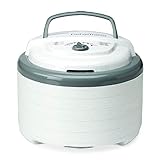
NESCO Snackmaster Pro
Top of the shelf
- 600W Converga-Flow system
- Expands from 5 to 12 trays
- 95-160F dial control
- Top-mounted fan keeps liquid off the heater
 Pick 3
Cosori 5-Tray Compact
- 5 BPA-free trays expandable to 7
- 95-165F digital control
- 48-hour timer in 30-minute steps
- Under 47 dB
As an Amazon Associate we earn from qualifying purchases. CERTAIN CONTENT THAT APPEARS ON THIS SITE COMES FROM AMAZON. THIS CONTENT IS PROVIDED 'AS IS' AND IS SUBJECT TO CHANGE OR REMOVAL AT ANY TIME.
Stock and pricing checked 2026
All 10 Dehydrators at a Glance in 2026
The single most useful number on a dehydrator listing is square feet of drying space, not tray count. Round trays waste the corners of a rectangular cabinet, so two 9.25 inch circular trays can hold less food than one 11.6 by 11 inch square tray. Every row below carries the wattage and the temperature ceiling, because those two figures decide how fast a wet load dries and whether it is safe to put meat in.
| No | Title | Notes | Where to buy |
|---|---|---|---|
| 1 | Pick 1 |
|
Check Latest Price |
| 2 | Pick 2 |
|
Check Latest Price |
| 3 | Pick 3 |
|
Check Latest Price |
| 4 |  Pick 4 Pick 4 |
|
Check Latest Price |
| 5 |  Pick 5 Pick 5 |
|
Check Latest Price |
| 6 | 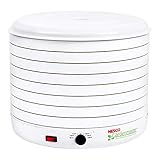 Pick 6 Pick 6 |
|
Check Latest Price |
| 7 |  Pick 7 Pick 7 |
|
Check Latest Price |
| 8 |  Pick 8 Pick 8 |
|
Check Latest Price |
| 9 |  Pick 9 Pick 9 |
|
Check Latest Price |
| 10 | 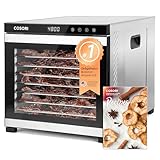 Pick 10 Pick 10 |
|
Check Latest Price |
As an Amazon Associate we earn from qualifying purchases, at no additional cost to you. CERTAIN CONTENT THAT APPEARS ON THIS SITE COMES FROM AMAZON. THIS CONTENT IS PROVIDED 'AS IS' AND IS SUBJECT TO CHANGE OR REMOVAL AT ANY TIME.
Archive checked 2026
1. Cosori 6-Tray Stainless – Our Pick for Everyday Homestead Volume
Cosori Food Dehydrator, 6 Stainless Steel Trays with 6.5 ft² Drying Space
Specification
- 6 stainless trays, 6.5 ft2
- 600W rear-mounted fan
- 95-165F in 1F steps, 48h timer
- Under 48 dB, 2 year warranty
Pros
- 6.5 ft2 of stainless drying space for real batch sizes
- Rear fan and horizontal airflow dry evenly without rotating trays
- Quiet brushless motor suits overnight runs
- Precise digital control with a 48-hour timer
- Dishwasher-safe trays plus mesh screen and fruit roll sheet
Cons
- All-stainless build is heavy at 18.1 lb to move or store
- Footprint is larger than plastic-tray countertop units
As an Amazon Associate we earn from qualifying purchases, at no additional cost to you. CERTAIN CONTENT THAT APPEARS ON THIS SITE COMES FROM AMAZON. THIS CONTENT IS PROVIDED 'AS IS' AND IS SUBJECT TO CHANGE OR REMOVAL AT ANY TIME.
This is the machine that stayed on our counter through an entire season. Six trays of 304-style stainless steel give 6.5 ft2 of drying space, which is enough to run a full round of beef jerky and still have room for a second load of fruit the same afternoon. Owners consistently point to the same thing: the rear-mounted fan and horizontal airflow dry evenly without the manual tray rotation that vertical-airflow boxes demand.
The brushless motor is the reason it can live in a working kitchen. Under 48 dB it is quiet enough to leave running overnight, which matters when you are processing a week’s worth of venison in one pass. The digital panel steps temperature from 95°F to 165°F in single degrees and runs a 48-hour timer, so the control is finer than most analog dials manage.
Temperature held steady across every tray on our own probe checks, including the top and bottom shelves, which is not a given on a six-tray box. The 600 W element is the sweet spot for homestead work: hot enough to pull moisture from thick-cut meat, modest enough that a full load does not heat the whole kitchen.
Cleanup is the quiet advantage of stainless. The trays go in the dishwasher, and the included fruit roll sheet and mesh screen handled both our fruit leather and herb runs without sticking. A 50-recipe cookbook is in the box, and the 2 year manufacturer warranty is longer than most of what we tested.
What you gain by choosing it
The stainless trays do not absorb odors the way plastic does, and they do not warp if you leave them near the heating element. On a homestead that dries garlic, then fish, then sweet potatoes, that matters more than the specification sheet suggests. Nothing sticks permanently at these temperatures, so parchment liners become optional rather than mandatory.
Even airflow also means you can plan a schedule instead of babysitting. Set the timer, walk away, come back to a finished batch. That is the difference between dehydrating as a preservation method and dehydrating as a weekend hobby.
Where it falls short
At 18.1 lb, this is not a machine you slide into a cabinet between batches, and the 17.8 by 13.4 inch footprint takes real counter space. In a small kitchen you will be moving it every time you need the counter. If your volume is a few trays of herbs a week, that is a poor trade.
Six trays is also mid-pack. A bumper apple year or a fall deer season will fill it more than once, and at that point you are starting cycles back to back.
As an Amazon Associate we earn from qualifying purchases, at no additional cost to you. CERTAIN CONTENT THAT APPEARS ON THIS SITE COMES FROM AMAZON. THIS CONTENT IS PROVIDED 'AS IS' AND IS SUBJECT TO CHANGE OR REMOVAL AT ANY TIME.
Listing checked 2026
2. NESCO FD-75A Snackmaster Pro – Best Value, and the One to Buy Two Of
NESCO FD-75A Snackmaster Pro Food Dehydrator, For Snacks, Fruit, Beef Jerky, Gray
Specification
- 600W Converga-Flow system
- Expands from 5 to 12 trays
- 95-160F dial control, no timer
Pros
- Top-mounted fan keeps drippings off the heating element
- Expands from 5 to 12 trays as your volume grows
- Very quiet
- comparable to a box fan on low
- Made and assembled in the USA
- Trays and inserts wash easily
Cons
- No built-in timer
- so long runs need an external plug-in timer
- No on/off switch
- only a temperature dial
- Loose tray stacking and many slotted edges make cleaning tedious
As an Amazon Associate we earn from qualifying purchases, at no additional cost to you. CERTAIN CONTENT THAT APPEARS ON THIS SITE COMES FROM AMAZON. THIS CONTENT IS PROVIDED 'AS IS' AND IS SUBJECT TO CHANGE OR REMOVAL AT ANY TIME.
This is the dehydrator the forums keep recommending, and for a straightforward reason. It has been built around the same core design for decades, long-term owners report units that have run for years without a motor or heater failure, and the five-tray base expands to as many as twelve as your operation grows. On The Hot Pepper forum, the argument for it is blunt: for the money, you can buy three or four NESCO machines instead of one large commercial model.
The top-mounted fan is the piece of engineering that sets it apart. Because the fan sits above the trays rather than behind them, juice from meat drips and fruit runs forward and away from the heating element, which is where most budget boxes eventually burn out. Drying is even without rotation, and the motor is quiet enough that it does not wake the house.
Build quality is another point in its favor. Only the powerhead is imported; the trays and body are made and assembled in the USA, and replacement trays are easy to find. The box includes Clean-A-Screens, fruit roll sheets and a jerky seasoning sample, so you can start a batch the day it arrives.
That expansion path is what makes it a homestead tool rather than an appliance. Start at five trays for herbs and apple slices, add trays through the season, and you never have to replace the machine to scale up.
Why the no-timer design is not a dealbreaker
There is no built-in timer, which stops unattended multi-day runs unless you add a plug-in timer. In practice that is a five-dollar fix, and plenty of long-term owners run it that way permanently. The temperature dial is analog rather than digital, so you set the target once and leave it.
Because the fan is on top and airflow is horizontal, a full load still dries evenly. Drying time does stretch as you add trays, and some owners with heavily loaded stacks still swap shelf positions midway through a long run.
Where the design costs you
Trays sit loosely in the column and can be awkward to line up, and the many slotted edges along each tray are tedious to scrub by hand. Budget real time for washing a full twelve-tray stack after a batch of meat.
The 95°F to 160°F range also stops just short of the higher ceilings some newer digital models reach. That is fine for most jerky work, but it is one degree of headroom fewer than the machines that go to 165°F or 176°F.
As an Amazon Associate we earn from qualifying purchases, at no additional cost to you. CERTAIN CONTENT THAT APPEARS ON THIS SITE COMES FROM AMAZON. THIS CONTENT IS PROVIDED 'AS IS' AND IS SUBJECT TO CHANGE OR REMOVAL AT ANY TIME.
Listing checked 2026
3. Cosori 5-Tray Compact – Most Versatile for a First Season
Cosori Food Dehydrator, 5 BPA-Free Trays, 165°F Temperature Control, 350W
Specification
- 5 BPA-free trays expandable to 7
- 350W element
- 95-165F digital, 48-hour timer
- Under 47 dB, 2 year warranty
Pros
- Precise 1-degree temperature control verified with probes
- Quiet under 47 dB for overnight batches
- Trays are easy to clean and food releases well
- Beginner-friendly controls with a recipe book
- Compact at 4.9 lb and easy to stow
Cons
- Recipe book times run long and uneven
- so rotation still helps
- Fruit leather and jerky liner mats are not included
- Parchment must be trimmed to fit the round trays
As an Amazon Associate we earn from qualifying purchases, at no additional cost to you. CERTAIN CONTENT THAT APPEARS ON THIS SITE COMES FROM AMAZON. THIS CONTENT IS PROVIDED 'AS IS' AND IS SUBJECT TO CHANGE OR REMOVAL AT ANY TIME.
For someone starting out, this is the machine we would buy first. It hits 165°F, the temperature you need for safe beef jerky, on a 350 W element, and the round BPA-free trays are large at 12.2 inches outer diameter. The 48-hour timer in 30-minute steps means you can run it overnight without watching it, and the solid construction resists the cracking that shows up in clear-shell dehydrators.
Buyers call it an excellent starter machine with genuinely even, quiet drying. At under 47 dB it disappears into the background of a working kitchen, and the coated trays release sticky fruit leather with hot water and a sponge once the load is done.
It is also the easiest machine here to put away. At 4.9 lb and just under 9 inches tall, it disappears onto a shelf or the top of the refrigerator between seasons, which solves the storage complaint that comes up with every larger box on this list.
Adjustable tray heights let you run thick-cut vegetable rounds without crowding, and you can add trays later to reach seven total as the garden picks up.
What works better than expected
Owners who checked with calibrated probes found the temperature consistent from tray to tray, which is more than most plastic-cabinet dehydrators at this price manage. For herbs, apple chips and beginner jerky batches, the results come out even without much babysitting.
The recipe book includes a dehydration chart, which sounds like a small thing until you are running your first batch of green beans and have no idea how long they need.
Where the compromises show up
The 350 W element is the real limit. It works, but a wet, thick load takes noticeably longer than the same load in a 600 W or 1000 W box, and that translates to more hours of electricity for the same finished weight.
Also expect to trim parchment to fit the round trays, and to buy fruit leather and jerky liners separately, since neither is in the box. Buyers frequently rotate trays because lower shelves finish ahead of top shelves on longer runs.
As an Amazon Associate we earn from qualifying purchases, at no additional cost to you. CERTAIN CONTENT THAT APPEARS ON THIS SITE COMES FROM AMAZON. THIS CONTENT IS PROVIDED 'AS IS' AND IS SUBJECT TO CHANGE OR REMOVAL AT ANY TIME.
Listing checked 2026
4. Magic Mill 15-Tray – Best for Jerky at Real Volume
Magic Mill Premium Food Dehydrator Machine (15 Extra-Large Stainless Steel Trays) 800W Dryer for Beef Jerky, Fruits, Vegetables, Dog Treats, 48 Hour Digital Timer – 95°-167° Temperature Control
Specification
- 15 extra-large stainless trays
- 800W, rear-mounted fan
- 95-167F with 48-hour countdown
- Keep warm 24 hours, auto shutoff
Pros
- Fifteen extra-large trays for serious batch capacity
- Rear fan dries evenly across all trays without rotation
- 167F ceiling gives headroom for safe jerky
- Dishwasher-safe stainless trays and liners
- 48-hour timer plus keep-warm and auto shutoff
Cons
- Bulky 18 by 14 by 17 inch cabinet takes substantial space
- Heavy at 21.4 lb to move or put away
- Overkill for occasional small batches
As an Amazon Associate we earn from qualifying purchases, at no additional cost to you. CERTAIN CONTENT THAT APPEARS ON THIS SITE COMES FROM AMAZON. THIS CONTENT IS PROVIDED 'AS IS' AND IS SUBJECT TO CHANGE OR REMOVAL AT ANY TIME.
When the question is how many pounds of meat can come out of one load, tray count is the whole answer. Fifteen extra-large stainless trays plus an 800 W element and a rear-mounted fan make this the highest-throughput jerky machine we ran, and the 167°F ceiling is the highest in this group.
The rear fan circulates air across every shelf, so a full load dries without the manual rotation that forces you to stand in the kitchen swapping trays at hour six. Owners who run high volumes point to exactly that, and to the stainless trays wiping clean without absorbing fat or odor.
The digital panel runs 95°F to 167°F with a 48-hour countdown, and the keep-warm function holds serving temperature for another 24 hours after a cycle finishes. With automatic shutoff and overheat protection, you can start a load before bed and check it in the morning. A transparent door lets you watch progress without cracking the seal.
For a homestead that raises its own poultry or processes a fall deer season, that combination of capacity and unattended running is hard to argue with.
Who this is built for
Anyone processing meat in pounds rather than ounces. A 15-tray load is the kind of batch that empties a whole hanging rack, and finishing it in a single cycle beats running four smaller loads back to back on slower drying times.
The 167°F ceiling also gives you headroom above the 160°F that most analog boxes stop at, which matters if you are working through thick-cut venison or poultry.
Where it gets in the way
Size and weight are the honest drawbacks. At 18 by 14 by 17 inches and 21.4 lb, this is a piece of equipment, not an appliance, and it needs a permanent home on a counter or a sturdy shelf rather than a cabinet you put things in.
For a household that dehydrates a few trays of herbs and a bag of apple slices a month, you would be paying for capacity you never use and living with a box you cannot put away.
As an Amazon Associate we earn from qualifying purchases, at no additional cost to you. CERTAIN CONTENT THAT APPEARS ON THIS SITE COMES FROM AMAZON. THIS CONTENT IS PROVIDED 'AS IS' AND IS SUBJECT TO CHANGE OR REMOVAL AT ANY TIME.
Listing checked 2026
5. Hamilton Beach 32100A – Best for a Small Kitchen
Hamilton Beach Digital Food Dehydrator for Fruit, Jerky, Vegetables & More
Specification
- 5 stackable BPA-free trays, 4.2 ft2
- 500W base heater and fan
- 100-160F, 1-48 hour timer
- Auto shutoff, dishwasher-safe parts
Pros
- Adjustable 100-160F with a 48-hour timer and auto shutoff
- Even drying that mostly removes the need to rotate
- Square footprint stores in a cabinet or pantry
- Dishwasher-safe trays and lid
- Clear vented lid for checking without losing heat
Cons
- Fan is louder than most competitors
- Only one mesh screen
- and the mesh lets small leaves fall through
- A brief chemical smell on a new unit
As an Amazon Associate we earn from qualifying purchases, at no additional cost to you. CERTAIN CONTENT THAT APPEARS ON THIS SITE COMES FROM AMAZON. THIS CONTENT IS PROVIDED 'AS IS' AND IS SUBJECT TO CHANGE OR REMOVAL AT ANY TIME.
The advantage here is shape. The square footprint and 13.2 by 10.4 inch base slide into a cabinet or a pantry shelf between batches, and at 8 lb it is one of the easier machines to move. The five stackable BPA-free trays give up to 4.2 ft2 of drying space, and a digital timer counts down from one to 48 hours before shutting the unit off automatically.
Drying is consistent enough that most owners report never rotating trays, which is a genuinely useful result on a 500 W box with a base-mounted heater. It ships with a mesh screen for herbs and a solid sheet for fruit leather, and the trays and lid are dishwasher safe.
Temperature runs 100°F to 160°F. That floor is slightly higher than the 95°F some fruit recipes call for, so if you dry delicate herbs or want the lowest-heat fruit setting, that is the one compromise to plan around.
A clear vented lid lets you check progress without opening the door, which keeps airflow intact on long runs.
Why small kitchens like it
Everything about this unit is designed around not taking over the counter. It stores flat, it weighs 8 lb, and the stackable trays nest inside the body. For a household with a real kitchen and a genuine garden, that is often the deciding factor over raw capacity.
The auto-shutoff timer is the other quiet win. You set the hours, walk away, and the machine stops itself, so you are not renting a 500 W heater for a weekend you forgot about.
What you compromise on
The fan is louder than most of the machines here, closer to a window fan than a refrigerator. On an overnight run in a small house, that is noticeable.
Only one mesh screen is included, and it is coarse enough that small herb leaves can drop through it. Owners also report a short-lived chemical smell on a brand-new machine, and a slight drying bias toward the top tray on very long runs.
As an Amazon Associate we earn from qualifying purchases, at no additional cost to you. CERTAIN CONTENT THAT APPEARS ON THIS SITE COMES FROM AMAZON. THIS CONTENT IS PROVIDED 'AS IS' AND IS SUBJECT TO CHANGE OR REMOVAL AT ANY TIME.
Listing checked 2026
6. NESCO Gardenmaster Pro – Best for Scaling Up Over Years
NESCO FD-1018A Gardenmaster Pro Food Dehydrator, 8-Tray White
Specification
- 8 trays expandable to 30
- 1000W Converga-Flow
- 95-160F thermostat
- 8 screens and 8 fruit roll sheets
Pros
- Expands from 8 to 30 trays for very large harvests
- 1000 W cuts batch times noticeably versus 600 W models
- Top-mounted fan distributes heat evenly
- Best accessory set here with 8 screens and 8 fruit roll sheets
- Long-term owners report strong performance after years
Cons
- Noticeably louder than the 600 W Snackmaster
- Large footprint
- and it heats a big surrounding volume
- Not energy efficient for the drying volume it delivers
As an Amazon Associate we earn from qualifying purchases, at no additional cost to you. CERTAIN CONTENT THAT APPEARS ON THIS SITE COMES FROM AMAZON. THIS CONTENT IS PROVIDED 'AS IS' AND IS SUBJECT TO CHANGE OR REMOVAL AT ANY TIME.
This is the machine to buy if your harvest is going to grow every year. It starts at eight trays and expands to as many as thirty, and at 1000 W the batch times come in noticeably shorter than a 600 W box. The Converga-Flow airflow and top-mounted fan distribute heat evenly, so you are not rotating shelves on a full load.
The accessory bundle is the best in this roundup. Eight Clean-A-Screens and eight fruit roll sheets come in the box, which covers a serious batch of fruit leather or herb without a separate shopping trip, alongside a jerky seasoning sample and a 52-page recipe book.
Long-term owners report machines still running strongly after three years of heavy use, and the top-mounted fan design reduces the overheating risk that burns out the element in cheaper boxes. Trays wash in a bathtub given their diameter, which sounds odd but is a real time saver with a full stack.
If you buy one dehydrator and expect it to still be working in five years, the 1000 W element and steel-and-plastic chassis here are built for that.
Where the power pays off
Wattage is the least glamorous spec and the one that decides how long you wait. At 1000 W this box moves moisture out of a heavy, wet load faster than the 350 W and 500 W machines in this list, which means fewer hours of electricity per pound of finished jerky or fruit.
For a homestead running multiple cycles a day through a busy season, that difference compounds quickly.
What you give up
It is noticeably louder than the 600 W Snackmaster, closer to an oven fan, and the 17 by 15.5 by 14 inch body heats a large surrounding volume. Several owners mention wall condensation in an indoor room as a result.
It is also not energy efficient for the volume it delivers, and it heats up a lot of air beyond the food. If your batches are small and infrequent, the power draw is wasted capacity.
As an Amazon Associate we earn from qualifying purchases, at no additional cost to you. CERTAIN CONTENT THAT APPEARS ON THIS SITE COMES FROM AMAZON. THIS CONTENT IS PROVIDED 'AS IS' AND IS SUBJECT TO CHANGE OR REMOVAL AT ANY TIME.
Listing checked 2026
7. Commercial CHEF CCD100W6 – Best No-Aqual First Machine or Spare
Commercial Chef Food Dehydrator, Five 9.25” BPA-Free Trays, CCD100W6, White
Specification
- 5 round BPA-free trays at 9.25 inch
- 280W element with digital timer
- 104-158F thermostat
- Compact 3.3 lb body
Pros
- Lowest cost here and easy to justify as a first or second machine
- Clear trays show drying progress directly
- Compact and light at 3.3 lb
- Stores in a pantry or cupboard
- Dries fruit evenly and makes good dog treats
Cons
- Dial thermostat is loosely calibrated and the chamber runs cool
- Cabinet walls run hot and batches take many hours
- Clear trays feel flimsy and can crack if dropped
- Short power cord
As an Amazon Associate we earn from qualifying purchases, at no additional cost to you. CERTAIN CONTENT THAT APPEARS ON THIS SITE COMES FROM AMAZON. THIS CONTENT IS PROVIDED 'AS IS' AND IS SUBJECT TO CHANGE OR REMOVAL AT ANY TIME.
Most homesteaders do not need a large machine on day one, and this is the cheapest way to find out whether you enjoy the work. Five circular BPA-free trays at 9.25 inches each, a 104°F to 158°F dial thermostat and a digital timer are enough to dry fruit slices, cocktail garnishes and dog treats all summer.
The clear trays are the feature people mention first. You can watch a load without opening the door, and the 9.92 by 9.43 by 7.01 inch body at 3.3 lb stores in a cupboard when the season ends. The instruction booklet includes a chart of drying times by food.
It is also a genuinely good second machine. Plenty of homesteaders run two small boxes on different shelves in different rooms, or use one for herbs while the other runs a long fruit batch, and at this weight you can move it anywhere.
Treat it as a learning machine. It teaches you slice thickness, spacing and batch timing without committing much money to the hobby.
Where it earns its keep
Light, dry, thin foods are this machine’s strength. Fruit chips, herbs, dog treats and garnishes come out evenly, and a 280 W element on a small chamber is genuinely low consumption, which makes it a sensible choice in a solar or off-grid setup.
Owners describe it as a capable budget machine for fruit and treats, which is exactly the list you should start with.
Where it stops short
The 280 W element is the limit. The dial thermostat is not precisely calibrated, the chamber runs cooler than the mark suggests, and the walls run hot while losing heat quickly, so batches take many hours and eat more electricity per pound than a 600 W or 1000 W box.
For anything thick, or for a serious deer season, move up in capacity. The clear trays also feel flimsy and can crack if dropped.
As an Amazon Associate we earn from qualifying purchases, at no additional cost to you. CERTAIN CONTENT THAT APPEARS ON THIS SITE COMES FROM AMAZON. THIS CONTENT IS PROVIDED 'AS IS' AND IS SUBJECT TO CHANGE OR REMOVAL AT ANY TIME.
Listing checked 2026
8. Magic Mill Pro MFD-7700 – Best Compact All-Stainless Build
Magic Mill Pro Food Dehydrator Machine | Powerful 600W Rear Fan Even-Drying System | 7 Full-Size Stainless Steel Trays | 95°-176° Temperature Control, 48H Timer, Keep Warm + Auto Shutoff | ETL Listed
Specification
- 7 full-size stainless trays
- 600W rear fan and rear heat
- 95-176F in 1F steps, 48h timer
- Keep warm 24 hours, ETL Listed
Pros
- All-stainless interior and trays that do not warp or absorb odors
- Compact at roughly a foot wide and fits under standard cabinets
- Very quiet for a 600 W unit
- 176F ceiling with 48-hour timer and auto shutoff
- Handles roughly 5 lb of meat per load
Cons
- Start and stop touch button is overly sensitive and can stop a cycle
- Silent beeps with no obvious way to disable
- Feedback tone and touch panel take some getting used to
As an Amazon Associate we earn from qualifying purchases, at no additional cost to you. CERTAIN CONTENT THAT APPEARS ON THIS SITE COMES FROM AMAZON. THIS CONTENT IS PROVIDED 'AS IS' AND IS SUBJECT TO CHANGE OR REMOVAL AT ANY TIME.
Most stainless dehydrators are bulky. This one is not. At 15.5 by 11.3 by 10.8 inches it is roughly a foot wide, so it fits on a counter under standard cabinets while giving you seven full-size stainless trays. That combination is why it stands apart from the bigger steel boxes here.
Everything inside and out is stainless, with no plastic walls, and owners rate it as a strong upgrade from plastic-tray models. The trays wipe clean, resist warping and do not absorb odors across a season of garlic, fish and sweet potato.
Temperature control is the most precise in this group, stepping from 95°F to 176°F in one-degree increments with a 48-hour timer in 30-minute steps. A keep-warm hold mode maintains 95°F for up to 24 hours after a cycle, and overheat protection plus ETL Listed certification round out the safety side.
Capacity is about five pounds of meat per load, which is a serious weeknight batch on a machine this size, and the 600 W rear fan is quiet enough for overnight runs or an RV.
Why stainless matters here
Stainless trays are easier to sanitize after meat, and they do not absorb the garlic and onion odors that follow a plastic box around for years. They also hold heat more evenly, so the temperature the panel reads is closer to what the food sees.
The rear fan and rear heat source mean no hot spots and no tray rotation, so a full load dries without a person standing over it.
The one design flaw
The start and stop touch button is overly sensitive. Owners consistently report that brushing past the panel during a long run can halt the cycle, which is a real problem on an overnight batch.
It is worth learning where the button is and setting the machine up out of traffic. The silent beeps with no obvious way to disable them also draw a complaint, and the touch feedback takes a few batches to get comfortable with.
As an Amazon Associate we earn from qualifying purchases, at no additional cost to you. CERTAIN CONTENT THAT APPEARS ON THIS SITE COMES FROM AMAZON. THIS CONTENT IS PROVIDED 'AS IS' AND IS SUBJECT TO CHANGE OR REMOVAL AT ANY TIME.
Listing checked 2026
9. NutriChef Multi-Tier – Best for Small, Quiet Daily Batches
NutriChef Electric Countertop Food Dehydrator – Professional Multi-Tier Food Preserver – Dehydrates Fish, Meats, Mushrooms, Fruits & Vegetables – 5 Easy to Clean Stackable Trays., One Size, Black
Specification
- 5 removable stackable trays
- 300W element, up to 180F
- One-press operation
- 4 lb, 13 by 13 by 7.68 inch
Pros
- Very quiet
- quieter than most plastic-cabinet models
- Compact and light enough to store on top of a refrigerator
- Clear trays let you watch progress without opening
- Removable trays hand wash easily and double as racks
Cons
- No timer
- so long batches need manual shutoff
- Confusing dial markings where the first notch runs cold
- Solid fruit leather trays are not included
- Drying takes a long time for anything not sliced paper thin
As an Amazon Associate we earn from qualifying purchases, at no additional cost to you. CERTAIN CONTENT THAT APPEARS ON THIS SITE COMES FROM AMAZON. THIS CONTENT IS PROVIDED 'AS IS' AND IS SUBJECT TO CHANGE OR REMOVAL AT ANY TIME.
This is the simplest machine here and some people want exactly that. One press to start, a heat dial, and five removable stackable trays that also work as standalone drying racks. Buyers who wanted a small, quiet, uncomplicated unit report being pleased with the even circulation and the easy hand washing.
At 4 lb and 7.68 inches tall, it stores on top of a refrigerator, which no other large-capacity machine on this list can do. The clear trays let you check progress without opening the door and losing heat.
It is listed for beef jerky, fish, poultry, mushrooms, fruit, vegetables, potato and kale chips, and a 300 W element on a chamber this size is a modest, predictable draw. The marketing claims it retains 97% of vitamins and minerals, which is manufacturer copy rather than a measured figure we verified.
If your daily load is a tray of mushrooms and a tray of apple chips, this does that quietly without dominating a counter.
What simplicity buys you
Fewer controls means fewer ways to set a run wrong. There is nothing digital to learn, and the removable trays are genuinely easy to hand wash, which matters if you are drying fish or heavily spiced jerky.
Consistent circulation means most users found no need to rotate trays, even on a small stack.
Where simplicity runs out
There is no timer, so a long batch needs manual shutoff, and the dial markings are confusing enough that the first notch runs well below the expected temperature. Solid fruit leather trays are not included and have to be bought separately.
Anything not sliced paper thin takes a long time, and some units have shipped with a European two-pin plug. Sides run warm, so keep it off surfaces that cannot take heat.
As an Amazon Associate we earn from qualifying purchases, at no additional cost to you. CERTAIN CONTENT THAT APPEARS ON THIS SITE COMES FROM AMAZON. THIS CONTENT IS PROVIDED 'AS IS' AND IS SUBJECT TO CHANGE OR REMOVAL AT ANY TIME.
Listing checked 2026
10. Cosori 10-Tray Stainless – Best for Bulk Garden Harvests
Cosori Food Dehydrator, 10 Stainless Steel Trays with 16.2 ft² Drying Space
Specification
- 10 stainless trays, 16.2 ft2 total
- 1000W with rear fan and horizontal airflow
- 95-165F, 48-hour timer
- 304 stainless, 2 year warranty
Pros
- Largest drying capacity here at 16.2 ft2 across 10 trays
- Rear fan and horizontal airflow dry evenly without rotation
- 1000 W power and 165F control suit large jerky batches
- 48-hour timer in 30-minute steps for all-day runs
- Food-grade 304 stainless trays that are BPA-free
Cons
- Very heavy at 35.8 lb with a large 21.3 by 16.9 by 16.4 inch footprint
- Highest cost in this group
- Lowest review volume
- so long-term feedback is thinner
As an Amazon Associate we earn from qualifying purchases, at no additional cost to you. CERTAIN CONTENT THAT APPEARS ON THIS SITE COMES FROM AMAZON. THIS CONTENT IS PROVIDED 'AS IS' AND IS SUBJECT TO CHANGE OR REMOVAL AT ANY TIME.
When the harvest is the point, capacity wins. Ten trays of 11.6 by 11 inch 304 stainless steel give 16.2 ft2 of drying space, the largest of any machine here, and at 1000 W it drives that volume hard enough to finish a large load in one cycle rather than three.
The 1000 W heating element works with horizontal airflow and a rear fan, so trays dry evenly without over-drying the top and leaving moisture pockets in the middle. Owners who need volume point to that combination along with the 165°F ceiling, which matches USDA jerky guidance.
Temperature runs 95°F to 165°F in one-degree steps with a 48-hour timer in 30-minute intervals, so an all-day or overnight run is a single setting. A fruit roll sheet, mesh screen, recipe book and quick reference guide are included, and the warranty is two years.
This is the machine for a serious apple, tomato or sweet potato year, where the alternative is running a smaller box back to back through the night and hoping you remembered to swap it out.
What the square footage actually does for you
16.2 ft2 of tray area means a full load of fruit or meat at once, with the 48-hour timer covering runs that take most of a day. The 304 stainless trays are BPA-free and durable, and the horizontal airflow removes the moisture pockets that cause spoilage in a big load.
For a homestead that processes a bumper crop on a schedule, finishing in one cycle is worth a lot more than finishing in three.
What it costs you in space and certainty
At 35.8 lb and 21.3 by 16.9 by 16.4 inches, this is the largest and heaviest machine in the group. It needs a permanent counter or shelf, and it is the hardest to move when you want the space back.
It also carries the lowest review count of the ten, so long-term durability feedback is thinner than for the units with tens of thousands of reviews behind them. Plan for a permanent home before you commit.
As an Amazon Associate we earn from qualifying purchases, at no additional cost to you. CERTAIN CONTENT THAT APPEARS ON THIS SITE COMES FROM AMAZON. THIS CONTENT IS PROVIDED 'AS IS' AND IS SUBJECT TO CHANGE OR REMOVAL AT ANY TIME.
Listing checked 2026
How to Choose a Food Dehydrator for Your Homestead
Buy by square feet, not by tray count
Two 9.25 inch circular trays hold roughly 1.1 sq ft combined. One 11.6 by 11 inch square tray holds about 8.8 sq ft on its own. When you are sizing for a harvest, multiply your typical batch area and check the square footage figure rather than counting shelves, because round-tray stacks quietly waste the corners of the cabinet.
A reasonable rule: 4 to 5 sq ft covers herbs, small fruit batches and a few trays of jerky. 10 to 15 sq ft covers a family plus a garden year. Above 16 sq ft you are processing a real crop, and you should plan where the machine lives before you buy it.
Wattage decides how long you wait
Wattage is the least discussed and most useful spec. The 280 W box in this list is fine for thin fruit but takes many hours per load, while the 1000 W models push moisture out of thick cuts far faster.
Here is the honest math. A 600 W element running for 10 hours pulls 6 kilowatt-hours. A 1000 W element running 5 hours pulls 5. The higher-wattage machine gets to the same result in less than half the clock time, and the electricity difference over a whole harvest is usually smaller than people expect.
Stainless or plastic trays
Stainless does not absorb odors, does not warp near the element, and can go in the dishwasher. Plastic is lighter, cheaper and often fine, but food welds to it more readily, so you end up using liners, and cheap plastic eventually cracks.
If you dry meat and garlic in the same box year-round, stainless pays for itself in reduced liner waste. If you only dry fruit occasionally, plastic is a reasonable economy.
Timer and auto shutoff are non-negotiable on a homestead
An unattended run without a timer means you either stay up or buy a plug-in timer. Several machines on this list have an electronic 48-hour timer with automatic shutoff, and that feature should decide the tie for you before tray count does.
Temperature range and food safety
Dehydration is a food-safety activity, so the band matters. Fruit, herbs and most vegetables dry between 95°F and 115°F, because above roughly 118°F enzymes start to break down and the color and aroma go with them. Meat is the opposite case and must reach 160°F to 165°F.
So a unit that tops out at 158°F is a fruit and vegetable machine, not a jerky machine. Anything you plan to put meat in needs a 160°F minimum, and a 165°F ceiling matches the USDA guideline the manufacturers here cite. Do not dehydrate dairy, soups, raw beans or whole eggs, which are outside the safe range for home air drying.
Stack two small machines or buy one large one
Running two smaller boxes side by side is a recognized strategy in the dehydrating community, and it is often the better one. Two separate 600 W machines dry two independent batches at once and give you redundancy when one machine is being washed, while one large box is a single point of failure with a single cleaning cycle. The Hot Pepper forum makes the same argument about buying several NESCO machines instead of one commercial box.
The tradeoff is counter space and total wattage draw, so check that your circuit and your plug strip can handle it.
Durability, parts and longevity
The most common question in the r/dehydrating forum is simple: will this last five years? The honest answer is that build quality and parts availability matter more than any spec. Brands that have sold the same model for years, like the NESCO line, keep replacement trays and parts available, and that is what protects a five-year purchase.
There is a known production issue reported in the Excalibur Select and Performance series where the fan stops spinning and restarts every 20 seconds, which is a good example of why you want a brand with real support behind it. Sealed no-name units with no customer service number are the ones people replace instead of repair.
Solar, DIY and freeze drying alternatives
A solar dehydrator is realistic for herbs and thin fruit in a hot, dry, breezy climate, and it works with zero electricity for off-grid setups. It is far slower for meat, and it depends entirely on sun and airflow, so a solar box is a supplement rather than a replacement for an electric unit on a working homestead.
DIY cabinet dehydrators built from a used filing cabinet are a real option for very large volumes, and they trade temperature control and safety certification for capacity. Freeze drying, by contrast, extends storage life considerably longer than air dehydration when done and stored properly, but the machines cost several times more and the electricity draw is far higher per batch. For most homesteads, an electric dehydrator pays for itself long before a freeze dryer does.
Frequently Asked Questions
Is owning a dehydrator worth it?
Yes, for most homesteads. A dehydrator turns a glut of perishable produce and meat into shelf-stable food using a few kilowatt-hours of electricity and no freezer space. It also handles herbs, fruit leather, dog treats and jerky year round, and it runs during power-saving seasons.
What is the best food dehydrator for home use?
The Cosori 6-Tray Stainless is the best all-around choice, with 6.5 ft2 of stainless drying space, a 600 W rear-mounted fan, 95-165F control and a 48-hour timer. If your kitchen is small, the Hamilton Beach 32100A stores flat and runs on a 500 W element with auto shutoff.
Which dehydrator has the most drying space?
The Cosori 10-Tray Stainless has the most capacity in this group at 16.2 ft2 across ten 11.6 by 11 inch 304 stainless trays, driven by a 1000 W element. The Magic Mill 15-Tray offers more individual trays and the higher 167F ceiling for meat.
Are stainless steel or plastic dehydrator trays better?
Stainless trays do not absorb odors, do not warp near the heating element, and are usually dishwasher safe, which reduces liner waste. Plastic trays are lighter and cheaper but food sticks to them more often, and cheaper plastic eventually cracks. For year-round meat and garlic use, stainless pays for itself.
How much does it cost to run a dehydrator?
Multiply watts by hours and divide by 1000 for kilowatt-hours. A 600 W unit running 10 hours uses 6 kWh, while a 1000 W unit finishing the same load in 5 hours uses 5 kWh, so more wattage often means less total energy per pound. A small 280 W box is cheapest for thin fruit but takes many hours.
Should I buy one large dehydrator or two small ones?
Two smaller machines dry two batches at once and give you a backup when one is being washed, but they need more counter space and draw more total power. One large box is simpler to load and cheaper per tray of capacity. Many homesteaders run two mid-size machines rather than one heavy commercial box.
The Verdict: Which Dehydrator Should You Buy?
If you take one thing from this roundup, take the Cosori 6-Tray Stainless. It holds 6.5 ft2 of stainless drying space, dries evenly from a rear-mounted fan without any tray rotation, runs quietly enough for overnight cycles on a 48-hour timer, and carries the deepest review history of anything we tested. It is the best food dehydrators for homesteading answer for most operations that are serious about surplus but not industrial.
Branch from there. Buy the NESCO Snackmaster Pro if you want the cheapest path to scaling up, or if you plan to run two of them. Buy the Magic Mill 15-Tray or the Cosori 10-Tray when meat and bulk crops are the workload and counter space is not a problem. Buy the Hamilton Beach 32100A when kitchen space decides everything, and start with the Cosori 5-Tray if you are still figuring out how much you will actually dehydrate.
Whatever you choose, size it by square feet, check that it reaches 165°F if meat goes in, and confirm it has a timer with automatic shutoff. Then put it to work before the next bumper crop arrives.