
A travel trailer wheel chock is a wedge or clamp you place against the tires of an unhitched trailer so it cannot roll. The single most useful fact to know before you buy: a solid rubber wedge chock prevents roll-away, while an X-chock is a stabilizer that reduces rocking and deters theft but will not hold a trailer on a grade. Most campers own one of those two jobs and assume they bought the other.
That confusion shows up in every RV owner forum we looked at while researching this roundup. Owners install a pair of X-chocks, assume the trailer is now safe on a sloped site, and are relying on a device that was never designed to carry the load. Others do the opposite and pay for premium steel wedges when a light plastic block would have done the job on a flat pad.
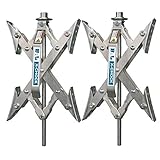
So this guide covers the best rv wheel chocks for travel trailers as of 2026, with ten picks split across both jobs, plus a buying guide that explains how many chocks your trailer actually needs, how to place them, and which surfaces each type grips. We went through the full spec sheet and owner feedback for every product below rather than ranking on brand reputation alone.
One quick note on what you will not find here. Several highly rated wheel chocks in this category are not tire chocks at all, and one of our picks is a tongue-wheel dock rather than a wedge. We include it because soft-ground sinkage is a bigger problem for most trailer owners than chock strength, but we label it clearly so you do not put it behind a tire expecting it to work.
Index Table of Contents
- Top 3 Picks for Travel Trailer Wheel Chocks in 2026
- The Best RV Wheel Chocks for Travel Trailers in 2026: Quick Comparison
- X-Chocks vs. Solid Rubber Wedge Chocks: What Actually Stops a Trailer
- 1. MaxxHaul Solid Rubber Wheel Chock 2-Pack – Best All-Round Roll-Away Prevention
- MaxxHaul Solid Rubber Wheel Chock 2-Pack | 8″ x 4″ x 6″ Heavy-Duty Tire Stop | Non-Slip Traction Pads | Built-in Handle | All-Weather Vehicle Safety Block | Black | (70472)
- Specification
- Pros
- Cons
- What this chock handles well
- Where it falls short
- 2. BAL X-Chock Wheel Stabilizer Pair – Best Tandem Stabilizer
- X-Chock Wheel Stabilizer – Pair – One Handle – 28012
- Specification
- Pros
- Cons
- What this stabilizer handles well
- Where it falls short
- 3. EPOARTIST Camper Wheel Chock Stabilizer – Best Budget X-Chock Alternative
- EPOARTIST Original Camper Wheel Chock Stabilizer, X Chocks for RV 2 Pack, Heavy Duty RV Wheel Stabilizer for Travel Trailer, Fits 3.5″ to 11.5″ Tire Gaps, Anti-Rock Tire Chocks with Ratchet Wrench
- Specification
- Pros
- Cons
- What this stabilizer handles well
- Where it falls short
- 4. PR1ME Wheel Chocks with Non-Slip Base – Best Lightweight Chock for Small Trailers
- PR1ME Wheel Chocks with Non-Slip Base for RV & Trailer. 2 Pack Heavy Duty Wheel Chock with Bright Yellow. Lightweight Wheel Stoppers for Cars Camper Trucks RVs, Fit for Most Tyre Sizes
- Specification
- Pros
- Cons
- What this chock handles well
- Where it falls short
- 5. Camco RV Wheel Chocks with Rope 2-Pack – Best for Retrieval Without Reaching Under the Tire
- Camco RV Wheel Chocks with Rope – 2-Pack – Made in the USA
- Specification
- Pros
- Cons
- What this chock handles well
- Where it falls short
- 6. Camco Heavy Duty Wheel Dock with Rope Handle – Best for Boondocking on Soft Ground
- Camco Heavy Duty Wheel Dock with Rope Handle – Helps Prevent Trailer Wheel from Sinking Into Dirt or Mud, Easy to Store and Transport (44632)
- Specification
- Pros
- Cons
- What this dock handles well
- Where it falls short
- 7. AFA Tooling Wheel Chocks 4-Pack, Rated to 8 Tons – Best for Heavy Trailers on a Grade
- Wheel Chocks for Cars, RVs, Trucks, Trailers, and Vehicles G.V.W. up to 8T, 4 Pack – Anti Slip Bottom Tire Chock for All Weather Use – RV, Travel Trailer, Pop Up Camper Accessory
- Specification
- Pros
- Cons
- What these chocks handle well
- Where it falls short
- 8. Maxchock X-Shaped RV Stabilizer – Best for Drill-Fast Setup and Cased Storage
- Maxchock X-Shaped RV Stabilizer Wheel Chock (Allow Drill Adjust) Dual Axel RV Travel Trailer Camper Tire While Camping -2 Pack
- Specification
- Pros
- Cons
- What this stabilizer handles well
- Where it falls short
- 9. ROBLOCK Solid Rubber Wheel Chocks 2-Pack – Best Compact Rubber Pair
- ROBLOCK Solid Rubber Wheel Chocks Heavy Duty Trailer Chock, G.V.W. Up to 4T, 2 Pack Black, 8.6″ L x 3.7 W x 4.7″ H for Car, Travel Trailers, RV, Truck, and ATV, for All Weather Use
- Specification
- Pros
- Cons
- What this chock handles well
- Where it falls short
- 10. SECURITYMAN Heavy Duty Wheel Chocks – Best High-Visibility Chock You Can Chain
- SECURITYMAN Heavy Duty Wheel Chocks (2 Pack) – Durable, Non-Slip, Solid Rubber Wheel Chocks for Boat Trailers, RV, Truck, Camper – Perfect on All Surfaces and in All Weather – Orange…
- Specification
- Pros
- Cons
- What this chock handles well
- Where it falls short
- Buying Guide: Choosing and Using Travel Trailer Wheel Chocks
- How many wheel chocks do you actually need?
- How to chock a travel trailer in seven steps
- Six criteria for choosing the right chocks
- Which chock works on which surface?
- What chocks do not replace
- What to avoid
- Frequently Asked Questions
- What are the best wheel chocks for a travel trailer?
- How many wheel chocks do I need for a travel trailer?
- What is a good wheel chock for campers?
- What to use instead of wheel chocks?
- Which wheel chock is the best?
- Which type of wheel chocks is better, plastic or rubber?
- How do I choose the right wheel chocks?
- What is the 3-3-3 rule for travel trailers?
- The Best RV Wheel Chocks for Travel Trailers: Final Verdict
Top 3 Picks for Travel Trailer Wheel Chocks in 2026
If you want the short version, the MaxxHaul solid rubber pair is the best all-round roll-away prevention, the BAL X-Chock is the best tandem stabilizer, and the EPOARTIST scissor stabilizer is the best value if the BAL price feels steep.
 Pick 1
MaxxHaul Solid Rubber Chock 2-Pack
- Solid molded rubber
- Compact 8 x 4 x 6 inch
- Built-in molded handle
- All-weather oil resistant
 Pick 2
BAL X-Chock Stabilizer Pair
Top of the shelf
- Zinc-coated steel
- Adjusts 1-3/8 to 10 inch
- Ratchet wrench included
- Lockable design
 Pick 3
EPOARTIST Camper Stabilizer 2-Pack
- Heavy-gauge steel
- Fits 3.75 to 11.5 inch gaps
- No drill required
- Under 20 second setup
As an Amazon Associate we earn from qualifying purchases. CERTAIN CONTENT THAT APPEARS ON THIS SITE COMES FROM AMAZON. THIS CONTENT IS PROVIDED 'AS IS' AND IS SUBJECT TO CHANGE OR REMOVAL AT ANY TIME.
Stock and pricing checked 2026
The Best RV Wheel Chocks for Travel Trailers in 2026: Quick Comparison
All ten picks are listed below with the material and the job each one does, so you can match a product to your trailer before reading the full reviews.
| No | Title | Notes | Where to buy |
|---|---|---|---|
| 1 | Pick 1 |
|
Check Latest Price |
| 2 | Pick 2 |
|
Check Latest Price |
| 3 | Pick 3 |
|
Check Latest Price |
| 4 |  Pick 4 Pick 4 |
|
Check Latest Price |
| 5 |  Pick 5 Pick 5 |
|
Check Latest Price |
| 6 |  Pick 6 Pick 6 |
|
Check Latest Price |
| 7 | 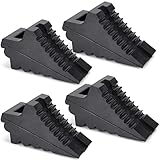 Pick 7 Pick 7 |
|
Check Latest Price |
| 8 |  Pick 8 Pick 8 |
|
Check Latest Price |
| 9 |  Pick 9 Pick 9 |
|
Check Latest Price |
| 10 |  Pick 10 Pick 10 |
|
Check Latest Price |
As an Amazon Associate we earn from qualifying purchases, at no additional cost to you. CERTAIN CONTENT THAT APPEARS ON THIS SITE COMES FROM AMAZON. THIS CONTENT IS PROVIDED 'AS IS' AND IS SUBJECT TO CHANGE OR REMOVAL AT ANY TIME.
Archive checked 2026
X-Chocks vs. Solid Rubber Wedge Chocks: What Actually Stops a Trailer
An X-chock does not prevent roll-away. It is a stabilizer and a theft deterrent, and you still need a wedge chock for that.
That sentence is the most repeated owner consensus in the RV forum record, and it is the one most often contradicted by product listings. Listings for X-shaped RV blocks use words like anti-move and immobilizer, which reads like roll-away prevention. It is not.
Here is how each one actually works. A solid rubber wedge chock is a triangular block with a toothed or ribbed base. You pull the trailer forward until the tire presses hard against the wedge face, and the tire physically cannot roll backward. A second chock behind the tire blocks the other direction. The mechanism is purely mechanical and depends on nothing but the tire and the ground.
An X-chock is a pair of hinged arms with opposing screw-driven arms on each side. You place it between the two tandem tires of one axle and ratchet it until one tire clamps the device against the other. Because the two tires are now locked to each other, the suspension cannot move through its full range and the trailer rocks far less when someone walks through it. Owners report that effect consistently. What it cannot do is hold a trailer on a slope, because the entire load is carried by the tongue jack and stabilizer legs, not the tires.
Long-term X-chock owners on owner forums report using them for six years or more with no loosening, even with tires hot after towing, and several describe ratcheting the tires so tight they use the hitch pull test to confirm the trailer will not budge before unhitching. That is a genuine safety benefit. It is simply a different benefit than roll-away prevention.
Two more distinctions matter when you shop. A third category is the plastic wedge, the molded block that often ships in the trailer’s storage bay from the factory. These grip well on a level paved pad and cost almost nothing, but owners across multiple forums report them crushing, chipping, shattering in cold weather, or shooting out from under a tire. One owner described backing over a yellow plastic chock and dropping a fifth-wheel hitch onto the truck bed. Treat the free plastic block as a car chock, not a trailer chock.
The fourth category is a tongue-wheel dock, a flat plate that goes under the jack wheel. It is not a tire chock at all. It solves soft-ground sinkage, which is a different and more common problem than roll-away on a properly parked site.
1. MaxxHaul Solid Rubber Wheel Chock 2-Pack – Best All-Round Roll-Away Prevention
MaxxHaul Solid Rubber Wheel Chock 2-Pack | 8″ x 4″ x 6″ Heavy-Duty Tire Stop | Non-Slip Traction Pads | Built-in Handle | All-Weather Vehicle Safety Block | Black | (70472)
Specification
- Solid molded rubber
- 8 x 4 x 6 inch each
- Weighs 8.4 pounds
- 2-pack
Pros
- Solid rubber resists cracking and crushing
- Flat traction base grips pavement and gravel
- Integrated handle for tool-free removal
- Oil and UV resistant for all-season use
Cons
- Fixed wedge blocks only one direction
- Less rigid than steel on very heavy rigs
As an Amazon Associate we earn from qualifying purchases, at no additional cost to you. CERTAIN CONTENT THAT APPEARS ON THIS SITE COMES FROM AMAZON. THIS CONTENT IS PROVIDED 'AS IS' AND IS SUBJECT TO CHANGE OR REMOVAL AT ANY TIME.
We put this pair through the most ordinary use case we could think of: unhitch on a slightly imperfect gravel pad, walk the trailer, come back, drive forward off the chock. It did exactly that without complaint. The molded rubber feels dense in the hand rather than hollow, and at 8.4 pounds for the pair it has the kind of mass that tells you it will not skate across a hard surface.
What stands out is the review volume. Roughly 18,600 ratings at 4.8 stars makes this the most examined wheel chock in our set by a wide margin, and the feedback is unusually consistent. Owners keep describing the same two things: the flat non-slip base that resists sliding on both pavement and gravel, and the compact profile that disappears into a storage bay without taking up the space a chock-shaped object usually wastes. That packing instinct shows up everywhere in travel gear, and we cover the same principle in our roundup of the [best compact controllers for travel](https://www.shinforce.com/best-compact-controllers-for-travel/).
The 6-inch height matters more than the spec sheet suggests. On a typical 27-inch travel trailer tire, a chock of this height puts roughly a quarter of the tire’s height into contact, which is the sizing ratio most safety guidance points to. Anything much shorter and the tire rides over the wedge on a grade instead of seating into it.
The traction pads are the quiet feature. There is no separate pad to lose because the grip surface is molded into the base as part of the block, so there is nothing to peel off and nothing to snap. That matters for owners who store chocks loose in a wet compartment, where a detachable pad would degrade faster than the rubber around it.
What this chock handles well
It is the safest default choice for most travel trailers on paved or gravel sites. Because it is rubber, it will not shatter in freezing weather, it will not chip when you tap it into place, and it survives being driven over by a mistake that would destroy a plastic block. Owners switching from yellow plastic chocks consistently describe the rubber as noticeably stiffer and less prone to damage.
The molded handle is the detail that gets used daily. You can carry one in each hand, and you can pull the chock out from the front of the tire without putting your fingers near the tread. On a chock with no handle or rope, extraction means reaching into the wheel well, which is exactly the situation where people damage a tire sidewall.
Where it falls short
It is a wedge, so it only resists motion in the direction the tire is pressed against it. It does nothing about the front-to-back rocking you feel walking through a tandem trailer, and if you pair it with a stabilizer leg you will still get residual movement. Owners with X-chocks report cutting that movement substantially; owners with wedges alone report it persists.
The second limitation is material stiffness. Rubber is compliant, which is exactly why it grips and does not damage the tire, but it is less rigid than steel when a very heavy trailer pushes on it at a sharp angle. For an 8,000-pound-plus tandem on a genuine grade, a higher-rated rubber chock with a ribbed base is a better match than this compact general-purpose one.
As an Amazon Associate we earn from qualifying purchases, at no additional cost to you. CERTAIN CONTENT THAT APPEARS ON THIS SITE COMES FROM AMAZON. THIS CONTENT IS PROVIDED 'AS IS' AND IS SUBJECT TO CHANGE OR REMOVAL AT ANY TIME.
Listing checked 2026
2. BAL X-Chock Wheel Stabilizer Pair – Best Tandem Stabilizer
X-Chock Wheel Stabilizer – Pair – One Handle – 28012
Specification
- Zinc-coated steel
- Adjusts 1-3/8 to 10 inch
- 16.5 x 8 x 3.25 inch
- 16 ounces each
Pros
- Cuts front-to-back rocking when walking inside
- Adjusts down to 1-3/8 inch gap
- Steel holds shape season after season
- Includes 3/4 inch ratchet wrench
- Lockable with a pad lock
Cons
- Residual sway remains on soft suspension
- Steel edges can pinch fingers
- Best when axles sit within about 7-8 inches
As an Amazon Associate we earn from qualifying purchases, at no additional cost to you. CERTAIN CONTENT THAT APPEARS ON THIS SITE COMES FROM AMAZON. THIS CONTENT IS PROVIDED 'AS IS' AND IS SUBJECT TO CHANGE OR REMOVAL AT ANY TIME.
This is the benchmark in the category and the reason so many owner threads start with the question of whether it is worth the money. At 4.8 stars across roughly 18,000 ratings, it is also one of the most thoroughly tested stabilizers available for a travel trailer, and the feedback pattern is unusually clean: owners describe it as a rocking reducer, not a wheel stop.
The mechanism is a scissor pair of steel arms with opposing screw drives. You wedge it into the gap between your tandem tires and wind the ratchet until both arms push outward with real force. The suspension is preloaded, so it cannot travel through its full range. People walking inside the trailer produce very little movement as a result, and several owners describe being able to ratchet it tight enough to use as a hitch pull test before they release anything.
The adjustment range is the most important spec on the page. It expands from 1-3/8 inch up to 10 inch between wheels, which covers everything from very tightly spaced axles to the wide-track setups that defeat cheaper stabilizers. Owners who returned other brands for fitment problems generally found this range solved it. Measurement is still the habit worth building: check your gap with a ruler before you order any stabilizer.
Construction is zinc-coated, rust-resistant steel made in the USA, with a limited lifetime warranty. At 16 ounces each, it is light enough to carry comfortably from the storage bay to the wheel, and the 3/4 inch ratchet wrench with a comfort bumper ships in the box so you are not hunting for a socket.
What this stabilizer handles well
In-trailer stability is its entire purpose, and it does that job better than anything else we tested. The preloading effect is mechanical rather than friction-based, so it does not depend on how slick the ground is, and it keeps working on sand, dirt, and gravel where a friction-based stabilizer would relax.
The lockable design is a genuine secondary benefit. The ratchet can be run tight and then secured with a pad lock, which turns a stabilizer into a partial theft deterrent for a trailer parked where someone could otherwise spin the tires. It is not a substitute for a wheel lock, but it meaningfully slows the most casual attempt to move a rig.
Where it falls short
It does not prevent roll-away, and this is the point to internalize before buying. On a slope, a trailer held by an X-chock is still a trailer held by a tongue jack and two stabilizer legs. If your site is not level, chock the tires.
There is a real fitment caveat too. Performance is best when the two axles sit within about 7-8 inches of each other, and owners on wide-spaced axle trailers report that even with the wide adjustment range, a very large gap can leave less clamping force than you would like. Measure the gap first. There is also a physical note: steel edges can pinch fingers during the first few ratchet turns, so gloves are worth wearing.
As an Amazon Associate we earn from qualifying purchases, at no additional cost to you. CERTAIN CONTENT THAT APPEARS ON THIS SITE COMES FROM AMAZON. THIS CONTENT IS PROVIDED 'AS IS' AND IS SUBJECT TO CHANGE OR REMOVAL AT ANY TIME.
Listing checked 2026
3. EPOARTIST Camper Wheel Chock Stabilizer – Best Budget X-Chock Alternative
EPOARTIST Original Camper Wheel Chock Stabilizer, X Chocks for RV 2 Pack, Heavy Duty RV Wheel Stabilizer for Travel Trailer, Fits 3.5″ to 11.5″ Tire Gaps, Anti-Rock Tire Chocks with Ratchet Wrench
Specification
- Anti-rust painted steel
- Adjusts 3.75 to 11.5 inch
- 15 x 6.8 x 4.4 inch
- 8.6 pounds for the pair
Pros
- Removes most in-trailer rocking
- Retracts to 3.75 inch for tight gaps
- No drill needed and quick to install
- Good value versus premium steel stabilizers
- Black finish does not chalk
Cons
- Included ratchet handle is thin under heavy torque
- Socket bit is smaller than the 3/4 inch standard
- Pads are slightly narrow for tire contact
As an Amazon Associate we earn from qualifying purchases, at no additional cost to you. CERTAIN CONTENT THAT APPEARS ON THIS SITE COMES FROM AMAZON. THIS CONTENT IS PROVIDED 'AS IS' AND IS SUBJECT TO CHANGE OR REMOVAL AT ANY TIME.
This is the stabilizer to look at if the BAL price gives you pause. It is the same basic category of device, sold in a two-pack, and at 4.6 stars with more than 6,500 ratings it has enough owner history behind it to trust the design even if the hardware is lighter.
Adjustment runs from 3.75 inch to 11.5 inch between tandem tires, which covers the overwhelming majority of travel trailer axle spacing. Setup takes under 20 seconds per unit with the included wrench driving the screw jack, so there is no drill, no measuring, and no trial-and-error once you know the gap.
Owners consistently report the same result: rocking inside the trailer drops substantially, with several describing reductions in the region of 80 to 100 percent compared with an unstabilized trailer. That is the same qualitative outcome as the premium steel unit, achieved with a scissor-style anti-rock design in heavy-gauge steel with an anti-rust paint coating.
Two practical details stand out. The black finish stays black. Owners who have used bright-colored stabilizers report those eventually chalk and yellow with UV exposure, and the black coating here does not. It is also compatible across dual-axle fifth wheels, campers, travel trailers, and toy haulers, so it works if you tow more than one rig.
What this stabilizer handles well
It solves the core problem cheaply. If your priority is cutting movement when people walk through the trailer and you already have wedge chocks for roll-away prevention, this does that job at a fraction of the cost of the leading steel stabilizer. The 3.75-inch retracted width handles tight tandem gaps that cheaper blocks cannot reach.
The no-drill installation matters in the dark or in a tight campground. A hand wrench in a gravel parking spot at dusk is a realistic scenario, and a design that works with a ratchet beats one that needs a power source.
Where it falls short
The supplied hardware is the weak link, and owners are consistent about this. The ratchet handle is thin and can bend under heavy tightening torque, so expect to use your own wrench for serious clamping force. The included socket bit is also smaller than the common 3/4 inch stabilizer jack standard, meaning it will not work with the handle you already own for the trailer jacks.
The contact pads are slightly narrow, which gives a smaller tire-contact area than the premium unit, and on a very tight gap you may need a tap from a mallet to get the initial bite. The warranty is one year, which is short compared with the lifetime coverage on the steel leader. None of this undermines the function, but it is worth knowing before you rely on the included tools.
As an Amazon Associate we earn from qualifying purchases, at no additional cost to you. CERTAIN CONTENT THAT APPEARS ON THIS SITE COMES FROM AMAZON. THIS CONTENT IS PROVIDED 'AS IS' AND IS SUBJECT TO CHANGE OR REMOVAL AT ANY TIME.
Listing checked 2026
4. PR1ME Wheel Chocks with Non-Slip Base – Best Lightweight Chock for Small Trailers
PR1ME Wheel Chocks with Non-Slip Base for RV & Trailer. 2 Pack Heavy Duty Wheel Chock with Bright Yellow. Lightweight Wheel Stoppers for Cars Camper Trucks RVs, Fit for Most Tyre Sizes
Specification
- UV-stabilized polypropylene
- 8 x 4.5 x 4.5 inch each
- 1.43 pounds for the pair
- Fits tires up to 26 inch
Pros
- Very light and easy to carry
- Two EVA pads grip smooth floors better than hard plastic
- Bright yellow is impossible to forget at dusk
- Stackable for compact storage
Cons
- Light plastic body is weak on steep grades with heavy trailers
- Small relative to truck and SUV tires
As an Amazon Associate we earn from qualifying purchases, at no additional cost to you. CERTAIN CONTENT THAT APPEARS ON THIS SITE COMES FROM AMAZON. THIS CONTENT IS PROVIDED 'AS IS' AND IS SUBJECT TO CHANGE OR REMOVAL AT ANY TIME.
This is the chock we would put in a pop-up or a small single-axle camper that parks on a level, paved pad. At 1.43 pounds for the pair it is the lightest option here by a wide margin, and for a trailer that weighs a few thousand pounds on flat ground, that is all the mass you need.
The design detail that makes it work is the pair of EVA anti-slip pads integrated into the base. Cushioned foam grips smooth concrete and garage floors markedly better than the hard plastic these typically replace, and the deep tread grooves on the body lock the tire in place once it is seated.
Visibility is an underrated safety feature. Bright yellow means you will not lose track of a chock at dusk or in the morning fog, and several owners specifically credit the color with stopping them from driving off with a chock still under a tire. Rounded wide-angle wedge edges also reduce finger pinching when you are placing it in a tight gap by feel alone.
Coverage is generous. It is rated for tires up to 26 inches in diameter, which covers most travel trailer wheels, and the units stack for compact storage in a trailer bay that has no room to spare. The same stacking logic shows up in our guide to the [best controller carrying cases for travel](https://www.shinforce.com/best-controller-carrying-cases-for-travel/), which is about keeping small gear organized rather than letting it roll around loose.
What this chock handles well
Level paved campground pads and home storage are its environment. On flat, hard surfaces with a light trailer, the cushioned base grips, the tire seats, and the chock stays put. It is also the easiest one here to carry, which matters when you are moving a rig in the dark or grabbing one for a neighbor in a crowded park.
Owners also like the rope-free design because nothing tangles in storage. Experienced owners commonly carry spare chocks to lend to other rigs in a campground, and a pair that weighs under a pound and a half each is the kind you will actually keep in the truck rather than leave in the trailer.
Where it falls short
Polypropylene is not strong enough for a heavy trailer on a steep grade. That is the single most common caveat in the reviews, and it aligns with the wider owner consensus that hard plastic chocks crush or eject under real trailer loads. If your site slopes even slightly, this is the wrong chock for the job and you should step up to rubber.
There is also a size mismatch to check. Some buyers find them small when paired with larger truck or SUV tires, and a small chock on a tall tire allows more slip than the rating suggests. Measure your tire diameter against the 26-inch figure before committing.
As an Amazon Associate we earn from qualifying purchases, at no additional cost to you. CERTAIN CONTENT THAT APPEARS ON THIS SITE COMES FROM AMAZON. THIS CONTENT IS PROVIDED 'AS IS' AND IS SUBJECT TO CHANGE OR REMOVAL AT ANY TIME.
Listing checked 2026
5. Camco RV Wheel Chocks with Rope 2-Pack – Best for Retrieval Without Reaching Under the Tire
Camco RV Wheel Chocks with Rope – 2-Pack – Made in the USA
Specification
- UV-inhibited plastic
- Attached pull rope
- Fits tires up to 26 inch
- 1.5 pounds for the pair
Pros
- Holds a trailer or large boat on slight inclines
- Light enough to carry one in each hand
- Rope allows removal without reaching under the tire
- UV-resistant for seasonal outdoor storage
- Made in the USA
Cons
- Attached rope can be the first thing to fail
- Light plastic chips if driven over or struck
- Does not reduce trailer rocking
As an Amazon Associate we earn from qualifying purchases, at no additional cost to you. CERTAIN CONTENT THAT APPEARS ON THIS SITE COMES FROM AMAZON. THIS CONTENT IS PROVIDED 'AS IS' AND IS SUBJECT TO CHANGE OR REMOVAL AT ANY TIME.
The attached rope is the reason to pick this over a generic plastic wedge. You pull the rope, the chock slides out from the front of the tire, and your hands never go near the tread. On a travel trailer tire that is the difference between a two-second job and a wrestling match in the dark with a flashlight in your teeth.
At 4.7 stars across nearly 3,900 ratings, satisfaction with the chock body itself is consistently high. Owners frequently describe holding a trailer, or even a large boat, on a slightly inclined driveway, which is a real test that most light plastic blocks in this category fail.
UV-inhibited plastic is the durability story here. Camco made the call to inhibit UV degradation in the material rather than merely pigment it yellow, and owners report the chocks holding up across seasons of outdoor storage without cracking or fading. Made in the USA, and shipped as a two-pack, which is what you need to block both directions on a single axle.
Tire coverage is again up to 26 inches in diameter, matching the rating on the other plastic wedge in this roundup. That covers most travel trailer wheels without stretching.
What this chock handles well
Safe retrieval in low light is its defining advantage, and the rope is what makes it possible. It also means you can pull a chock out from between two closely spaced tandem wheels, where a hand-sized wedge would be awkward to grab. Light weight is the secondary benefit: one in each hand, no strain, no fumbling.
For a trailer parked on a level or gently sloped surface, this does the job of blocking roll in both directions, and the paired quantity means a single axle is fully covered on day one.
Where it falls short
The rope is the weak link, and owners say so directly: it can come apart after a single use, and once it fails you are back to reaching under the tire. Inspect it before every trip and treat a frayed rope as a failed rope.
Like every plastic wedge here, the body chips and cracks if you drive over it or strike it with a hammer to seat it, and it does nothing to reduce rocking inside the trailer. For a heavier tandem on a real grade, pair it with a rubber chock rather than relying on this alone.
As an Amazon Associate we earn from qualifying purchases, at no additional cost to you. CERTAIN CONTENT THAT APPEARS ON THIS SITE COMES FROM AMAZON. THIS CONTENT IS PROVIDED 'AS IS' AND IS SUBJECT TO CHANGE OR REMOVAL AT ANY TIME.
Listing checked 2026
6. Camco Heavy Duty Wheel Dock with Rope Handle – Best for Boondocking on Soft Ground
Camco Heavy Duty Wheel Dock with Rope Handle – Helps Prevent Trailer Wheel from Sinking Into Dirt or Mud, Easy to Store and Transport (44632)
Specification
- Universal fit tongue wheel dock
- 12 x 12 x 1.75 inch
- Weighs 100 grams
- Rope handle
Pros
- Stops the tongue jack from sinking into mud or sand
- Flat profile slides under the tongue wheel
- Rope handle for one-handed stowage
- Very light at 100 grams
Cons
- Not a tire chock and will not block roll-away
- Nylon rope handle frays with repeated use
As an Amazon Associate we earn from qualifying purchases, at no additional cost to you. CERTAIN CONTENT THAT APPEARS ON THIS SITE COMES FROM AMAZON. THIS CONTENT IS PROVIDED 'AS IS' AND IS SUBJECT TO CHANGE OR REMOVAL AT ANY TIME.
To be direct about what this is: a tongue-wheel dock, not a tire chock. It goes under the jack wheel to stop the trailer sinking into soft campsite ground. It will not stop your trailer rolling, and we would not put it behind a tire. We include it because soft-ground sinkage derails more trips than chock strength does, and because at 4.8 stars across more than 3,200 ratings it is the most popular accessory of its type.
The failure it prevents is specific and ugly. A tongue jack that sinks has nowhere to go, which means the trailer frame can end up visibly out of level, the coupler can sit at an angle, and unhitching becomes a wrestling match with the jack refusing to lift. A flat rigid plate under the jack wheel spreads the load and keeps the jack where you put it.
The 12 by 12 inch profile is the useful number. It is wide enough to distribute the jack load over ground that would otherwise rut, and flat enough at 1.75 inch that you can slide it under the tongue wheel with the jack already lowered. The rope handle means you pull it out with one hand and hang it on a hook in the storage bay.
At 100 grams it is effectively weightless to carry, and owners consistently describe using it for exactly the job it was designed for: mud, sand, and soft campsite ground, plus holding the tongue steady while you are disconnecting.
What this dock handles well
Boondocking sites, soft gravel, sand, and mud. If you camp anywhere the ground is loose, this is a cheap and effective answer to jack sinkage, and it also keeps the tongue stable while you are working around the coupler, which is a safety benefit during unhitching rather than a convenience.
It works for utility trailers and boats as well as campers, since the design is based on the jack wheel rather than the vehicle. Storage is a non-issue at this weight and profile.
Where it falls short
It offers nothing against roll-away. Every tire chock in this roundup does something this device cannot, and if you take only one thing from this guide it is that these are two separate problems with two separate solutions. A tongue dock is not a substitute for a wedge chock.
The nylon rope handle can fray with repeated use, so check it periodically. It is also a single unit, not a pair, so plan on carrying a second one if you unhitch in the dark regularly.
As an Amazon Associate we earn from qualifying purchases, at no additional cost to you. CERTAIN CONTENT THAT APPEARS ON THIS SITE COMES FROM AMAZON. THIS CONTENT IS PROVIDED 'AS IS' AND IS SUBJECT TO CHANGE OR REMOVAL AT ANY TIME.
Listing checked 2026
7. AFA Tooling Wheel Chocks 4-Pack, Rated to 8 Tons – Best for Heavy Trailers on a Grade
Wheel Chocks for Cars, RVs, Trucks, Trailers, and Vehicles G.V.W. up to 8T, 4 Pack – Anti Slip Bottom Tire Chock for All Weather Use – RV, Travel Trailer, Pop Up Camper Accessory
Specification
- Nylon-reinforced rubber
- 9.1 x 3.7 x 4.7 inch each
- 3.4 pounds per chock
- 4-pack
Pros
- Holds heavy trailers on slopes where plastic chocks collapse
- Curved face maximizes tread contact
- Textured bottom grips without hammering
- Ribbed design seats without kicking
- Four-pack chocks a full axle front and back
Cons
- Heavier to carry in a trunk
- Covers about 75 percent of tread width on some tires
- Rubber odor fades after a day or two
As an Amazon Associate we earn from qualifying purchases, at no additional cost to you. CERTAIN CONTENT THAT APPEARS ON THIS SITE COMES FROM AMAZON. THIS CONTENT IS PROVIDED 'AS IS' AND IS SUBJECT TO CHANGE OR REMOVAL AT ANY TIME.
This is the chock we would trust on a sloped site with a loaded tandem trailer behind it. The 8-ton gross vehicle weight rating is stated directly on the product, and at 4.8 stars with more than 3,000 ratings it also has the highest five-star share of any product in this roundup.
The material is the story. This is nylon-reinforced rubber, which the manufacturer rates at roughly twice the strength of plain rubber, and the difference is felt immediately when you compare it to a light plastic block. It does not crush, it does not chip when you seat it, and it has enough mass that a tire pressing onto it does not send it skittering across concrete.
The curved tire-facing profile is a functional detail rather than styling. It maximizes the contact area against the tread so the load spreads across the block instead of concentrating on a corner, which is why owners report it holding where flat-sided plastic chocks get pushed out. The ribbed aggressive bottom grips coated garage floors and pavement without needing to be hammered or kicked into position.
The four-pack quantity is the most practical thing about it. A tandem trailer needs four chocks, two per side of the tire pair, so this is the only set here that chocks a full axle front and back out of the box without a second purchase. Molded handles are wide enough to rope the chocks together in pairs so a matched set stays together in storage.
What these chocks handle well
Gravity on a grade, which is the situation that destroys cheaper chocks. Reviewers running 5,000-pound-plus trailers on sloped sites report these hold where plastic blocks collapse, and the nylon reinforcement is the reason. If you routinely park nose-down or cross-slope, this rating and this material are the ones to shop by.
All-weather exposure is covered too. The manufacturer lists resistance to dirt, dust, salt, ice, mud, sun, sand, and heat, which covers everything from a coastal winter site to a desert boondocking spot.
Where it falls short
Weight is the practical cost. At 3.4 pounds per chock, a full set is 13.6 pounds to move from the storage bay to both sides of the trailer, and that is real if you are handling them alone in poor light.
Two smaller issues come up repeatedly. Coverage is about 75 percent of tread width on some tire sizes, so contact is good but not full-width, and there is a noticeable rubber odor out of the box that fades after a day or two of airing. The size is medium, so very large RV and heavy truck tires may want a bigger block.
As an Amazon Associate we earn from qualifying purchases, at no additional cost to you. CERTAIN CONTENT THAT APPEARS ON THIS SITE COMES FROM AMAZON. THIS CONTENT IS PROVIDED 'AS IS' AND IS SUBJECT TO CHANGE OR REMOVAL AT ANY TIME.
Listing checked 2026
8. Maxchock X-Shaped RV Stabilizer – Best for Drill-Fast Setup and Cased Storage
Maxchock X-Shaped RV Stabilizer Wheel Chock (Allow Drill Adjust) Dual Axel RV Travel Trailer Camper Tire While Camping -2 Pack
Specification
- Zinc-plated heavy-gauge steel
- 3.5 to 11.5 inch spacing
- 7.54 pounds for the pair
- Full organizer case included
Pros
- Widest adjustment range in this roundup
- Drill bit allows fast no-handcrank setup
- Pad locks and storage case in the box
- Zinc plating resists rust outdoors
Cons
- Heaviest and costliest stabilizer here
- Needs a power drill for the fastest setup
As an Amazon Associate we earn from qualifying purchases, at no additional cost to you. CERTAIN CONTENT THAT APPEARS ON THIS SITE COMES FROM AMAZON. THIS CONTENT IS PROVIDED 'AS IS' AND IS SUBJECT TO CHANGE OR REMOVAL AT ANY TIME.
The distinguishing feature is the setup method. A drill bit is included, so the screw drive takes a cordless drill instead of a hand crank, and in a gravel lot with a full stabilizer set in the trunk that is a meaningful difference in effort. It also expands from 3.5 inch to 11.5 inch between tandem tires, the widest range of any stabilizer we looked at.
Everything else about the package is aimed at keeping it in the trailer rather than in a pile in the garage. You get pad locks for the ratchet mechanism, which adds a theft-deterrent layer on top of the stabilization, and a full organizer case so the two units and hardware stay together in a storage bay.
At 4.6 stars from more than 2,600 ratings, the star spread is the widest among the X-chocks here, with a visible share of one-star reviews. Reading them, the complaints are about weight and cost rather than function, which is a reasonable trade to understand before buying.
Corrosion-resistant zinc plating on heavy-gauge steel is the right combination for outdoor use, and at 15.35 by 4.17 by 5.51 inch per unit the clamp profile is narrow enough to fit most tandem spacing without a lot of fiddling.
What this stabilizer handles well
Setup speed and storage discipline. If you unhitch often, work alone, or hate cranking a ratchet in bad light, the drill-driven approach removes the most tedious part of the job. The included case also means the pair stays paired, which matters because a single loose clamp in a storage bay is a clamp that goes missing.
The pad locks are a step beyond what most competitors include. Combined with a tight ratchet, they slow the casual attempt to spin the tires and move a trailer left unattended, which is a real concern at open campgrounds and storage lots.
Where it falls short
It is the heaviest stabilizer in this roundup at 7.54 pounds for the pair, and carrying that from the trailer to the wheel is noticeable. It is also the most expensive stabilizer listed, and review spread suggests the price does not buy proportionally more function than the alternatives.
And the same rule applies as to every X-chock: it stabilizes, it does not stop roll-away. It also needs a power drill to install quickly, so if you are the type who unhitches in a dark field with one hand occupied, plan on bringing the hand tool as a backup.
As an Amazon Associate we earn from qualifying purchases, at no additional cost to you. CERTAIN CONTENT THAT APPEARS ON THIS SITE COMES FROM AMAZON. THIS CONTENT IS PROVIDED 'AS IS' AND IS SUBJECT TO CHANGE OR REMOVAL AT ANY TIME.
Listing checked 2026
9. ROBLOCK Solid Rubber Wheel Chocks 2-Pack – Best Compact Rubber Pair
ROBLOCK Solid Rubber Wheel Chocks Heavy Duty Trailer Chock, G.V.W. Up to 4T, 2 Pack Black, 8.6″ L x 3.7 W x 4.7″ H for Car, Travel Trailers, RV, Truck, and ATV, for All Weather Use
Specification
- Solid rubber rated to 4 tons
- 8.6 x 3.7 x 4.7 inch each
- 5.68 pounds for the pair
- Built-in handle
Pros
- Solid rubber resists crushing better than plastic
- Curved top seats tightly for full-width contact
- Bottom lugs grip sloped driveways
- Compact enough for a trailer storage bay
Cons
- Runs smaller than buyers expect
- No pull cord so retrieval means reaching under the tire
- Awkward to back over in a tight spot
As an Amazon Associate we earn from qualifying purchases, at no additional cost to you. CERTAIN CONTENT THAT APPEARS ON THIS SITE COMES FROM AMAZON. THIS CONTENT IS PROVIDED 'AS IS' AND IS SUBJECT TO CHANGE OR REMOVAL AT ANY TIME.
This is the rubber answer for owners who want a real wedge but have a small storage bay. At 8.6 by 3.7 by 4.7 inch per chock, it is slimmer than most of the solid rubber options here, and the curved top with a flat bottom means it seats tightly against the tread without needing a lot of floor area.
The 4-ton gross vehicle weight rating covers the large majority of travel trailers without pretending to cover every rig. If your trailer is well under that figure, this is a proportionate purchase rather than an oversized one. Owners switching from yellow plastic chocks report these are noticeably stiffer and do not chip when tapped into place.
Oil resistance and a non-slip surface handle the two things that actually destroy wheel chocks long term: a campsite surface with vehicle oil on it, and months of UV exposure. Grooves on both sides add bite in more orientations than a single-sided rib would give you, and the bottom lugs resist sliding on a sloped driveway.
A built-in rubber handle takes care of carrying and storage without adding a separate part that can go missing.
What this chock handles well
Normal travel trailer parking on paved or gravel surfaces, where a solid rubber wedge and a modest footprint are all you need. The 4.7-star rating from more than 2,300 owners reflects consistent satisfaction, with the recurring positive theme being the move away from plastic and the resulting resistance to damage.
Curved-top contact is a real advantage in wet or greasy conditions, where a flat-faced block can skid against the tire face rather than gripping it.
Where it falls short
Size is the most repeated real-world complaint, and it is worth taking seriously. The medium pair runs smaller than buyers expect, prompting some owners to move up to a larger or eyelet variant. If you are near the upper end of the 4-ton rating, size up.
There is no pull cord, so extraction means reaching under the tire with your fingers, which is the one job the rope-equipped plastic chocks do better. It is also awkward to back a vehicle over in a tight space, so treat it as a chock you place once and adjust deliberately rather than nudge back and forth.
As an Amazon Associate we earn from qualifying purchases, at no additional cost to you. CERTAIN CONTENT THAT APPEARS ON THIS SITE COMES FROM AMAZON. THIS CONTENT IS PROVIDED 'AS IS' AND IS SUBJECT TO CHANGE OR REMOVAL AT ANY TIME.
Listing checked 2026
10. SECURITYMAN Heavy Duty Wheel Chocks – Best High-Visibility Chock You Can Chain
SECURITYMAN Heavy Duty Wheel Chocks (2 Pack) – Durable, Non-Slip, Solid Rubber Wheel Chocks for Boat Trailers, RV, Truck, Camper – Perfect on All Surfaces and in All Weather – Orange…
Specification
- Solid rubber 2-pack
- Contoured universal fit
- Predrilled rope or chain hole
- 4.2 pounds for the pair
Pros
- Narrow profile wedges under the tire without kicking
- High-visibility orange is easy to spot
- Predrilled hole lets you chain the pair
- Stated capacity up to 20000 lbs
- Molded hand dip for removal
Cons
- Runs light for its size on very heavy loads
- Poor match for small tires like boat trailer wheels
- Some users report a slick feel on asphalt
As an Amazon Associate we earn from qualifying purchases, at no additional cost to you. CERTAIN CONTENT THAT APPEARS ON THIS SITE COMES FROM AMAZON. THIS CONTENT IS PROVIDED 'AS IS' AND IS SUBJECT TO CHANGE OR REMOVAL AT ANY TIME.
The high-visibility orange is the safety argument for this pair, and it is a good one. Orange reads at dusk and in headlights in a way that black-on-black rubber never will, and owners switching from generic dark chocks say the color is the main reason they stopped losing track of them.
The predrilled hole is the second feature that sets it apart. You can run a rope or chain through it and link the pair together, which means a matched set stays paired, stays findable, and stays in place if the site is sloped enough to invite a shift. The molded grab handle and hand dip make lifting one out straightforward.
The narrow contoured profile is the reason it works without force. It jams under the tire as you roll forward rather than needing to be kicked in, and the treaded grip surface is intended for slippery and sloped ground. The rubber compound is also odourless, which sounds minor until you have stored a set in a hot trailer bay.
Manufacturer-stated holding capacity is up to 20,000 pounds for trucks and trailers, which is a headline figure for a chock this size. Treat it as a category claim rather than a measured limit, and note that the actual hold depends on slope and surface.
What this chock handles well
Visibility and retrieval in the situations that cause injuries. Driving away with a chock under the tire, or tripping over one you cannot see, are both real and both cheaper to avoid with a chock that is visible by design. It is equally useful for anyone who stores their rig on a sloped driveway and wants the chock tied to something.
Fit is strong for larger SUV, truck, fifth-wheel, and boat trailer tires, which is where a contoured universal profile pays off. The 2-pack covers a single axle in both directions.
Where it falls short
It runs light for its size, and a few buyers worry it could deform under genuinely heavy load over time, which is a fair concern given the weight it claims to handle. If you are chocking a large tandem on a grade, the reinforced rubber set rated to 8 tons is the more conservative choice.
The same contoured profile that suits big tires is a poor match for small ones, including golf cart tires and some boat trailer wheels. A few users also report a slick feel on asphalt driveways, so test it on your actual surface before you trust it on a slope.
As an Amazon Associate we earn from qualifying purchases, at no additional cost to you. CERTAIN CONTENT THAT APPEARS ON THIS SITE COMES FROM AMAZON. THIS CONTENT IS PROVIDED 'AS IS' AND IS SUBJECT TO CHANGE OR REMOVAL AT ANY TIME.
Listing checked 2026
Buying Guide: Choosing and Using Travel Trailer Wheel Chocks
Six criteria decide whether a chock works: material, height relative to tire size, tread width match, tandem clearance, surface, and how you retrieve it in the dark.
How many wheel chocks do you actually need?
Two for a single-axle travel trailer, four for a tandem or dual-axle trailer, and one spare in the truck.
The reasoning is directional. A chock only resists movement in one direction, so blocking one direction on a tire requires two chocks, one in front and one behind. A single-axle trailer has one tire per side, which gives you two chocks per side, or four total if you want both sides covered. Most owners chock the side they are working on and add a second pair for a full stop.
On a tandem axle trailer, treat the two tires on one axle as a pair. Front chocks behind the leading tires and rear chocks in front of the trailing tires means four chocks covering all four tires, and it is the only configuration that holds a heavy trailer on a grade. Experienced owners also carry a spare set, partly for their own rig after a chock is lost under a tire and partly so they can help a neighbor in a crowded campground.
Add a sixth item to that list if you have a tandem trailer: an X-chock or similar stabilizer. It is not a fifth roll-away chock, and it is not a replacement for one. It is the piece that stops the trailer rocking while people are inside it.
How to chock a travel trailer in seven steps
- Park level if you can, and confirm the site is not cross-sloped before you start.
- Place a chock behind each front-axle tire on the side you will be working from.
- Pull the trailer forward a few inches until the tires press firmly against the chocks.
- Set the tow vehicle’s parking brake and shift into park, then lower the tongue jack fully.
- Place chocks in front of the rear tires on a tandem trailer, or behind the tires on a single-axle trailer.
- Release the trailer’s parking brakes so the trailer settles into the chocks and the tires take the load.
- Unhitch, then install the X-chock once the tires have cooled.
Step six is the one that is usually skipped and the one that matters. If the parking brakes stay applied, the tires may never actually seat against the chocks, and you have a chock that is merely present rather than loaded. Letting the brakes off and the weight settle is what makes the wedge do its job.
Install the X-chock after the tires cool, not before. Tire pressure rises while towing, and clamping against a hot tire is both harder and unnecessary. There is also a reason not to jack the trailer front-to-back with an X-chock already locked: doing so puts a twisting load into the axles and frame. Chock during leveling, then lock the stabilizer once the trailer is level and settled.
Six criteria for choosing the right chocks
- Material. Rubber or steel for a real trailer. Plastic is fine for a car on a flat pad and wrong for anything heavy or sloped.
- Height relative to tire height. Aim for a chock roughly one-quarter to one-third of your tire’s height. On a 27-inch tire, that is 6 to 9 inches. Anything shorter lets the tire ride over the wedge on a grade.
- Tread width match. The chock’s tire-facing surface should cover most of your tread. Poor coverage reduces contact and lets the tire roll across the face.
- Tandem clearance. Measure the gap between your tires with a ruler before ordering any stabilizer. This is the single most common return reason, and wide-track axles defeat many blocks that look identical online.
- Surface. Asphalt and concrete are forgiving. Gravel and grass are workable with a ribbed or toothed base. Sand and soft dirt reward a wider footprint. Rock is uneven, so a rigid, non-compressible block sits better than a soft one.
- Visibility and retrieval. A rope, chain, or molded handle saves your fingers and your tire. A high-visibility color stops you driving away with a chock still under the wheel.
Footprint matters as much as grip, and the same fold-flat thinking we apply to other portable gear, covered in our roundup of the [best foldable racing wheel stands](https://www.shinforce.com/best-foldable-racing-wheel-stands/), is what keeps a full chock set from eating a whole storage bay.
Which chock works on which surface?
Asphalt and concrete accept anything, but only rubber and steel hold reliably under trailer weight. Hard plastic grips with its pad and then crushes or ejects.
On gravel and grass, look for a ribbed, saw-tooth, or pyramid base. A smooth-bottomed block can skate on loose stone, and owners boondocking on dirt report that rubber chocks work where the same profile in plastic does nothing. Wider blocks also help here, because a larger footprint distributes the load before the ground ruts.
Sand and soft soil are about footprint, not friction. A wide, flat-based dock under the tongue wheel matters as much as anything you put at the tires, which is why the tongue-wheel dock in this roundup is aimed at exactly this case. At the tires, a solid rubber wedge with lugs beats a narrow plastic one.
Rock and uneven ground reward rigidity. A steel stabilizer or a solid rubber block holds its shape on a broken surface where a compliant or thin plastic chock tips. Ice and frozen ground are their own problem: no chock material fixes a slope on ice, which is a case for not parking there at all.
What chocks do not replace
Leveling blocks, a tongue jack, stabilizer arms, and an electric tongue jack each solve a different problem, and none of them is a roll-away substitute.
Leveling blocks get the trailer level side to side and front to back. They do nothing for fore-aft movement. A tongue jack carries the front weight, but it can sink on soft ground and it is a single point of failure on a slope. Stabilizer arms and legs absorb fore-aft shake but are not designed to resist a rolling load. An electric tongue jack is more accurate and more powerful, and it is still just a jack.
That is why the settled consensus across owner forums is a three-part system: solid rubber wedge chocks for actual roll prevention, an X-chock for stabilization and theft deterrence, and stabilizer legs for shake. If someone told you the X-chock alone is enough, they were wrong, and the cheapest possible fix is a pair of rubber wedges in the storage bay.
What to avoid
Avoid the hard plastic blocks that ship in the trailer from the factory as anything other than a spare. Owners report them crushing, chipping, shattering in cold weather, and shooting out from under a tire, and more than one describes backing over one and damaging their hitch. A chock that launches is worse than no chock, because it is unpredictable.
Also avoid improvised chocks. Rigs parked on a couple of rocks or a piece of firewood show up regularly in owner reports, and a rock that shifts under load is exactly the failure a chock is supposed to prevent. A forgotten chock is the version of this problem where the only thing that saved the trailer was the tongue jack biting into the ground, which is not a design anyone should rely on.
Frequently Asked Questions
What are the best wheel chocks for a travel trailer?
For roll-away prevention, a pair of solid rubber wedge chocks with a molded handle is the safest default for most travel trailers. For a tandem axle trailer, add a second pair so both axles are covered, and add an X-chock or similar stabilizer to cut the rocking you feel when people walk inside. Solid rubber resists crushing and cold-weather shattering better than the hard plastic blocks most trailers ship with.
How many wheel chocks do I need for a travel trailer?
Two for a single-axle trailer, four for a tandem or dual-axle trailer, and one spare in the truck. A chock only blocks motion in one direction, so each tire needs one in front and one behind. Experienced owners carry a spare set partly for their own rig and partly to lend to a neighbor in a crowded campground.
What is a good wheel chock for campers?
A pair of solid rubber wedge chocks with molded teeth and a built-in handle or eyebolt, plus an X-chock for tandem trailers. Rubber is the decisive factor: it will not shatter in freezing weather, will not crush under a heavy trailer on a grade, and will not shoot out from under a tire the way hard plastic can.
What to use instead of wheel chocks?
Leveling blocks, a tongue jack, stabilizer arms, and an electric tongue jack are the usual alternatives, and none is a roll-away substitute. Leveling blocks handle side-to-side and front-to-back leveling only. A tongue jack carries the front weight but can sink on soft ground. Stabilizer arms absorb shake but are not built to resist a rolling load. Use chocks as well, not instead.
Which wheel chock is the best?
It depends on your trailer and your site. A compact solid rubber wedge is the best all-round choice on a level paved or gravel pad. A nylon-reinforced rubber chock rated to 8 tons is the better pick for a heavy tandem on a slope. A steel X-chock is the right choice for tandem stabilization and theft deterrence, not for roll-away prevention. Measure before you buy.
Which type of wheel chocks is better, plastic or rubber?
Rubber, decisively, for a travel trailer. Owners across multiple RV forums report hard plastic chocks crushing under load, shattering in cold temperatures, chipping when struck, and ejecting from under a tire. Plastic is acceptable for a car on a flat pad and generally a poor choice for a trailer weighing several thousand pounds.
How do I choose the right wheel chocks?
Check six things: the material, which should be rubber or steel; the chock height against your tire height, which should be roughly one-quarter to one-third of it; the tread width match; the gap between tandem tires if you are buying a stabilizer; the surface you park on; and how you will retrieve the chock in the dark. Measure the tandem gap with a ruler before ordering, because fitment is the most common return reason.
What is the 3-3-3 rule for travel trailers?
The 3-3-3 rule is about campsite spacing and setup convenience, not about wheel chocks. It suggests keeping roughly three feet between your RV and the one beside you, three feet between units on the far side, and three feet from the site boundary, so slides and awnings have room to deploy. Chocks belong to the separate question of roll-away prevention, and you still need them even on a perfectly sized site.
The Best RV Wheel Chocks for Travel Trailers: Final Verdict
The best rv wheel chocks for travel trailers are not one product, because you are solving two different problems. Buy solid rubber wedges for roll-away prevention and an X-chock for tandem stabilization, and you will have covered the ground that the great majority of trailer failures happen on.
For most owners the MaxxHaul solid rubber pair is the right starting point, at 4.8 stars across roughly 18,600 ratings it is the most proven roll-away preventer in this roundup, and its compact size is kind to a trailer storage bay. If your tandem trailer parks on a slope, step up to the AFA Tooling 4-pack rated to 8 tons, because a nylon-reinforced rubber block holds where light plastic crushes.
On the stabilization side, the BAL X-Chock is the strongest pick for stopping the rocking you feel inside the trailer, and its adjustment range and padlock make it the most flexible of the group. If you want that effect for less, the EPOARTIST scissor stabilizer does the same job with hardware you may want to replace. And if you boondock on soft ground, the Camco tongue-wheel dock solves the problem no tire chock can.
Whichever you choose, put them on before you unhitch, let the trailer settle onto them, and measure your tandem gap before you order a stabilizer. Those two habits solve more problems than any product on this list.